
Travel comfort research guide
Best Airplane Seat Cushions for Long Flights (2026)
The best plane seat cushion is thin enough to preserve airline-seat geometry, compact enough to carry, and stable enough not to slide. Our overall research pick is the ComfiLife Portable Foldable Travel Seat Cushion; the Klymit V Seat is the lighter choice when packed size matters most.
Mr. Squish has not physically tested these cushions on a flight. Picks are based on current manufacturer specifications, portability, construction, cleanability, and how each design fits an airline seat. This page covers cushioning under the hips and tailbone; compare other settings and materials in our seat cushion guide, or see the travel pillow guide for head and neck support.
Quick picks
| Category | Pick | Why it fits a plane |
|---|---|---|
| Best overall | ComfiLife Foldable Travel Cushion | Thin, foldable, non-slip, washable |
| Best ultralight | Klymit V Seat | 2.6 oz and pocket-size when packed |
| Best for tailbone pressure | ComfiLife Gel Enhanced | Contoured foam with coccyx cutout |
| Best foldable | ComfiLife Foldable Travel Cushion | Folds to 11.4 × 7.7 × 2.4 inches |
| Best self-inflating | Therm-a-Rest Lite Seat | Foam stability with valve-adjustable air |
We may earn a commission from eligible purchase links. Amazon buttons go to the exact product-detail listings we verified and include our Amazon Associates tag; manufacturer links remain available for specification and availability checks. Affiliate disclosure.
The best travel seat cushions for planes
Best overall · Best foldable
ComfiLife Portable Foldable Travel Seat Cushion
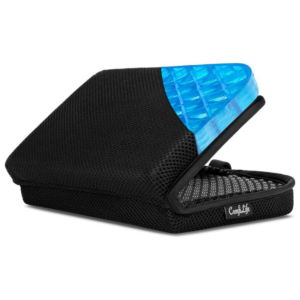
- Build:
- Cooling gel grid
- Size:
- 15.4 × 11.4 × 1.2 in open; 11.4 × 7.7 × 2.4 in folded
- Packed:
- Folds in half
Why it surfaced: Its relatively thin profile, compact folded shape, non-slip cover, and washable cover are unusually airplane-specific. ComfiLife markets it for airplane seats and long flights.
Trade-off: The manufacturer does not publish a weight, and the gel grid will not pack as small as an inflatable pad.
Best ultralight
Klymit V Seat

- Build:
- Air cushion in 75D polyester
- Size:
- 14 × 14 × 1 in inflated
- Packed:
- 3.5 × 1.5 in; 2.6 oz
Why it surfaced: It is the easiest option here to fit in a small personal item. Klymit explicitly lists long flights as a use and says it inflates in 1–2 breaths.
Trade-off: An air-only pad can feel less planted than foam. Leave it slightly soft rather than turning it into a rounded, unstable perch.
Best for tailbone pressure
ComfiLife Gel Enhanced Seat Cushion
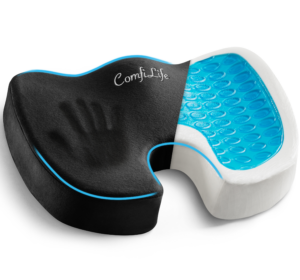
- Build:
- Gel layer over memory foam with a coccyx cutout
- Size:
- 17.6 × 13.8 × 2.75 in; about 2.05 lb
- Packed:
- Full-size; does not fold
Why it surfaced: The contoured foam and rear cutout are designed to redistribute sitting pressure, while the non-slip base and removable washable cover suit extended sitting.
Trade-off: It is the bulkiest option here. At 2.75 inches thick, it may lift the hips enough to change knee angle, seat-belt position, legroom, and tray-table clearance.
Best self-inflating
Therm-a-Rest Lite Seat
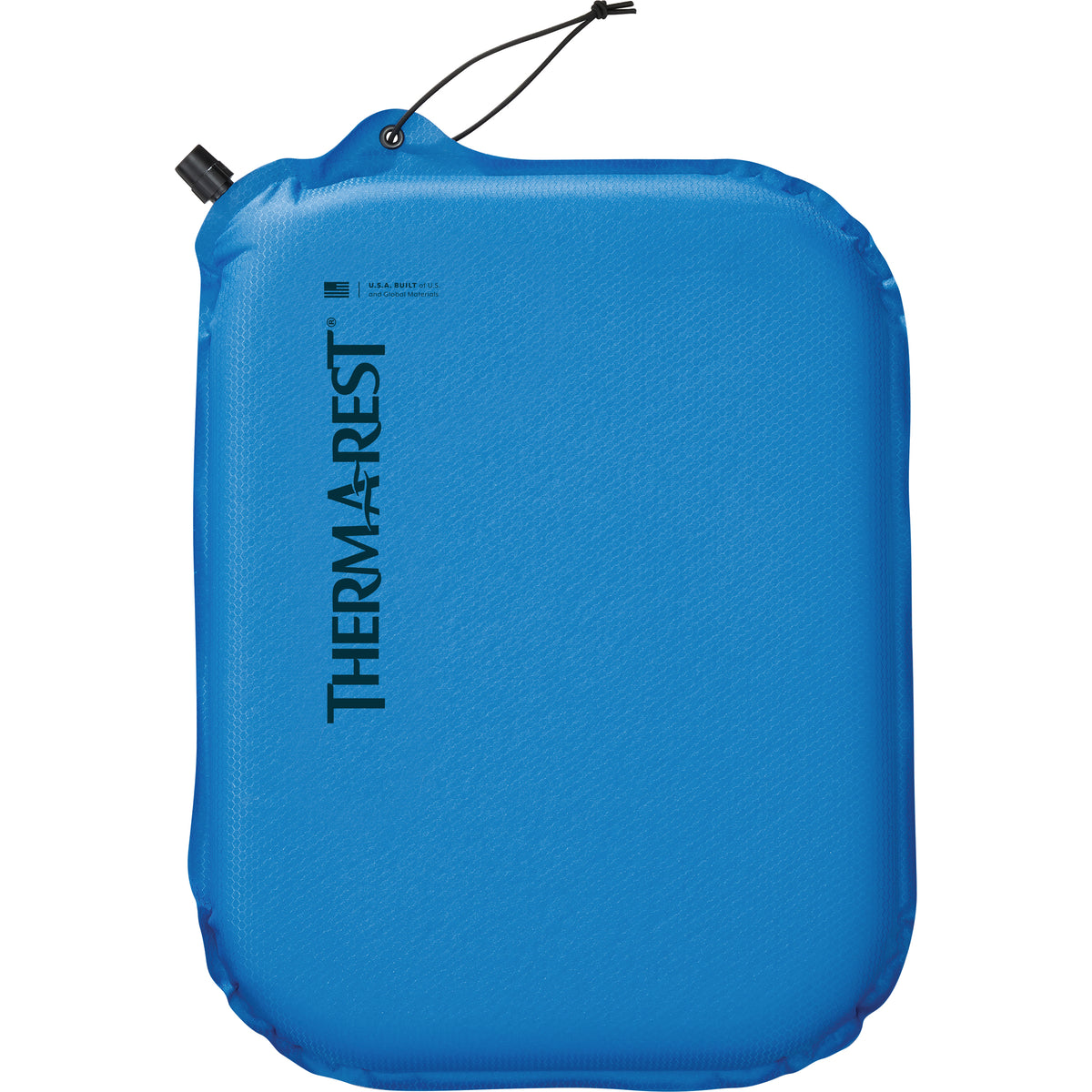
- Build:
- Open-cell foam and air in a 50D polyester shell
- Size:
- 13 × 16 × 1.5 in; about 4 oz
- Packed:
- About 6 × 2.5 in
Why it surfaced: The foam core self-inflates and the valve lets you reduce firmness after sitting down. Its compact roll makes it a practical outdoor-to-travel crossover.
Trade-off: Therm-a-Rest positions it primarily for lightweight outdoor use, not specifically for flights, and availability may vary.
Airplane fit first
What actually matters in an airline seat
Packed size
A cushion only helps if you bring it. Inflatable and self-inflating models disappear into a personal item; full-size foam needs a carrying plan.
Seat width
The cushion should sit flat inside the armrests without curling at the edges. A width around 14–16 inches is easier to place on many economy seats than a broad office cushion.
Thickness and hip height
Extra thickness changes more than softness. It can lift the knees, reduce backrest contact, alter lap-belt placement, and crowd the tray table.
Pressure distribution
Air spreads load with little weight; foam and gel create a more planted surface. A coccyx cutout shifts contact away from the center rear of the seat.
Grip and stability
A non-slip underside matters on smooth upholstery. With an inflatable, releasing a little air usually improves stability more than maximum inflation.
Cleanability
Plane seats and airport floors are high-contact surfaces. A wipeable shell or removable washable cover is more practical than an exposed foam core.
Foam vs inflatable airplane cushions
| Factor | Foam or gel | Inflatable or self-inflating |
|---|---|---|
| Packed size | Bulky; foldable gel is the exception | Very compact |
| Stability | Usually planted and predictable | Depends on pressure; overinflation can wobble |
| Thickness | Fixed | Adjustable by releasing air |
| Pressure feel | Contoured, slow-response, or springy | Even air support; less sculpted |
| Cleaning | Often a washable cover; foam core stays dry | Usually wipe-clean shell |
| Failure point | Can compress or retain heat | Valve or puncture risk |
Tailbone, piriformis, sciatica, and hip discomfort
A cushion can change where the seat presses and may make prolonged sitting more tolerable, but it does not treat coccyx pain, piriformis syndrome, sciatica, or a hip condition. A rear cutout can reduce direct contact beneath the tailbone; a stable foam surface can spread load; and a lightly inflated pad can soften a hard seat without adding as much height.
Thinner is often better on a plane than at a desk. A thick office-style coccyx cushion can raise the pelvis, leave the lower back unsupported, and bring the thighs closer to the tray table. Test the complete setup in a firm chair, including belt position and knee angle, before the trip. Seek clinical advice for severe or persistent pain, symptoms after an injury, weakness, or spreading numbness.
Flight setup
Use less cushion than you think
- Place the cushion fully against the seatback so it cannot creep into the knee area.
- Inflate an air pad only until your sitting bones stop meeting the seat sharply; maximum pressure is rarely the most stable setting.
- Fasten the lap belt low across the pelvis, not over the stomach, and follow crew instructions if the cushion interferes with restraint placement.
- Stand and move when permitted. A cushion changes pressure, but it does not replace movement during a long flight.
How we chose
This is a research shortlist, not a record of test flights. We checked current manufacturer pages for dimensions, weight, packed size, materials, inflation method, surface grip, cover care, and intended uses. We favored products with clear documentation and a plausible airline-seat fit, and stopped at four rather than padding the list with lightly documented white-label cushions.
We treated cooling, pressure relief, and pain language as design claims rather than measured outcomes. Product availability and specifications can change, so the manufacturer links below are the final check before buying. Read more about Mr. Squish research and testing standards.
Sources and verification
- ComfiLife Portable Foldable Travel Seat Cushion — official product page
- Klymit V Seat — official product page
- ComfiLife Gel Enhanced Seat Cushion — official product page
- Therm-a-Rest Lite Seat — official product page
Last fact checked: October 5, 2026.
FAQ
Can I bring a seat cushion on a plane?
Usually, yes. A small cushion can generally travel in your carry-on or personal item, but baggage rules vary by airline and fare. It must not block the aisle, interfere with the seat belt, or prevent you from following crew instructions.
Do airlines count a seat cushion as a carry-on?
Policies vary. Do not assume a separate full-size cushion is exempt from the airline's item limit. A cushion that fits inside your personal item is the lowest-risk choice; ask the airline before travel if you need it as an accessibility aid.
Is memory foam or inflatable better for long flights?
Inflatable cushions win on packed size and adjustable firmness. Memory foam feels more stable and can spread pressure across a larger area, but it is heavier, bulkier, and may raise you too far off the seat. The better choice depends on whether portability or a planted feel matters more.
How thick should an airplane seat cushion be?
Start thinner than you would for an office chair. About one to one-and-a-half inches is easier to fit into airline-seat geometry. A thicker cushion can work, but check whether it lifts your knees, changes lap-belt position, or reduces tray-table clearance.
What type is best for tailbone pressure?
A stable cushion with a rear coccyx cutout or pressure-distributing contour may feel more comfortable than a flat pad. It is a comfort aid, not treatment. Persistent pain, weakness, or numbness deserves advice from a qualified clinician.
Can a cushion make an airplane seat less comfortable?
Yes. Too much thickness can push your knees upward, reduce backrest support, change the seat-belt angle, and crowd the tray table. An overinflated pad can also wobble. Test the cushion in a firm dining chair before packing it.
Complete the flight setup
Head support and in-flight sleep
Affiliate disclosure: Mr. Squish may earn a commission when you buy through eligible links. Recommendations are based on independent product research; any hands-on test is labeled separately. Learn more.