
How to Sleep on a Plane
Sleeping upright is hard for one mechanical reason: nothing holds your head. The moment you drift off, the muscles that keep your head balanced let go, your chin drops toward your chest or your head falls sideways, and the stretch wakes you. Every effective plane-sleep tactic is really an answer to that single problem — either stop the head from falling, or recline enough that gravity stops pulling it forward. Everything else, from eye masks to caffeine timing, is a supporting act.
In this guide
Fix the head-drop first
A flat rectangular pillow behind your head does nothing on a plane, because the failure is sideways and forward, not backward. What works is support at the sides of your neck, so your head has somewhere to rest before it has travelled far enough to strain anything.
There are two designs that do this. A wrap-style support builds a column around the neck and braces against the seat back. A sculpted memory foam U with a raised back keeps your head from sliding forward off the headrest. Inflatable travel pillows pack smaller but generally give less lateral support, which makes them better for camping than for seated sleep.
- Wear the U-shape backwards — thick part under your chin — if your head keeps falling forward.
- Tighten any strap or toggle before you get sleepy; you will not adjust it once you are dozing.
- If you use a hood or a scarf, tuck it between the seat wing and your cheek so the head has a stop.
Pick the seat that lets you sleep
A window seat is worth more than any accessory. It gives you a wall to lean against, control over the shade, and freedom from two people climbing over you. Aisle seats are better for anyone who gets up often, but they are the worst place to try to sleep.
- Window seat, and ideally not the last row, where seats often recline less.
- Avoid the row in front of an exit row for the same reason.
- Sitting slightly ahead of the wing tends to be quieter than the very back of the cabin.
Work with your body clock, not against it
If the flight lands in the morning at your destination, treat the flight as a night and try to sleep. If it lands in the evening, staying awake is usually the better call, even on a long haul. Fighting the destination clock is the main reason people arrive wrecked.
Caffeine has a half-life of roughly five to six hours, so a coffee at boarding is still working at cruise. Alcohol is worse than it feels: it shortens the time it takes to fall asleep and then fragments the second half of your rest, which is exactly the part you want on a long flight.
Control light, sound, and temperature
Cabin lighting and screens keep melatonin suppressed, cabin noise sits around the level of a busy road, and cabin air is dry and cool. Each of those is fixable with something that fits in a small bag.
- A contoured eye mask that does not press on your eyelids.
- Foam earplugs or noise-cancelling headphones — the low engine drone is what keeps waking you.
- A layer you can add: most people get cold two hours in, and cold wakes you before you notice it.
- Water at intervals. Dehydration headaches on landing are more common than jet lag itself.
Set your position before takeoff
Recline as soon as it is allowed and keep your knees supported — a bag under your feet raises the knees slightly and takes strain off the lower back. Seatbelt over the blanket so the crew does not need to wake you during turbulence checks. Then commit: repeatedly repositioning is what turns a four-hour sleep window into four twenty-minute naps.
Pillows we recommend for this
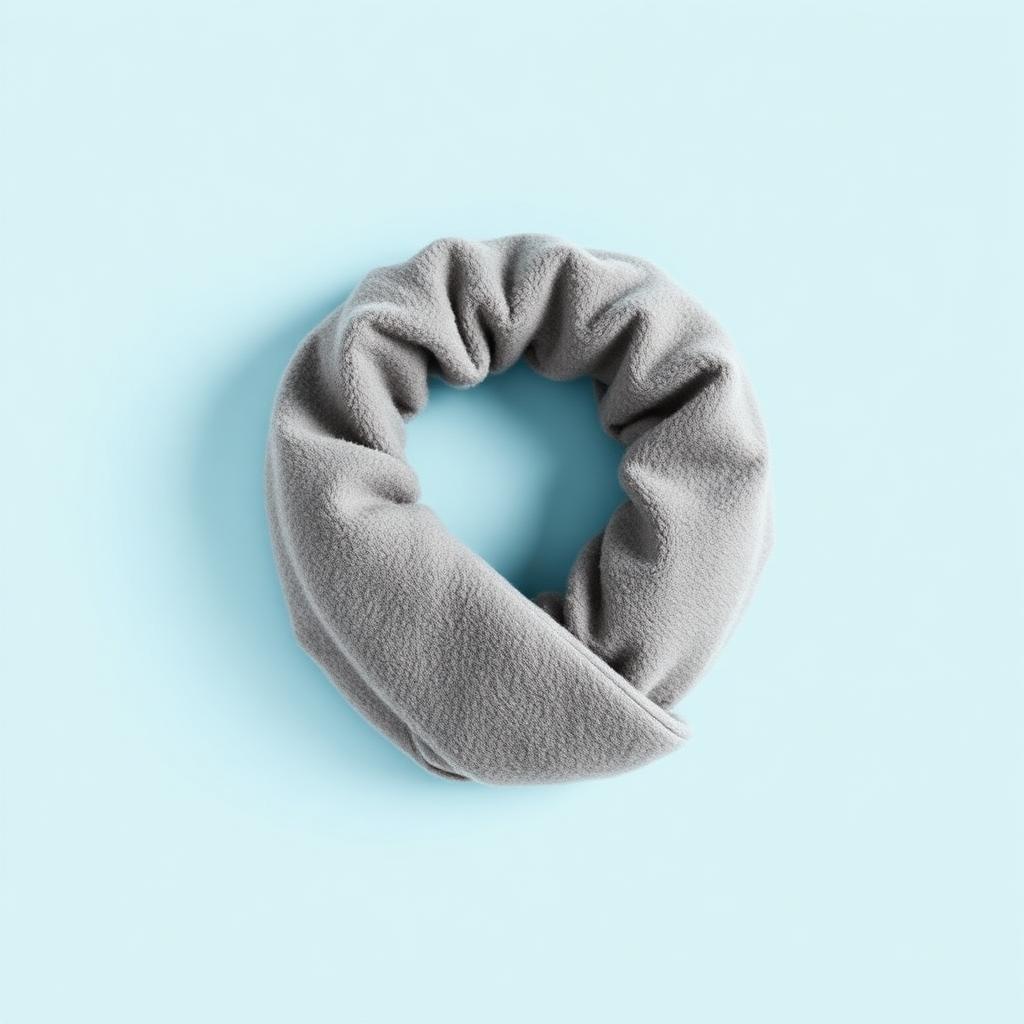

Under-seat comfort
Need cushioning under your hips?
Neck pillows manage head drop; a compact seat cushion addresses pressure beneath the hips and tailbone without taking over the seat.
Compare airplane seat cushions →FAQ
Do travel pillows actually work?
The ones that support the sides of the neck do. A soft ring that only fills the space behind your head does not stop the head from falling sideways, which is the movement that wakes you.
Should I take melatonin on a flight?
Many travellers use a low dose timed to bedtime at the destination rather than at takeoff. It is a body-clock signal, not a sedative, and it is worth asking a doctor or pharmacist first if you take other medication.
Is it better to sleep leaning on the window or upright?
Leaning on the window is usually better, because the wall gives your head a stop. Pad the gap with a jacket so your temple is not against cold plastic.
Why do I wake up with neck pain after flying?
Because your head spent hours at an angle with no support, holding your neck muscles in a stretched position. Lateral neck support during the flight prevents most of it.
Does an inflatable travel pillow work as well as foam?
For packability, yes. For seated support, usually not — inflatables tend to be less stable side to side, which is the direction that matters on a plane.
Keep reading
Find the Right Pillow for Your Sleep Style
Get a tailored shortlist based on sleep position, shoulder fit, desired loft and materials using our free Pillow Finder.
Start the Free Pillow Finder →Instant recommendations, no email or signup required. We may earn commissions on some buying links.
Affiliate disclosure: Mr. Squish may earn a commission when you buy through links on this page. Recommendations are based on independent product research; any hands-on test is labelled separately. Learn more.