
Can Your Pillow Cause Headaches? How to Pick One That Helps
If you regularly wake up with a headache that fades as the morning goes on, your pillow is a reasonable first suspect. Headaches that begin at the base of the skull and radiate forward are frequently cervicogenic — meaning they originate in the neck joints and muscles, not the head itself. A pillow that holds your neck too high, too low, or twisted for hours can irritate exactly those structures. Migraine is different: it is a neurological condition a pillow cannot fix, but overheating, poor sleep quality, and neck tension are all documented migraine triggers that a better pillow can reduce. This guide explains the difference, what pillow features matter for each, and when headaches mean it is time to see a doctor instead of buying bedding.
In this guide
How a pillow can cause a headache
Your neck has a natural curve, and the job of a pillow is to keep that curve neutral while you sleep. When a pillow is too tall, your chin tucks toward your chest and the muscles at the base of the skull stay contracted all night. When it is too flat, your head drops back or sideways and the same muscles overstretch. Either way, you can wake up with pain that starts in the neck and climbs into the temples and forehead.
These are called cervicogenic headaches, and they have a recognizable pattern: they are usually worst on waking, often one-sided, and tend to ease once you are up and moving. If that describes your mornings, adjusting your pillow is one of the cheapest experiments you can run before anything else.
What about migraines?
Migraine attacks are not caused by pillows, and no pillow will prevent them. But sleep is one of the most consistent migraine triggers in both directions — too little, too much, and fragmented sleep all raise attack frequency. A pillow contributes to sleep quality more than most people realize: one that sleeps hot, loses support by 3 a.m., or leaves your neck sore can fragment sleep enough to matter.
The practical takeaway is that migraine sufferers benefit from the same features everyone does — neutral neck alignment and consistent support — plus a stronger emphasis on cooling and pressure relief, since heat and muscle tension are common personal triggers.
Pillow features that matter for headache relief
Not every 'orthopedic' pillow helps, and not every soft pillow hurts. Focus on these mechanics instead of marketing labels.
- Correct loft for your position — side sleepers need enough height to fill the shoulder gap; back sleepers need a medium loft with neck support; stomach sleepers need very little.
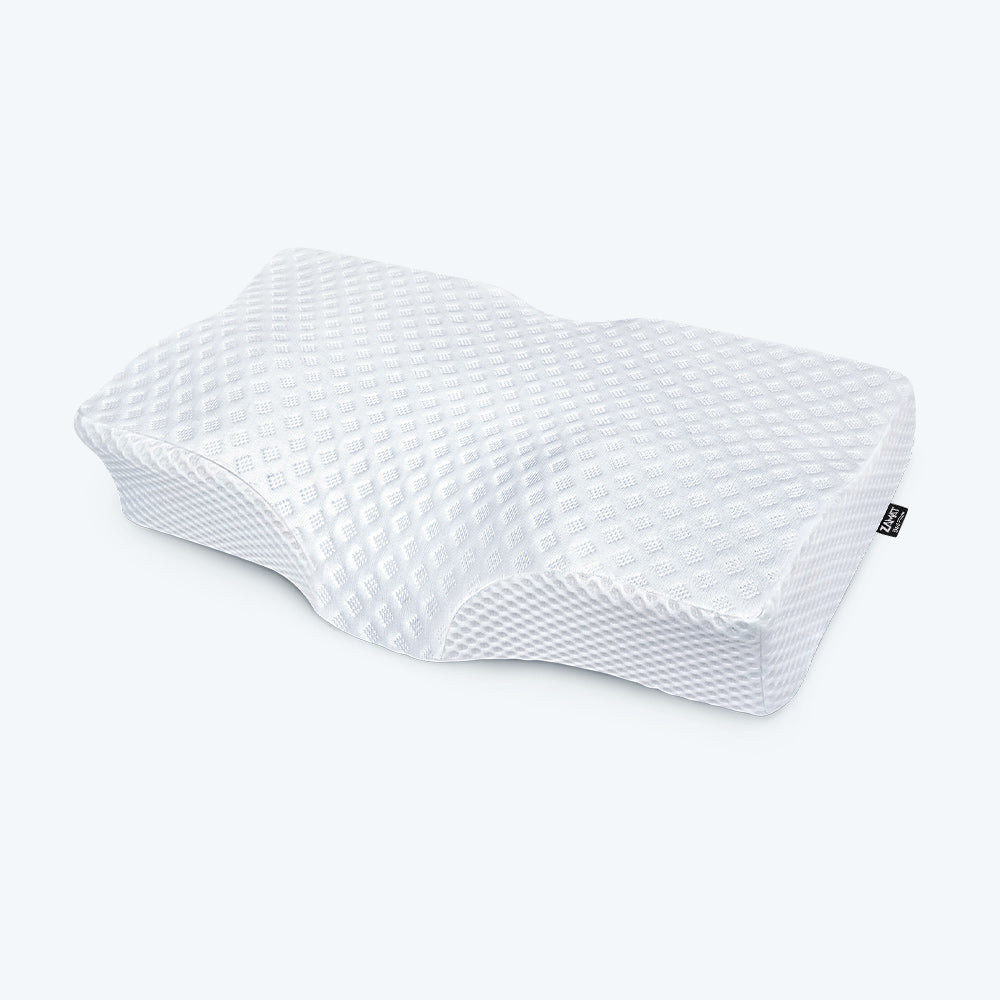
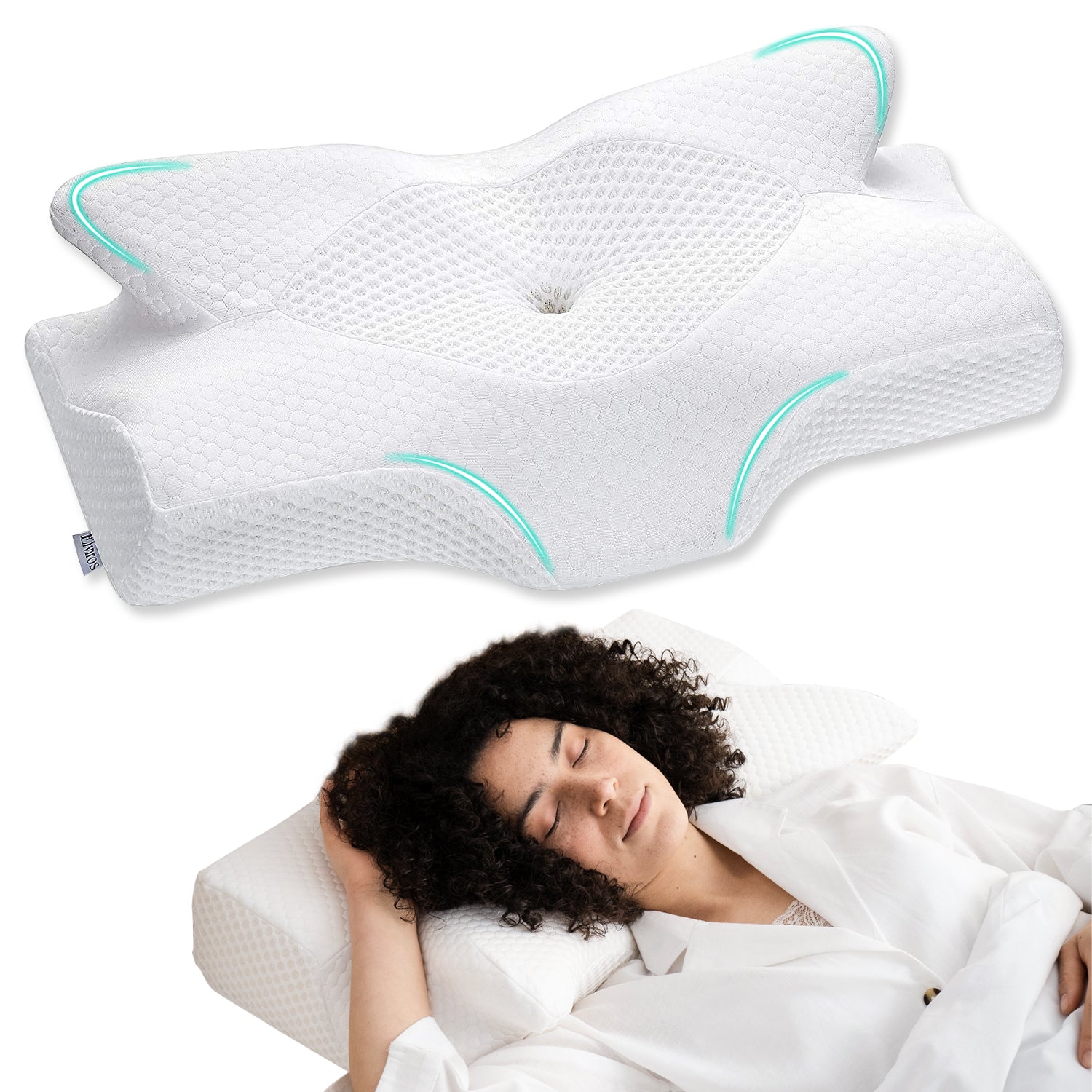
- Cervical contour or neck roll — a shaped pillow that cradles the neck curve keeps the head from drifting out of alignment overnight.
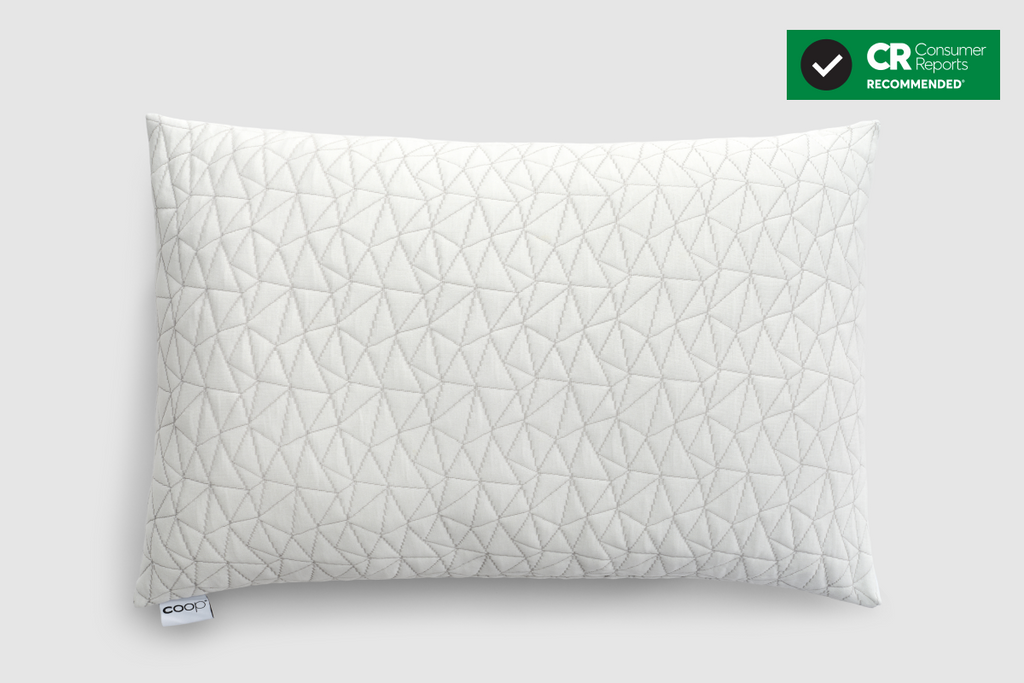
- Adjustability — shredded-foam pillows let you dial in the exact height, which matters because the 'right' loft depends on your shoulder width and mattress firmness.
- Consistent support — solid or shredded memory foam and latex hold their shape; polyester and low-quality down collapse by morning and let the neck sag.
- Cooling materials — gel infusions, breathable covers, and ventilated foam reduce the overheating that fragments sleep and triggers heat-sensitive headaches.
Matching the pillow to your sleep position
Side sleepers get the most cervicogenic benefit from a contoured cervical pillow or an adjustable pillow set to full loft — the goal is a straight line from nose to sternum. Back sleepers do well with a medium-loft pillow that has a neck roll or a contoured dip for the head. Combination sleepers should choose an adjustable pillow, since no fixed shape fits both side and back positions equally well.
Stomach sleeping is the position most likely to cause neck-driven headaches because the head stays rotated to one side for hours. If you cannot switch positions, use the thinnest pillow you can tolerate — or none under the head — to reduce the rotation angle.
Give it time, and change one thing at a time
A new pillow — especially a contoured cervical one — can feel wrong for the first week or two because your neck muscles have adapted to the old setup. Most manufacturers and physical therapists suggest a two-to-four-week adjustment period before judging results. Change only your pillow, not your pillow, mattress topper, and sleep position all at once, or you will not know what helped.
Keep a simple morning note for two weeks: headache yes or no, and where it hurt. If a correctly sized pillow makes no difference after a month, the cause is probably not your pillow.
When to see a doctor
Pillows are a reasonable fix for mild, mechanical morning headaches — but some headache patterns need medical evaluation, not bedding. See a clinician promptly if your headaches are new and worsening, wake you from sleep, come with neurological symptoms (vision changes, weakness, slurred speech), follow a head injury, or are the 'worst headache of your life.' Frequent migraines also deserve a proper diagnosis: modern treatments work far better than any pillow, and a pillow is at most a supporting player in a migraine management plan.
Pillows we recommend for this

FAQ
Get the Mr. Squish Pillow Cheat Sheet
A simple guide to choosing the right pillow based on your sleep position, body size, and comfort preferences.
No spam. Unsubscribe anytime.
Affiliate disclosure: Mr. Squish may earn a commission when you buy through links on this page. Recommendations come from hands-on testing. Learn more.