
Do Sleep Apnea Pillows Really Work?
Search for a sleep apnea pillow and you will find dozens of products implying that foam can fix a breathing disorder. It cannot. Obstructive sleep apnea happens when the airway collapses repeatedly during sleep, and the treatments with real clinical evidence are CPAP, oral appliances, surgery in select cases, weight management, and clinician-guided positional therapy. A pillow is not on that list. What a pillow can do is make treatment more tolerable and reduce the time you spend flat on your back — and for some people that is a meaningful improvement. This guide separates the two.
In this guide
What a pillow can genuinely change
There are three real mechanisms, and every honest claim in this category traces back to one of them.
- CPAP compliance: a mask that leaks or gets shoved sideways by a thick pillow is the single most common reason people abandon therapy. A CPAP pillow with mask cut-outs and hose relief keeps the seal intact, which improves the treatment you are already using.
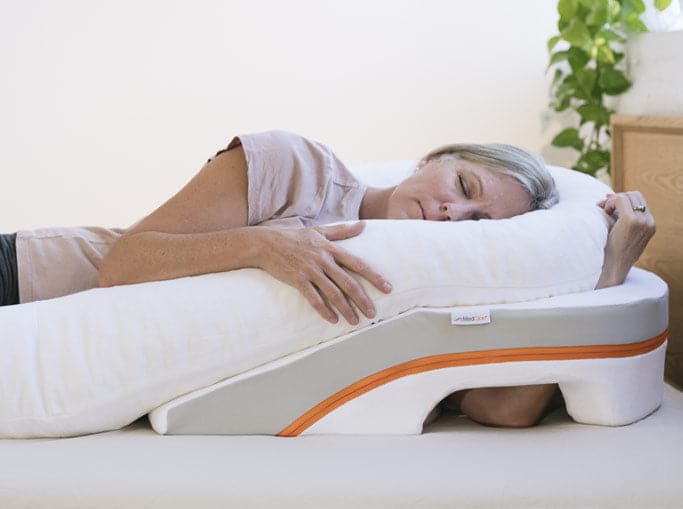
- Torso elevation: raising the upper body roughly 30 to 45 degrees uses gravity to reduce airway crowding. This is the mechanism behind wedge pillows, and it is the same one clinicians use when they raise the head of the bed.
- Positional support: for people whose events cluster while supine, staying off the back matters. Body pillows, wedge-and-body-pillow systems, and smart pillows that nudge the head all target this.
What a pillow cannot do
A pillow does not lower your apnea-hypopnea index in any way you can rely on, and no pillow sold for home use is cleared to treat sleep apnea. If a product page implies otherwise, that is marketing, not medicine.
Two specific claims to distrust: that a contour shape 'opens the airway' enough to replace CPAP, and that reduced snoring means reduced apnea. Snoring and apnea overlap but are not the same thing — quieter nights can even mask worsening events.
Is a wedge pillow good for sleep apnea?
A wedge is the strongest option in this category because elevation is a physical change, not a comfort tweak. Head-of-bed elevation is well established for nighttime reflux, and reflux and apnea frequently travel together, so people using a wedge often report better nights on both counts.
The catch is execution. A cheap foam triangle that only lifts your head bends the neck and can narrow the airway rather than open it. You want the whole torso raised from the hips up, on a wedge firm enough that it does not flatten by 2 a.m. A wedge-plus-body-pillow system also discourages rolling onto your back, which stacks two mechanisms at once.
If you use CPAP, buy for the mask first
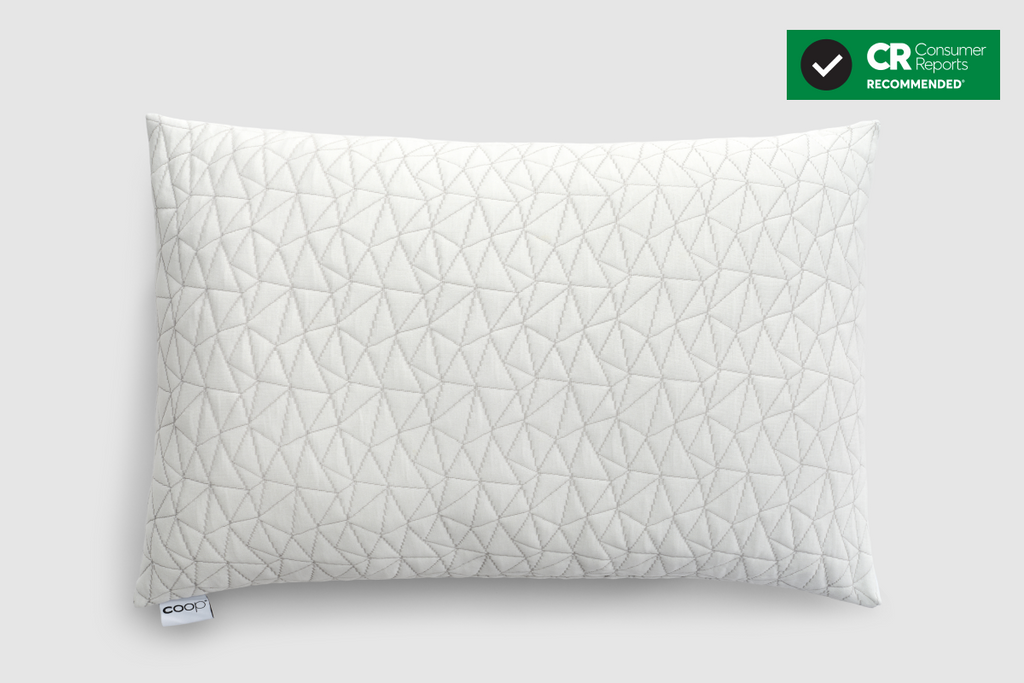
Once you are on therapy, the pillow's job is narrow: do not break the seal. Look for side cut-outs deep enough for your specific mask style, enough loft that a full-face mask clears the surface, and a fill you can reshape. Adjustable shredded foam and buckwheat both work well because you can scoop out a channel for the hose.
Test it for a week before deciding. Mask leaks show up in your machine's own data — most CPAP units report leak rate nightly, which is a far better verdict on a pillow than how it feels the first night.
Red flags that mean see a doctor, not a store
If you have not been diagnosed, buying a pillow is the wrong first step. Untreated apnea is linked to high blood pressure, cardiac problems, and daytime accidents, and a sleep study is the only way to know what you are dealing with.
- Witnessed pauses in breathing, gasping, or choking during sleep.
- Loud snoring plus daytime sleepiness despite a full night in bed.
- Morning headaches, dry mouth, or waking unrefreshed most days.
- Difficult-to-control blood pressure, especially with the symptoms above.
How to spend the money well
If you are already on CPAP, spend on a pillow that protects the seal — that is the highest-return purchase in this category. If you are waiting on a sleep study or your events are positional, a proper wedge system is the better buy. A smart positional pillow is worth considering only if you know from testing that your back is the problem, because they are expensive and require power.
Whatever you choose, treat it as support for a treatment plan rather than the plan itself.
Pillows we recommend for this

Nitetronic Z6 Smart Anti-Snore Pillow
Shoppers comparing automatic repositioning designs and their limitations
FAQ
Do sleep apnea pillows really work?
Not as a treatment. No pillow is cleared to treat obstructive sleep apnea. Pillows can help indirectly by keeping a CPAP mask sealed, elevating your torso, and discouraging back sleeping — all of which support treatment rather than replace it.
Is a wedge pillow good for sleep apnea?
A wedge is the most useful shape in the category because it raises the whole torso, which reduces airway crowding and helps coexisting reflux. It works only if it elevates from the hips up rather than just propping the head, which bends the neck.
What is the best pillow to use with a CPAP machine?
One with mask cut-outs and hose relief, or an adjustable fill you can scoop a channel into. Judge it by your machine's nightly leak-rate data after a week, not by first-night comfort.
Can a pillow replace my CPAP?
No. If a product suggests it can, treat that as a reason to distrust the seller. Stopping prescribed therapy on the strength of a pillow purchase is genuinely dangerous.
Does reducing snoring mean my apnea is better?
Not necessarily. Snoring and apnea overlap but are distinct. Quieter nights can occur while breathing events continue, which is one reason diagnosis relies on a sleep study rather than how loud you are.
Keep reading
Find the Right Pillow for Your Sleep Style
Get a tailored shortlist based on sleep position, shoulder fit, desired loft and materials using our free Pillow Finder.
Start the Free Pillow Finder →Instant recommendations, no email or signup required. We may earn commissions on some buying links.
Affiliate disclosure: Mr. Squish may earn a commission when you buy through links on this page. Recommendations are based on independent product research; any hands-on test is labelled separately. Learn more.