
Firm vs Soft Pillow for Side Sleepers: Which Is Right?
Side sleepers are routinely told to buy a firm pillow, and routinely end up with a sore ear instead of a better neck. The confusion comes from mixing up two separate dials: loft (height) and firmness (resistance to compression). Side sleeping needs the height dial set high and the firmness dial set to medium-firm — enough to hold that height under your head's weight without creating a pressure point on your ear and jaw.
In this guide
Why soft pillows fail side sleepers
A soft pillow — down, down alternative, low-density polyester — feels luxurious for the first twenty minutes. Then the concentrated weight of your head on a small contact area compresses it to a fraction of its shelf height, and your head sinks below the spine line for the rest of the night.
That is the failure mode behind the classic complaint of a pillow that goes flat by 2 a.m. It is not defective; it is a soft fill doing what soft fills do under a side-sleeper load. If you love the feel of down, the fix is using it as a top layer over a supportive pillow, not as the sole support.
Why rock-hard fails too
At the other extreme, an over-firm pillow holds loft perfectly but concentrates pressure on your ear, jaw, and temple. Ear pain, jaw ache, and a numb feeling on the downside of the face are the signatures. Buckwheat and very dense solid foam are the usual suspects.
The target is medium-firm: enough resistance that the pillow loses no more than about a third of its height under your head, but enough give that your ear sinks slightly into the surface instead of pressing against a wall.
Firmness by fill type
Fill determines the firmness range you can expect, and some fills let you adjust it.
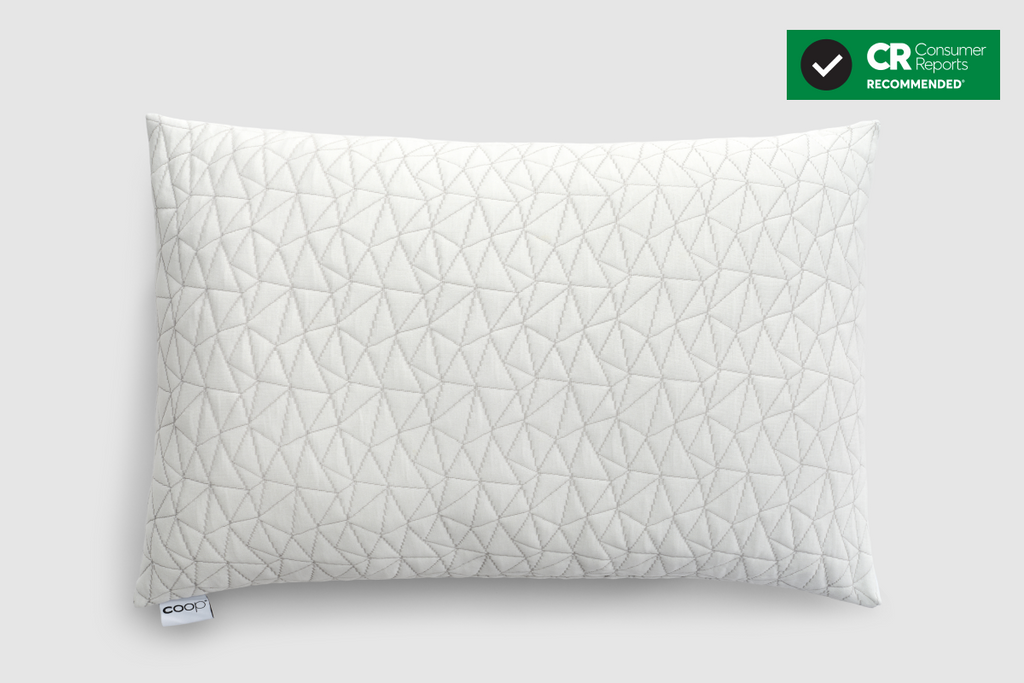
- Shredded memory foam: medium to firm, adjustable by fill amount — the most tunable option.
- Solid memory foam: medium-firm and contouring; softens with body heat through the night.
- Latex: springy medium-firm; pushes back rather than cradling.
- Buckwheat: the firmest mainstream fill; softens slightly as hulls break in but never cradles.
- Down and alternative: soft to medium; will not hold side-sleeper loft alone.
How to test firmness at home
Press your palm flat into the pillow's centre with moderate pressure. A side-sleeper pillow should resist noticeably and spring back when you lift your hand. If your hand sinks to the mattress with little resistance, it is too soft for side sleeping. If the surface barely dents and feels like a wall, expect ear pressure.
Then do the real test: a full night. Judge the pillow at 6 a.m., not at 10 p.m. — soft fills are at their best at bedtime and their worst at dawn.
Pillows we recommend for this
FAQ
Keep reading
Get the Mr. Squish Pillow Cheat Sheet
A simple guide to choosing the right pillow based on your sleep position, body size, and comfort preferences.
No spam. Unsubscribe anytime.
Affiliate disclosure: Mr. Squish may earn a commission when you buy through links on this page. Recommendations are based on independent product research; any hands-on test is labelled separately. Learn more.