
What Type of Pillow Is Best for Side Sleepers?
Roughly two out of three people sleep on their side, and it is the position most likely to leave you with a sore neck or a numb shoulder. The reason is simple geometry: on your side, your head sits four to six inches away from the mattress, so your pillow has to fill a much bigger gap than it does for a back or stomach sleeper. Get that gap wrong and your cervical spine bends all night. This guide covers the loft, fill, and shape that actually work for side sleeping — and how to tell within a week whether your pillow is the problem.
In this guide
The short answer
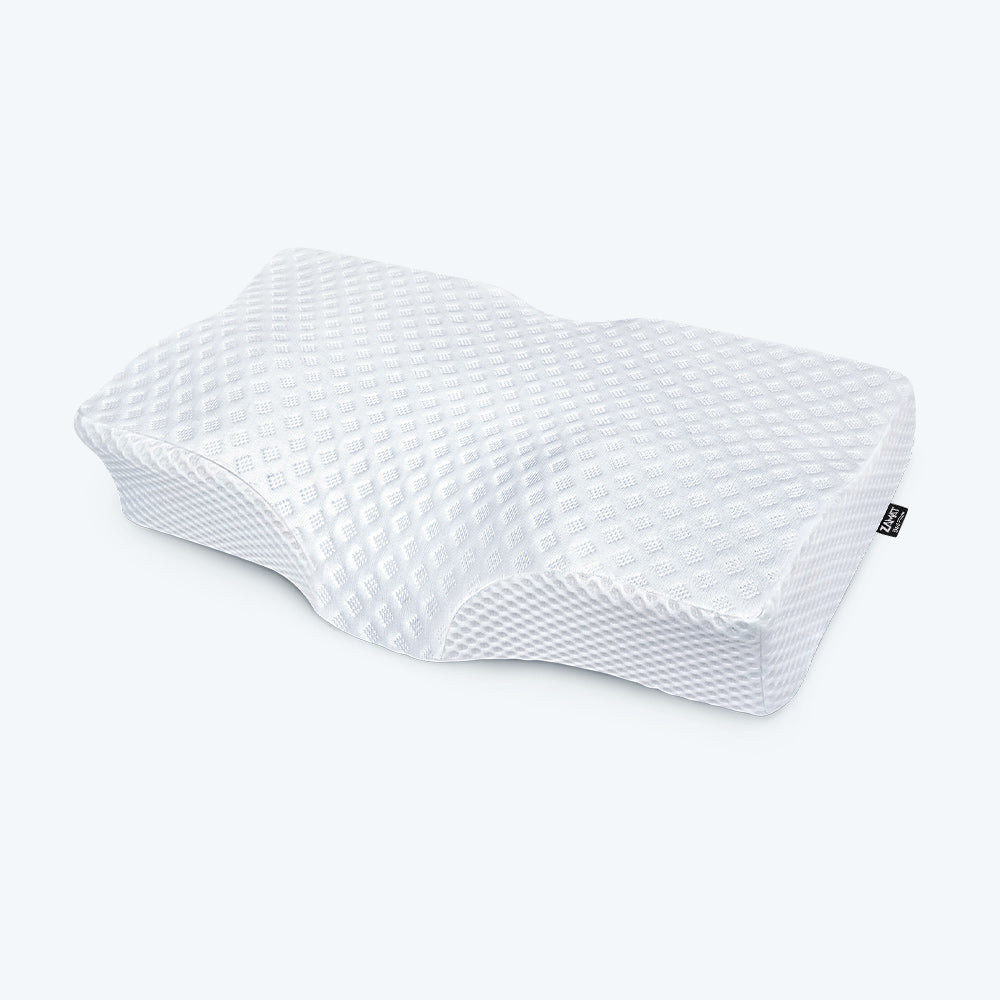
For most side sleepers, the best pillow is a medium-firm pillow with a high loft of roughly 5 to 6 inches, made from either shredded memory foam with an adjustable fill or a contoured cervical foam with a shoulder notch. Both keep your ear, shoulder, and hip stacked in one line without collapsing under the weight of your head.
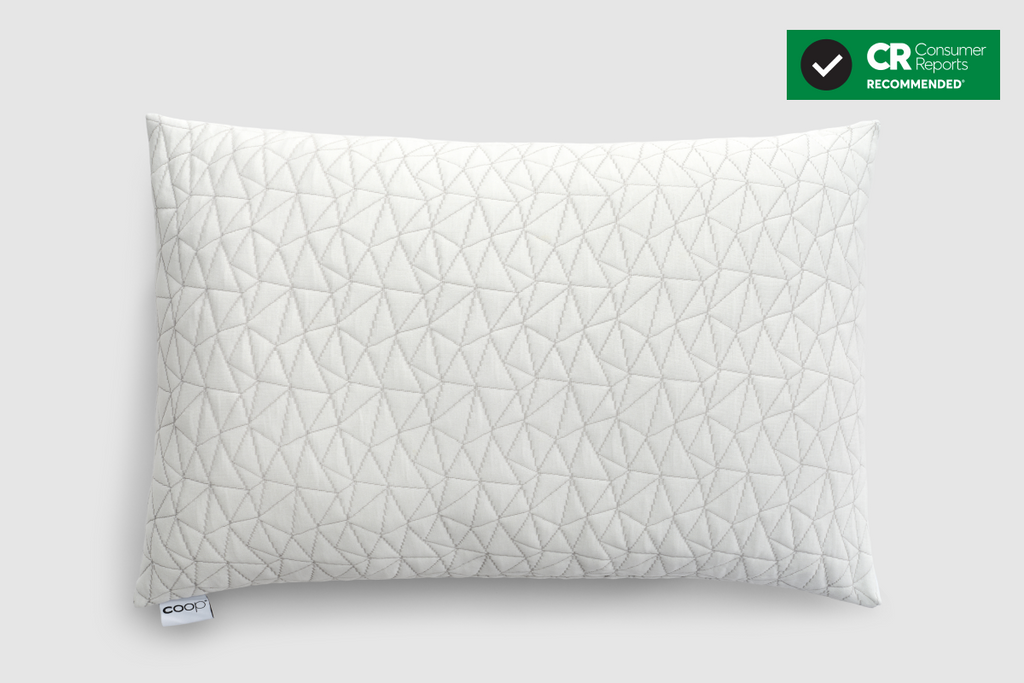
Adjustable shredded fill wins if you are not sure what loft you need, because you can remove fill in small handfuls until the pressure under your ear disappears. A one-piece cervical contour wins if you already know you wake up with neck pain and want the shape decided for you.
How to find your correct loft
Loft is the single biggest factor and it depends on your shoulder width, not your height. Broad-shouldered sleepers need more pillow; petite sleepers need less. Use a mirror or a phone photo taken from behind you while you lie on your side.
- Neutral: your nose lines up with the center of your chest and your chin is neither tucked nor lifted.
- Too flat: your head tips down toward the mattress and you feel a pull along the top side of your neck.
- Too tall: your chin presses toward your chest and the underside of your neck feels compressed.
- Rough starting points: narrow shoulders 4–5 inches, average 5–6 inches, broad 6–7 inches.
Fill types, ranked for side sleeping
Not every fill can hold a tall loft under sustained pressure, and that is where most side sleepers get burned.
- Shredded memory foam — best all-round choice. Holds loft, moldable, and usually adjustable. Slight break-in smell at first.
- Cervical contour foam — best for existing neck pain. The raised edge supports the neck while the dip cradles the head. Less forgiving if the height is wrong.
- Shredded latex — springy, cooler than memory foam, very durable. Costs more.
- Down and down alternative — plush and lovely, but it compresses under a side sleeper's head and usually goes flat by 2 a.m. Fine as a top layer, weak as a sole support pillow.
- Buckwheat — extremely supportive and breathable, and it holds a tall loft, but it is heavy and rustles when you move.
Shape matters more than most people expect
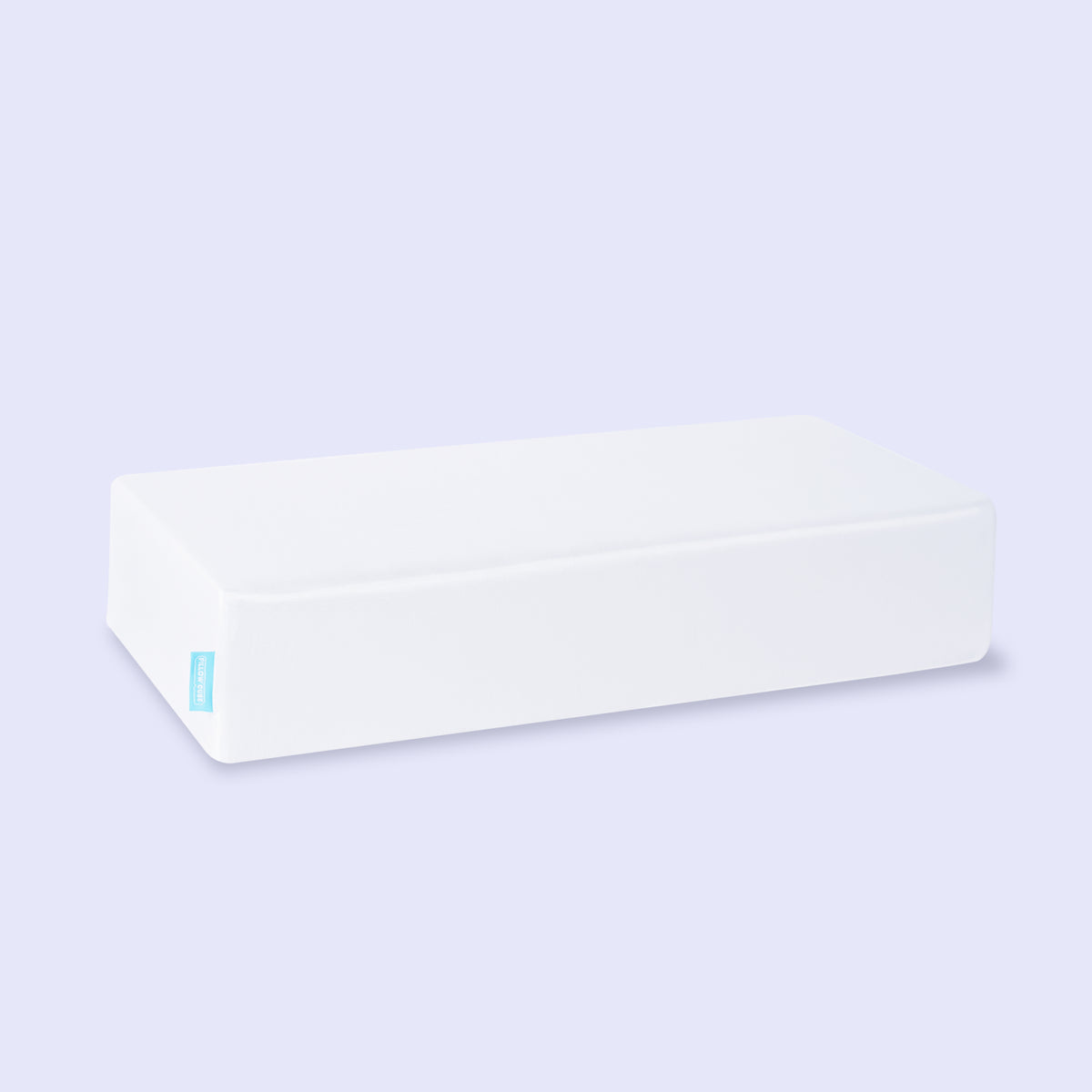
A rectangular pillow forces your shoulder to either be pushed under the pillow or squashed against it. Two shapes solve this: a shoulder-notch cervical pillow, which cuts out space for the shoulder to slide into, and a cube-style side pillow, which uses vertical walls to fill the ear-to-shoulder gap without spilling over. If you wake up with a tingling arm rather than a sore neck, shape is your problem, not loft.
Firmness and cooling
Side sleepers should skip soft pillows. A medium-firm feel resists the concentrated pressure of your head on a small contact area. Firmness that is too high, however, creates a pressure point on the ear and jaw — if your ear aches, drop a step in firmness rather than in loft.
Side sleeping also traps heat because half your face is buried in the pillow. Look for a gel-infused or ventilated core, a percale or performance-knit cover, and a fill that breathes. Solid memory foam blocks are the worst offenders.
Common mistakes
Most side-sleeper pillow complaints trace back to one of these.
- Keeping a pillow past its life. Most fills lose meaningful loft in 1–3 years; if it folds in half and stays folded, replace it.
- Stacking two flat pillows. The seam between them creates an unstable, angled surface.
- Ignoring the mattress. A very soft mattress lets your shoulder sink, which means you need less pillow loft, not more.
- Sleeping without a knee pillow. A pillow between the knees stops your top hip from rotating forward and pulling your spine out of line.
- Judging a pillow in one night. Give a new pillow at least a week — your muscles adapt to a bad position and need time to unlearn it.
A one-week test you can run tonight
Sleep on the pillow for seven consecutive nights and note, each morning, whether the discomfort is in your neck (loft is wrong), your ear or jaw (too firm), your shoulder or arm (shape is wrong), or nowhere at all. If the answer is nowhere by night four, you have the right pillow. If it is the same complaint every morning, adjust exactly one variable and run the week again.
Pillows we recommend for this
FAQ
How high should a side sleeper's pillow be?
Usually 5 to 6 inches of loft, adjusted for shoulder width. The correct height keeps your nose in line with the center of your chest.
Is memory foam or down better for side sleepers?
Memory foam, in almost every case. Down compresses under the weight of your head and loses the loft a side sleeper needs by the middle of the night.
Should side sleepers use a firm pillow?
Medium-firm is the sweet spot. Firm enough to resist collapsing, soft enough to avoid creating a pressure point on your ear and jaw.
Do side sleepers need a cervical pillow?
Only if you regularly wake with neck pain or stiffness. Otherwise an adjustable shredded-foam pillow set to the right loft does the same job with more flexibility.
Why does my shoulder go numb when I sleep on my side?
That is usually a shape problem, not a loft problem. A shoulder-notch or cube-shaped pillow gives your shoulder somewhere to go instead of being compressed.
Keep reading
Find the Right Pillow for Your Sleep Style
Get a tailored shortlist based on sleep position, shoulder fit, desired loft and materials using our free Pillow Finder.
Start the Free Pillow Finder →Instant recommendations, no email or signup required. We may earn commissions on some buying links.
Affiliate disclosure: Mr. Squish may earn a commission when you buy through links on this page. Recommendations are based on independent product research; any hands-on test is labelled separately. Learn more.