
How to Fluff a Pillow (Every Fill Type, Plus How to Fix a Flat One)
Pillows go flat for a simple reason: the fill inside gets compressed and clumped by eight hours of head weight every night. Fluffing is how you undo that — breaking up clumps, redistributing fill, and getting air back into the loft. It takes under a minute by hand, and a dryer cycle can revive pillows that hand-fluffing cannot. The right technique depends on what is inside your pillow, and one fill type — solid memory foam — should never be fluffed at all. Here is how to do each one properly, plus how to tell when a pillow is past saving.
In this guide
The 30-second hand fluff (works for most pillows)
Hold the pillow by two opposite corners and push them together and apart in an accordion motion, like squeezing a bellows. Do this five or six times, then rotate 90 degrees and repeat on the other axis. Finish with a few firm karate-chop punches down the middle and along the edges to break up clumps.
This works because the pushing motion forces air through the fill and separates compressed clusters. Do it every morning while you make the bed and your pillow will hold its loft noticeably longer between washes.
The dryer method (for a seriously flat pillow)
When hand-fluffing is not enough, the dryer does the heavy lifting. Put the pillow in on low heat or air-fluff for 10 to 20 minutes with two or three dryer balls or clean tennis balls. The balls pound the fill apart as the drum turns, and the tumbling redistributes it evenly.
This method works for down, feather, polyester, and shredded memory foam. Check the care label first, and make sure the pillow is completely dry afterward — especially down, which can mildew inside if it goes back on the bed damp. Adding a dry towel to the load speeds things up.
Fluffing by fill type
Each fill behaves differently, and one common mistake — trying to fluff a solid foam pillow — does nothing at best and tears the foam at worst.
- Down and feather — fluff aggressively by hand daily and dryer-fluff monthly. Down clumps when damp, so keep it dry and fluff after humid nights.
- Polyester / down alternative — hand-fluff works, but clumps form fast. The dryer with tennis balls is your main tool; expect to do it weekly.
- Shredded memory foam — hand-fluff and knead like dough to break up foam clusters. A short dryer cycle on low revives it well. Adjustable pillows can also be topped up with extra fill.
- Solid memory foam and latex — do not fluff. These are single molded pieces with nothing to redistribute. If one has gone flat or developed a permanent dip, it is worn out, not flat.
- Buckwheat — no fluffing needed; the hulls do not compress. Just shake to redistribute, and refresh the hulls if the loft has dropped.
The fold test: when fluffing won't save it
Fluffing restores loft; it cannot restore support that is gone. To check, lay the pillow on a flat surface and fold it in half. For polyester and down, place a light shoe on top — if the pillow stays folded instead of springing back and pushing the shoe off, the fill has lost its resilience. For foam pillows, look for permanent indentations, crumbling edges, or a smell that survives washing.
Most polyester pillows last one to two years, down and feather two to three, and quality memory foam or latex three to five. If your pillow fails the fold test and you wake with neck pain, replacement is cheaper than the chiropractor.
Pillows we recommend for this
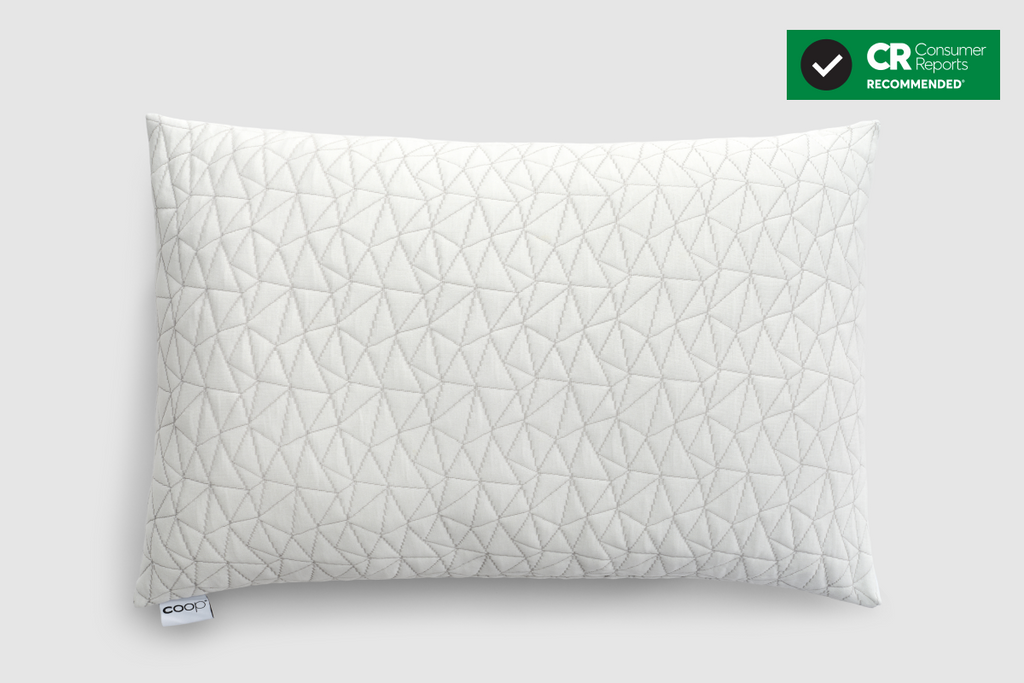
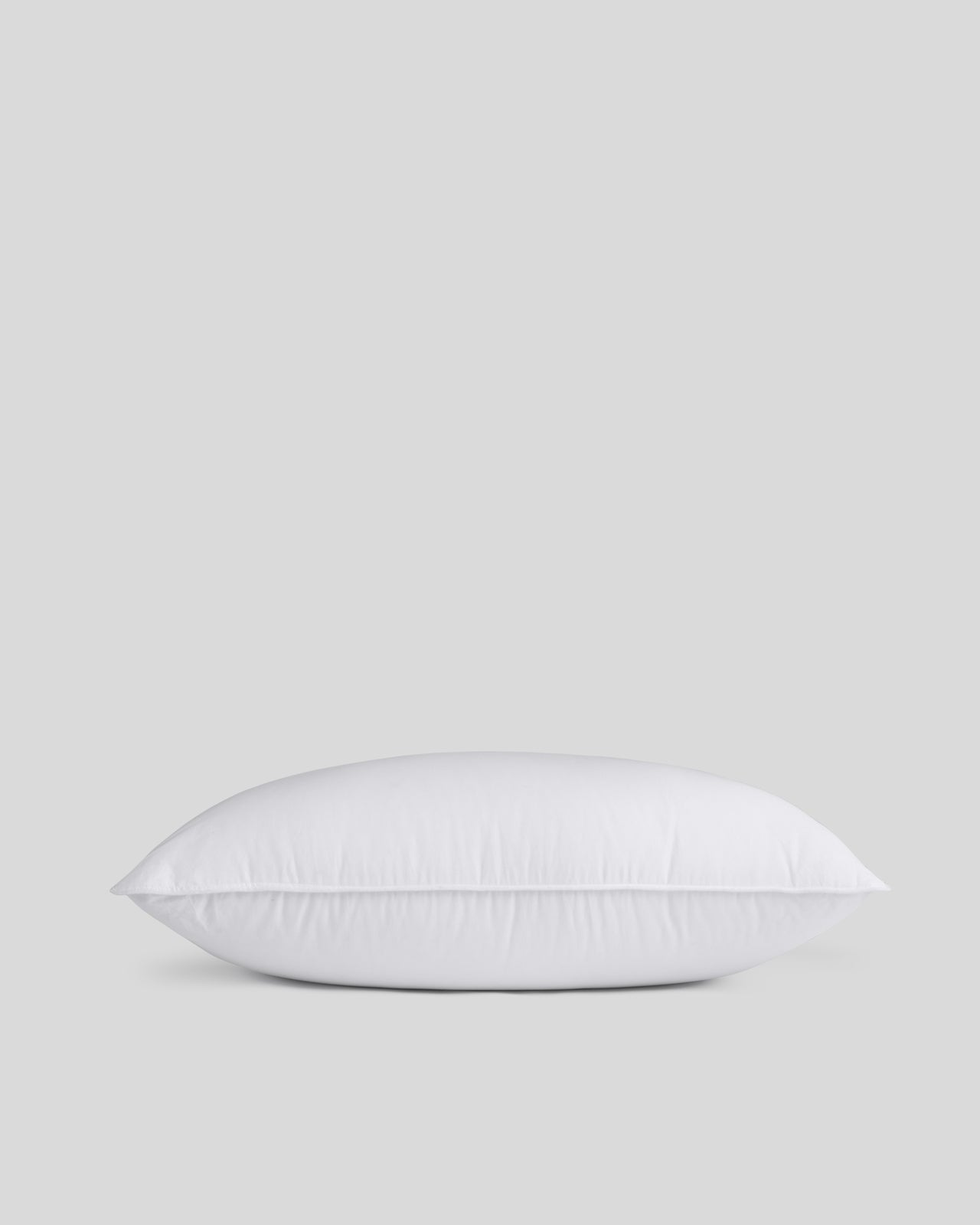
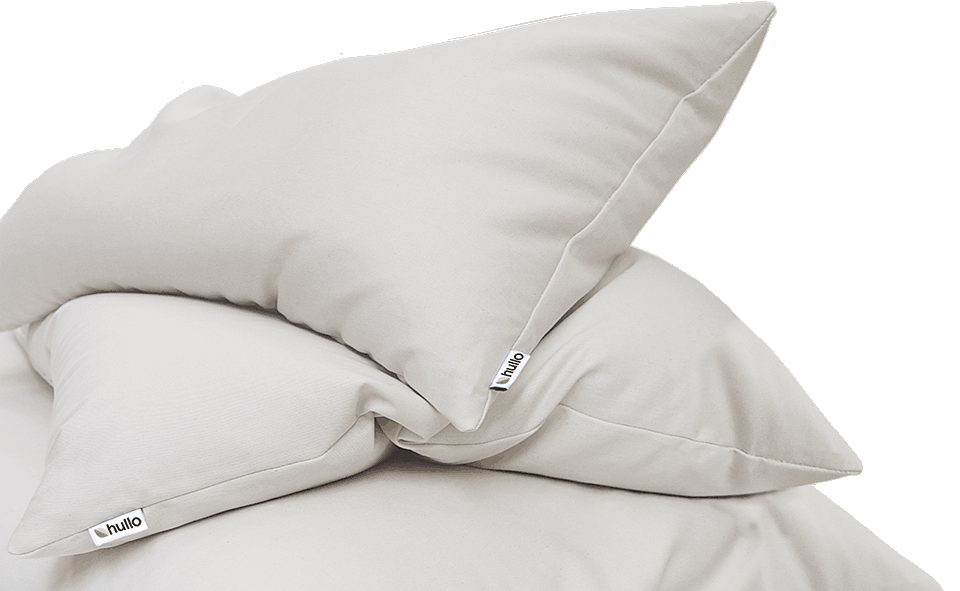
FAQ
How often should you fluff your pillow?
A quick hand-fluff every morning keeps fill distributed. Dryer-fluff monthly for down and polyester, or whenever the pillow starts feeling flat or lumpy.
Can you fluff a memory foam pillow?
Shredded memory foam, yes — knead it by hand or use a low-heat dryer cycle. Solid memory foam, no — it is one molded piece, and if it has a permanent dip it needs replacing, not fluffing.
Why does my pillow go flat so fast?
Cheap polyester fill compresses permanently within months, and sleeping on the same spot every night speeds it up. Moisture from sweat and humidity also clumps down and polyester. Daily fluffing and monthly dryer cycles slow it down, but budget fills have a short lifespan by nature.
Does putting a pillow in the dryer kill dust mites?
Heat helps — a hot dryer cycle reduces dust mite populations — but a wash-and-dry cycle is more effective. Regular fluffing on air-fluff keeps fill fresh between washes but is not a substitute for laundering.
How do you fluff a pillow without a dryer?
Hand-fluff with the accordion method, then leave the pillow in direct sunlight for a few hours. Sun and fresh air dry out moisture and help fill expand — an old-school method that genuinely works for down and polyester.
Keep reading
Find the Right Pillow for Your Sleep Style
Get a tailored shortlist based on sleep position, shoulder fit, desired loft and materials using our free Pillow Finder.
Start the Free Pillow Finder →Instant recommendations, no email or signup required. We may earn commissions on some buying links.
Affiliate disclosure: Mr. Squish may earn a commission when you buy through links on this page. Recommendations are based on independent product research; any hands-on test is labelled separately. Learn more.