
How to Measure Yourself for a Cervical Pillow
Cervical pillows are the one pillow category where sizing is not optional: the contour is fixed foam, so it either matches your body or it does not. Size charts based on height or T-shirt size are rough proxies at best. Two measurements you can take at home — your shoulder gap and your neck depth — get you much closer, and this guide walks through both.
In this guide
Measurement one: the shoulder gap
This is the number that sizes the side-sleeping contour. Lie on your side on your own mattress in your normal position, head unsupported. Have someone measure from the mattress surface straight up to the side of your head at ear level. That distance is the loft the pillow must deliver under load.
Alone? Stand sideways against a wall in your side-sleeping posture, shoulder touching the wall, and measure from the wall to the side of your head. Slightly less accurate — standing posture is not lying posture — but within the half-inch tolerance that matters.
Measurement two: neck depth
This sizes the back-sleeping contour — the roll that fills the curve behind your neck. Lie on your back on a firm surface with your head flat. Slide a hand behind your neck: the space between your neck curve and the surface is your neck depth. A rough measure with a ruler from surface to the deepest point of the curve is enough — most adults fall between two and three and a half inches.
The neck roll should fill that space without lifting your head. A roll much deeper than your curve pushes your head forward into flexion; a roll much shallower leaves the neck unsupported.
Adjust for your mattress
Both measurements were taken on a surface, and your mattress is softer than a floor. On a soft mattress your shoulder sinks, shrinking the shoulder gap by up to an inch — subtract accordingly. On a very firm mattress the gap is at its maximum.
This is why cervical pillow fit can only be confirmed on your own bed over several nights. Measurements get you to the right size range; the trial window confirms it.
Using the numbers
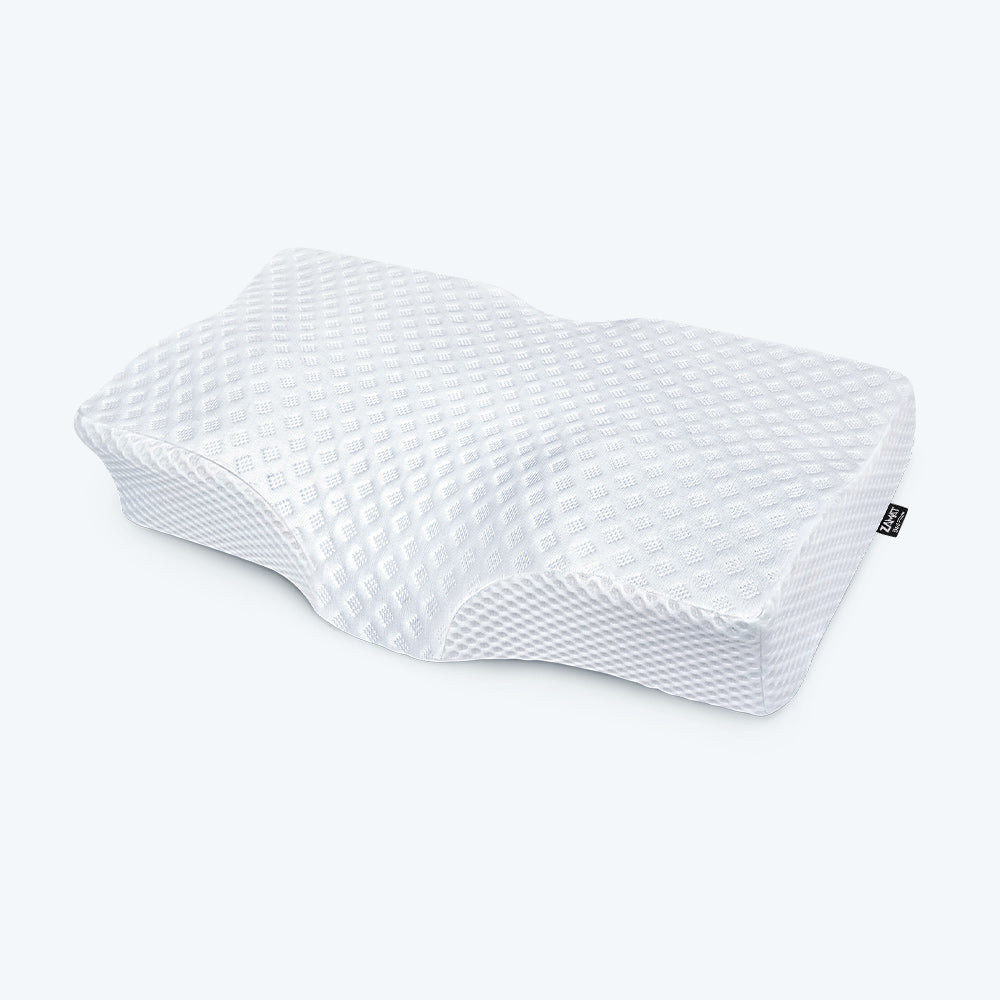
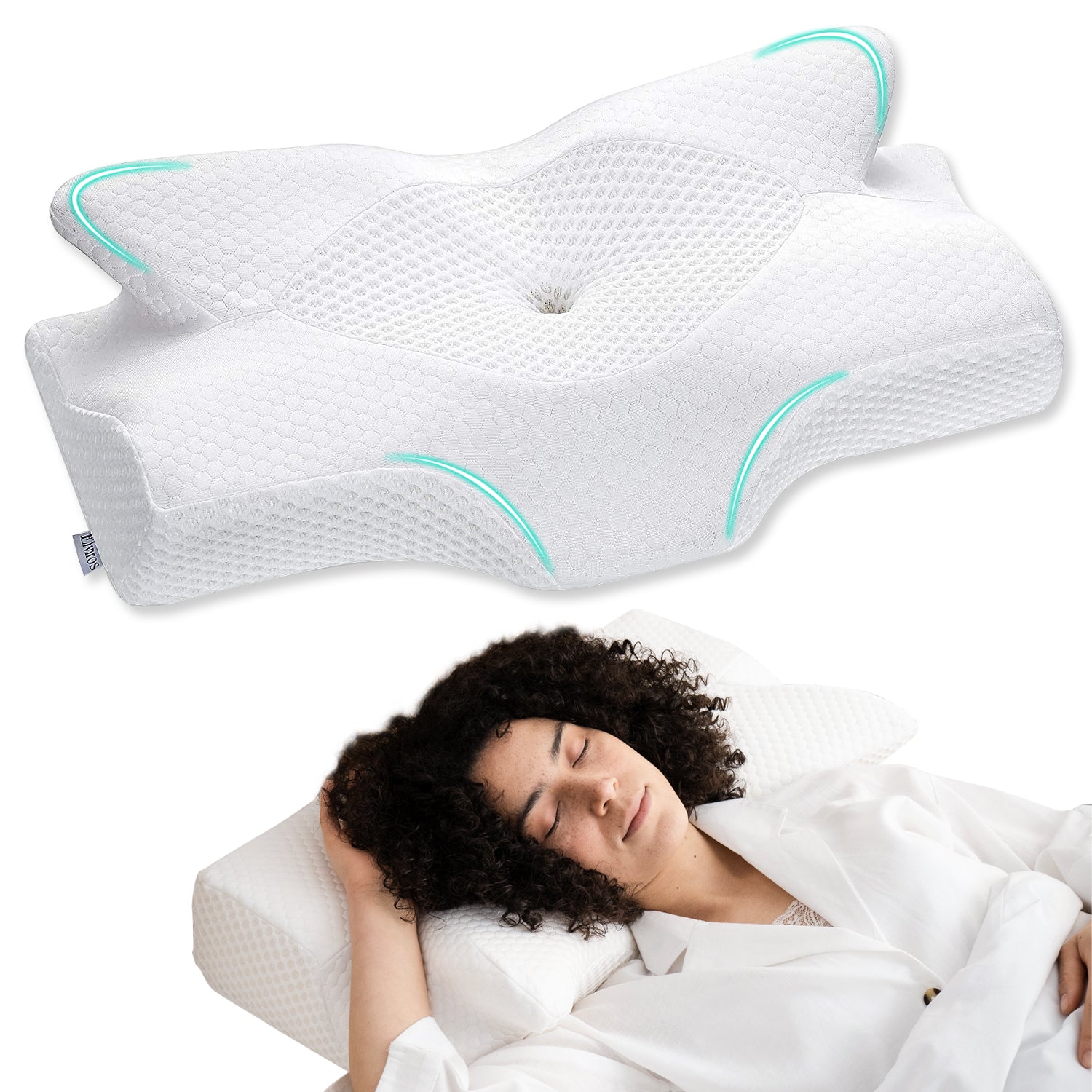
Compare your shoulder gap to the pillow's published high-contour height — within half an inch is a match, remembering that foam compresses slightly. Compare your neck depth to the low contour the same way. If only one matches and you sleep in both positions, the adjustable alternative — building support height yourself with removable fill — is the lower-risk buy.
If your numbers fall between a brand's two sizes, size down rather than up: a contour slightly too low under-supports, while one too high actively bends the neck the wrong way.
Pillows we recommend for this

FAQ
Keep reading
Get the Mr. Squish Pillow Cheat Sheet
A simple guide to choosing the right pillow based on your sleep position, body size, and comfort preferences.
No spam. Unsubscribe anytime.
Affiliate disclosure: Mr. Squish may earn a commission when you buy through links on this page. Recommendations are based on independent product research; any hands-on test is labelled separately. Learn more.