
Are Wool Pillows Good?
Wool is one of the oldest pillow fills and one of the least understood. It does something no foam can: it moves moisture away from your head and buffers temperature swings in both directions, so it feels warm in a cold room and cool in a warm one. It is also naturally resistant to dust mites, which matters for allergy sufferers. The catch is feel — wool is dense and firm, and it compresses steadily over the first months, so it behaves nothing like the pillow most people are used to.
What wool actually does well
Wool fibres are hygroscopic: they absorb moisture vapour and release it, which is why a wool pillow rarely feels clammy. That is a genuine advantage for people who sweat at night but find gel foam pillows disappointing, because gel only conducts heat away for a while, whereas moisture management works all night.
Wool is also naturally flame resistant and inhospitable to dust mites, so wool pillows are often marketed to allergy sufferers. That claim is more defensible than most in bedding, though a zippered protector still does more of the work.
The downsides
Wool packs down. A wool pillow that feels perfect in month one usually feels lower in month six, and there is no fill bag to top it up unless the model is specifically adjustable. Look for one with a zip and buy replacement batting if long-term loft matters to you.
Wool is also firm and dense rather than plush, and untreated wool can carry a faint lanolin smell for the first week. Neither is a fault; both surprise people expecting a down-like experience.
Wool vs the alternatives
Against memory foam, wool wins on breathability and loses on contouring — it will not cradle a head or fill a cervical curve. Against down, wool is firmer, cheaper, hypoallergenic and far less lofty. Against latex, wool is softer and more temperature-adaptive but much less durable.
If your main problem is overheating and you dislike foam, latex and buckwheat both beat wool on raw airflow. If your problem is night sweats and clamminess, wool's moisture handling is the more targeted answer.
Care
Most wool pillows are spot clean and air dry only — machine washing felts the fibres and ruins the loft. Air the pillow outdoors periodically instead, and always use a protector. Treated that way a good wool pillow lasts several years, though it will be flatter at the end than at the start.
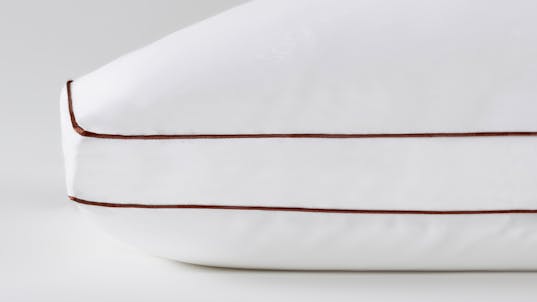
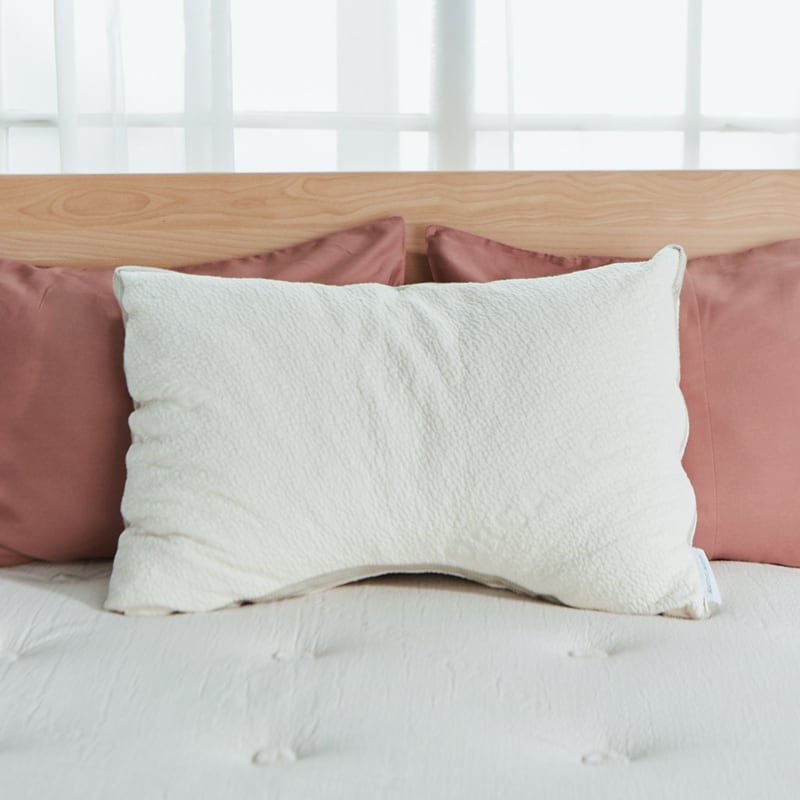
Pillows we recommend for this
FAQ
Are wool pillows good for hot sleepers?
For sweaty sleepers, yes — wool moves moisture well. For pure heat, latex or buckwheat move more air.
Are wool pillows hypoallergenic?
Wool naturally resists dust mites and mould, which helps. It is not a substitute for a zippered allergen protector.
Do wool pillows go flat?
They compress over months. Choose an adjustable model with a zip if you want to top the fill up.
Can you wash a wool pillow?
Usually not in a machine — washing felts the wool. Spot clean and air it instead.
Do wool pillows smell?
Some have a faint lanolin scent when new that fades within a week or two of airing.
Keep reading
Find the Right Pillow for Your Sleep Style
Get a tailored shortlist based on sleep position, shoulder fit, desired loft and materials using our free Pillow Finder.
Start the Free Pillow Finder →Instant recommendations, no email or signup required. We may earn commissions on some buying links.
Affiliate disclosure: Mr. Squish may earn a commission when you buy through links on this page. Recommendations are based on independent product research; any hands-on test is labelled separately. Learn more.