
Bed Sheet Materials Compared
Sheets get sold on thread count, but the fibre and the weave decide almost everything you will notice: whether you sleep hot, whether the fabric feels crisp or slippery, and whether it still looks good after two years of washing. This is a straight comparison of the materials worth considering, what each one is genuinely good at, and the trade-off that comes with it.
In this guide
Cotton percale — crisp and cool
A one-over-one-under weave that feels like a good hotel sheet: matte, crisp, and breathable. It is the default recommendation for hot sleepers who want cotton. It wrinkles, and it feels slightly stiff for the first few washes before it softens.
Cotton sateen — smooth and warmer
The same fibre in a weave with floating threads, which gives a subtle sheen and a smoother hand. It drapes better and wrinkles less than percale, and it sleeps warmer because the tighter surface restricts airflow. Good for cold sleepers and anyone who wants a silkier feel without buying silk.
Linen — coolest, roughest at first
Flax fibre with a loose, textured weave and the best moisture handling of any common sheet material. It is the strongest performer for very hot and humid sleeping, it gets softer every year, and it is the most expensive per set. It looks rumpled by design, which some people love and some cannot live with.
Bamboo viscose and lyocell — soft and cool-to-the-touch
Regenerated cellulose fibres that feel slippery-smooth and cool on first contact, with good moisture wicking. Lyocell-processed bamboo uses a closed-loop solvent system and is the more environmentally defensible version. The trade-off is durability: viscose fibres are weaker when wet, so bamboo sheets need gentle washing and tend not to last as long as good cotton.
Silk — smooth, gentle on hair and skin, high maintenance
Mulberry silk in the 19 to 22 momme range is smooth enough to reduce friction on hair and skin, which is the main reason people buy it. It is temperature regulating rather than actively cooling. It needs cold, gentle washing with a pH-neutral detergent and no tumble drying, and full sheet sets are expensive enough that many people buy only pillowcases.
Microfibre and polyester — cheap and warm
Finely woven synthetic that is inexpensive, wrinkle resistant, and durable in the sense that it does not tear. It does not breathe well, so it traps heat and holds odour more than natural fibres. It is a reasonable choice for a guest room or a child's bed and a poor one for a hot sleeper.
Quick matching guide
If you only remember one line per sleeper type, use these.
- Sleeps hot: linen first, cotton percale second.
- Sleeps cold: cotton sateen or flannel.
- Sensitive skin or hair breakage: silk, or a lyocell bamboo.
- Allergies: tightly woven cotton percale, washed weekly at 60°C where the label allows.
- Tight budget: cotton percale from a long-staple cotton beats microfibre at the same price for comfort.
Pillows we recommend for this

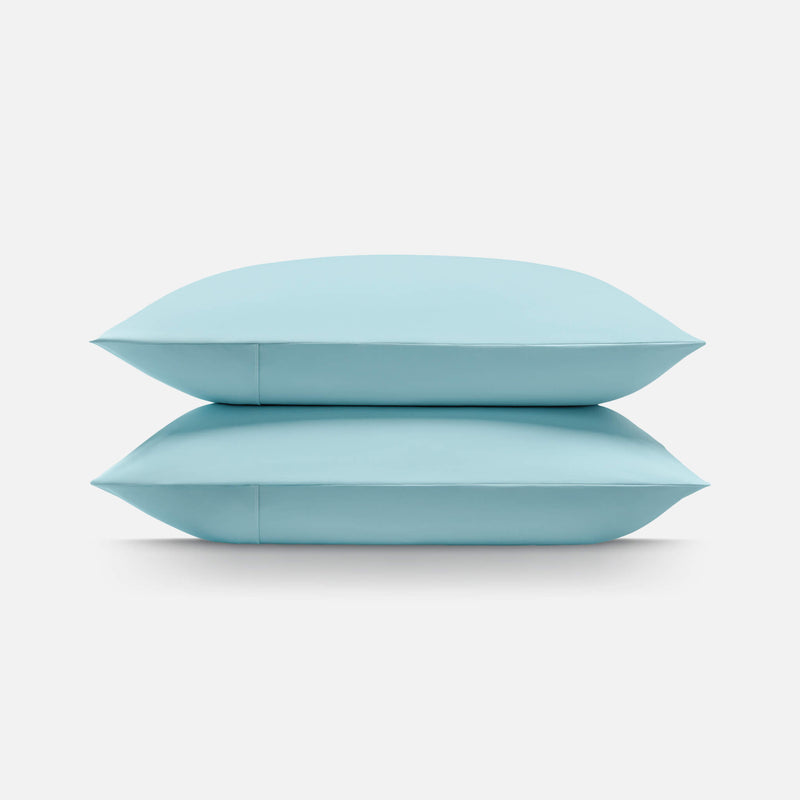
Rest Evercool+ Cooling Pillowcases
Hot sleepers and night sweaters who want instant cool-to-the-touch fabric
FAQ
What is the coolest sheet material?
Linen, followed by cotton percale. Both use loose, breathable weaves that move air and moisture away from the skin.
Are bamboo sheets better than cotton?
They feel smoother and cooler to the touch, but good long-staple cotton generally lasts longer. Bamboo viscose is weaker when wet, so it needs gentler washing.
Is percale or sateen better?
Percale if you sleep hot and like a crisp hotel feel, sateen if you sleep cold and prefer a smooth, draping fabric.
Do silk sheets actually help hair and skin?
Silk creates less friction than cotton, which is why people use it to reduce hair breakage and creasing. Most of that benefit comes from the pillowcase, so a pillowcase alone is a sensible way to test it.
Is microfibre bad for hot sleepers?
Generally yes. It is tightly woven synthetic that traps heat and moisture, so it tends to feel clammy compared with cotton or linen.
Keep reading
Find the Right Pillow for Your Sleep Style
Get a tailored shortlist based on sleep position, shoulder fit, desired loft and materials using our free Pillow Finder.
Start the Free Pillow Finder →Instant recommendations, no email or signup required. We may earn commissions on some buying links.
Affiliate disclosure: Mr. Squish may earn a commission when you buy through links on this page. Recommendations are based on independent product research; any hands-on test is labelled separately. Learn more.