
Pillowcase Materials Compared
The pillowcase is the only part of your bed that touches your face for eight hours, and it changes how a pillow sleeps far more than most people expect. A breathable case can rescue a foam pillow that runs warm; a cheap microfiber case can make a good pillow feel clammy. Here is what each material actually does.
In this guide
- Cotton percale — the cool, crisp default
- Cotton sateen — smooth and warmer
- Bamboo viscose — the cooling compromise
- Mulberry silk — for skin and hair
- Linen — textured, breathable, and slow to love
- Microfiber and polyester — cheap and warm
- Choosing by problem, not by material
- Wash the case more often than you think
Cotton percale — the cool, crisp default
Percale is a plain one-over-one-under weave in cotton. It feels crisp like a good hotel sheet, breathes very well, and gets softer with every wash without going slippery. If you sleep hot and do not want to think about it, percale is the answer.
The trade-off is wrinkles — percale looks rumpled and always will — and it can feel cool to the point of chilly in winter. Look for long-staple cotton and a thread count in the 200 to 400 range; percale above about 400 starts losing the airflow that makes it worth buying.
Cotton sateen — smooth and warmer
Sateen uses a three-or-four-over-one-under weave, which puts more thread surface on the face of the fabric. The result is a smooth, slightly lustrous feel that drapes better and resists wrinkles. It also traps more heat than percale and is marginally less durable because those long floating threads can snag.
Choose sateen if you like a silky feel but do not want to pay for silk, and you do not overheat at night.
Bamboo viscose — the cooling compromise
Bamboo-derived viscose or lyocell is softer than cotton, drapes like sateen, and moves moisture noticeably better, which is why it dominates the cooling pillowcase market. For sweaty sleepers it is often the single best-value upgrade in the bed.
Two caveats. It is a chemically processed fibre despite the natural marketing, so look for lyocell processing or OEKO-TEX certification if that matters to you. And it is less durable than cotton — bamboo cases pill and thin out faster, especially in a hot dryer.
Mulberry silk — for skin and hair
Silk's selling point is friction, not temperature. The smooth filament surface causes less tug on hair and less creasing of facial skin than cotton, which is why it is popular with anyone managing frizz, breakage, or sleep lines. It is also naturally low-absorbency, so it draws less moisture out of skin and out of whatever you put on it before bed.
Buy by momme weight rather than thread count: 19 to 22 momme is the practical range, 6A grade long-fibre mulberry silk is the quality marker, and anything advertised as satin is polyester woven to look similar — smooth, cheap, and far less breathable.
- 22 momme is more durable than 19 and worth the difference if you wash often.
- Hand wash or use a mesh bag on a cold delicate cycle with a pH-neutral detergent.
- Silk sleeps neutral, not cold; if your problem is night sweats, bamboo or percale beats it.
Linen — textured, breathable, and slow to love
Linen is the most breathable material on this list and the most durable — it lasts decades and gets softer for years. It starts out coarse, though, and it wrinkles enthusiastically. For a pillowcase specifically, some people find the texture too rough against the face even after it has broken in. Great for hot sleepers who like the rumpled look; wrong for anyone with sensitive skin.
Microfiber and polyester — cheap and warm
Microfiber is finely woven polyester. It is inexpensive, soft out of the packet, wrinkle-resistant, and does not breathe. It holds heat and traps moisture against your face, which is why hotels use cotton and budget bedding sets use microfiber. It is a reasonable choice for a guest room or a child who destroys bedding, and a poor one if you sleep warm.
Choosing by problem, not by material
If you know your specific complaint, the choice narrows quickly.
- Night sweats and overheating — bamboo viscose first, cotton percale second.
- Frizzy or breaking hair, sleep lines — mulberry silk, 19 to 22 momme.
- Acne-prone skin — anything you can wash hot twice a week; percale is the practical winner because silk cannot take that treatment.
- Allergies and dust mites — tightly woven cotton with a zippered protector underneath.
- Durability on a budget — cotton percale, 200 to 400 thread count, long-staple.
Wash the case more often than you think
Whatever material you land on, a pillowcase collects oil, sweat, product, and skin cells faster than any other bedding. Once a week is the baseline, twice a week if you have acne-prone skin, use heavy hair products, or sleep hot. That washing frequency should factor into the material you buy: a silk case you are afraid to launder is a worse choice than a cotton one you actually keep clean.
Pillows we recommend for this

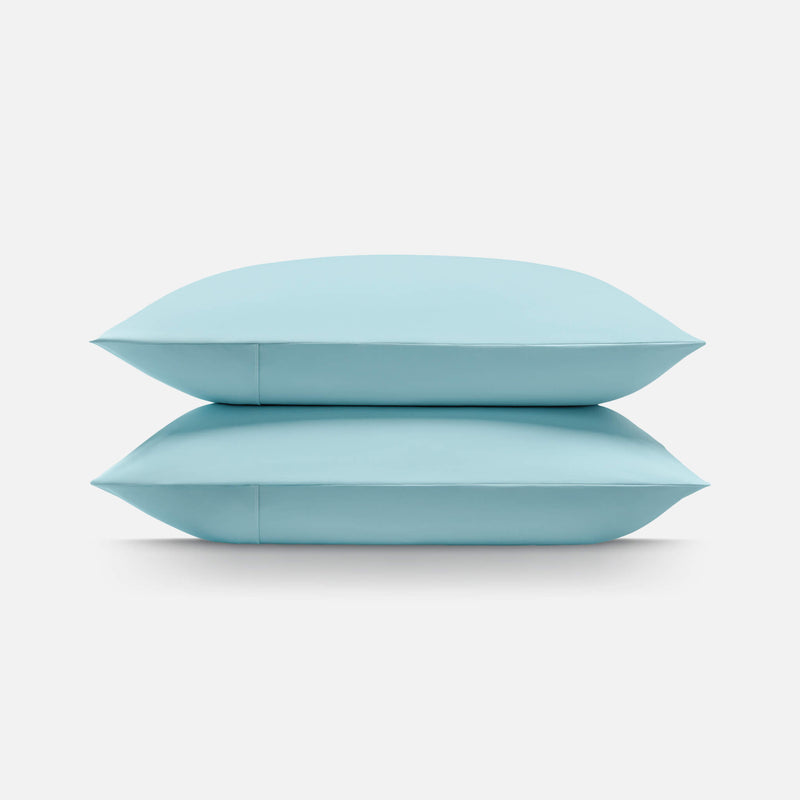
Rest Evercool+ Cooling Pillowcases
Hot sleepers and night sweaters who want instant cool-to-the-touch fabric
FAQ
What is the coolest pillowcase material?
Bamboo viscose and cotton percale, with linen close behind. All three move heat and moisture away far better than sateen, silk, or microfiber.
Is silk or bamboo better for hair?
Silk. Its smooth filament surface creates less friction against hair than any woven fibre, and bamboo's benefit is moisture and heat rather than friction.
Is satin the same as silk?
No. Satin is a weave, and most satin pillowcases are polyester. They feel smooth and cost far less, but they trap heat and do not last as long as real mulberry silk.
What pillowcase is best for acne-prone skin?
Whichever one you will wash twice a week. Cotton percale tolerates hot washes best, which matters more than any claimed antibacterial property.
How often should you change your pillowcase?
Weekly at minimum, twice a week if you sleep hot, use hair products, or have oily or acne-prone skin.
Keep reading
Find the Right Pillow for Your Sleep Style
Get a tailored shortlist based on sleep position, shoulder fit, desired loft and materials using our free Pillow Finder.
Start the Free Pillow Finder →Instant recommendations, no email or signup required. We may earn commissions on some buying links.
Affiliate disclosure: Mr. Squish may earn a commission when you buy through links on this page. Recommendations are based on independent product research; any hands-on test is labelled separately. Learn more.