
Latex vs. Memory Foam Pillows: Which Is Right for You?
Latex and memory foam are the two premium pillow fills, and they are almost opposites. Memory foam softens under your body heat and molds slowly around your head. Latex pushes back instantly and keeps your head floating on top. Neither is universally better — but one of them is almost certainly better for you. This guide breaks down the differences that matter: feel, cooling, allergies, durability, and price.
In this guide
Feel: sink vs bounce
Memory foam is viscoelastic: it softens with heat and pressure, then holds the impression of your head. Sleepers who love it describe a cradling, pressure-melting hug. Sleepers who hate it describe feeling stuck.
Latex is elastic: it compresses under load and springs back the instant you move. Your head rests on the pillow rather than in it. Combination sleepers and people who change positions at night almost always prefer latex, because the pillow never lags behind them.
Cooling
This is latex's clearest win. Talalay and Dunlop latex have an open cell structure that moves air continuously, and solid latex pillows are typically ventilated with pinholes. Traditional memory foam is the hottest mainstream fill — it traps body heat in the impression it holds — though gel infusions and shredded constructions narrow the gap.
If you sleep hot and want foam-like contouring, choose shredded memory foam or a ventilated design. If cooling is the top priority, latex, buckwheat, or a grid-wrapped latex hybrid like the Purple Harmony are the strongest options.
Allergies and sensitivities
Natural latex is inherently resistant to dust mites and mold, making it a strong hypoallergenic choice — with one caveat: anyone with a true latex allergy must avoid it entirely. Memory foam is also dust-mite resistant and carries no latex-allergy risk, though some sleepers notice off-gassing odor in the first days after unboxing.
Durability and price
A quality latex pillow commonly lasts three to five years or more without losing loft; memory foam typically needs replacing at two to three years as the cells break down and the pillow develops permanent hollows. Latex costs more up front — $129 to $229 in our reviews versus $60 to $129 for memory foam — but the per-year cost is often lower.
Which should you choose?
Choose latex if you sleep hot, change positions at night, want the longest-lasting fill, or dislike the sinking feel of foam. Choose memory foam if you want deep contouring pressure relief (especially for neck pain with a cervical contour shape), prefer a moldable feel, or are shopping on a tighter budget.
- Hot sleeper: latex (or buckwheat)
- Neck pain with fixed contour: memory foam cervical pillow
- Combination sleeper: latex or adjustable shredded foam
- Tight budget: shredded memory foam
- Longest lifespan: natural latex
A worked example: many "latex" and "memory foam" pillows are blends
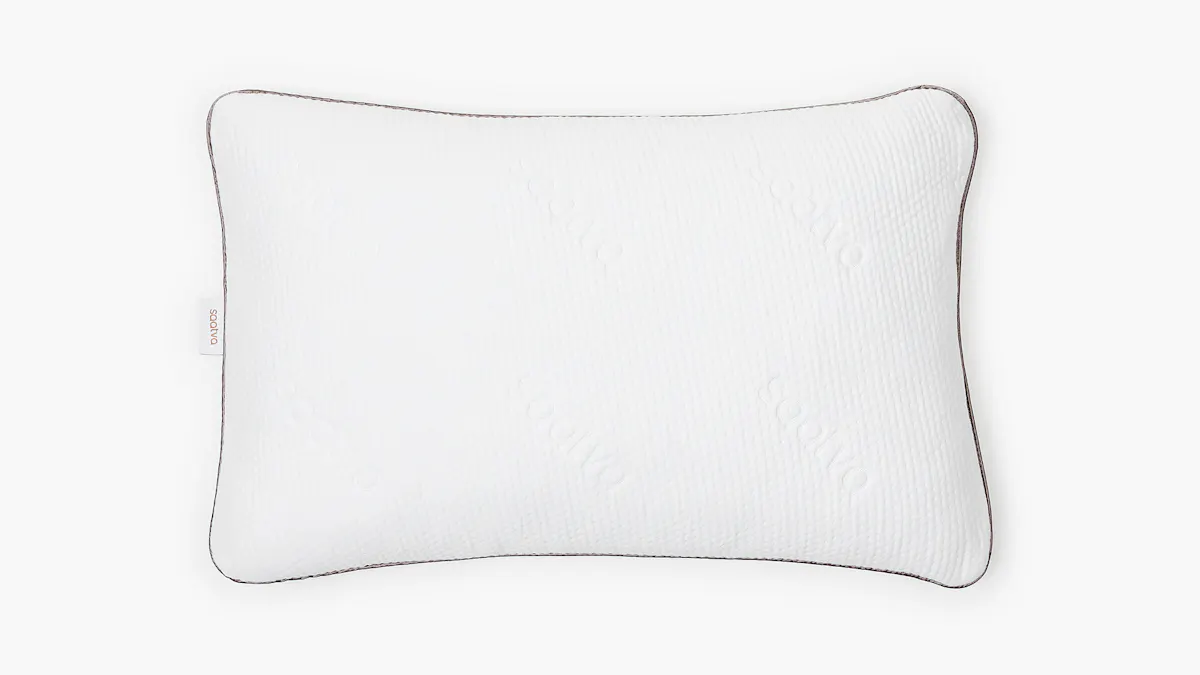
Category labels hide a lot. Saatva's Graphite Memory Foam Pillow, for example, is not a latex-free block of foam: Saatva lists natural latex in its shredded inner blend. Its Latex Pillow is not a bare latex slab either — it surrounds a shredded latex core with a microdenier fiber outer layer. Both are sold in roughly 4–5-inch Standard and 6–7-inch High lofts rather than as loose-fill adjustable systems.
Care differs too: the Graphite model's cover is washable and its inner pillow is spot-cleaned, while the Latex model's cover and fiber outer pillow can be washed but its latex core must stay out of the washer. This is drawn from manufacturer documentation; Mr. Squish has not measured comfort, overnight temperature, or durability side by side, and two blended products cannot settle a category-wide winner.
Pillows we recommend for this
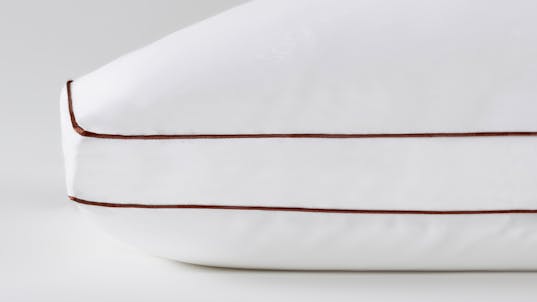

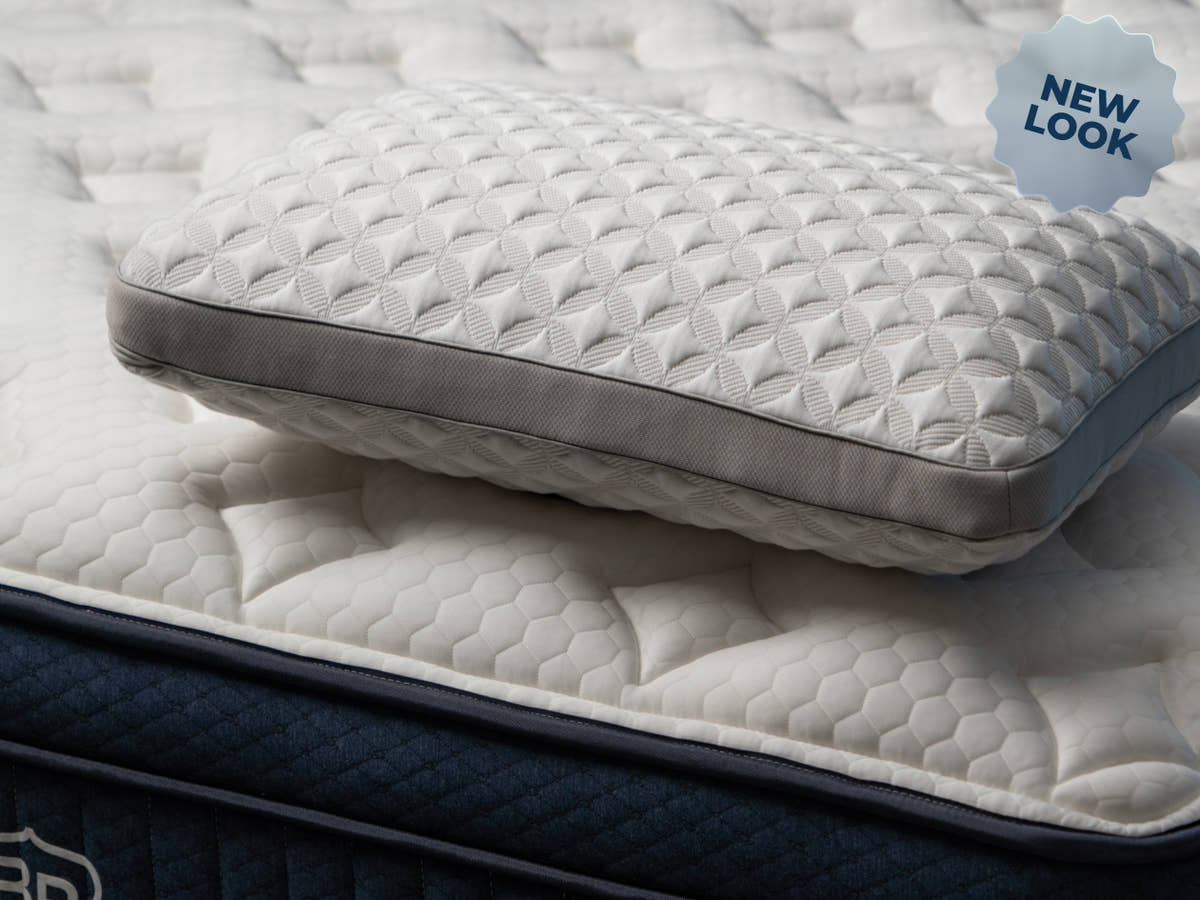
Brooklyn Bedding Talalay Latex Pillow
Sleepers who want natural latex bounce without a luxury price

FAQ
Is a latex pillow better than memory foam?
For cooling, durability, and ease of movement, yes — latex wins clearly. For deep contouring pressure relief and moldability, memory foam wins. Hot sleepers and combination sleepers should default to latex; dedicated side sleepers wanting a cradling hug often prefer foam.
Do latex pillows sleep cooler than memory foam?
Yes. Latex has an open cell structure and is usually ventilated, so heat dissipates instead of pooling. Traditional solid memory foam is the hottest pillow fill; shredded and gel-infused versions improve on it but still run warmer than latex.
How long does a latex pillow last compared to memory foam?
Natural latex typically lasts three to five years or longer with minimal loft loss. Memory foam lasts about two to three years before developing permanent compression hollows. Latex costs more up front but often less per year of use.
Can I use a latex pillow if I have a latex allergy?
No — anyone with a diagnosed latex allergy should avoid natural latex pillows entirely, even with a cover and pillowcase. Choose memory foam, down alternative, or buckwheat instead.
Is a "memory foam" pillow always latex-free?
No. Some memory-foam pillows, such as Saatva's Graphite Memory Foam Pillow, list natural latex in the inner blend. If you are avoiding latex, check the full fill composition rather than the product name.
Keep reading
Find the Right Pillow for Your Sleep Style
Get a tailored shortlist based on sleep position, shoulder fit, desired loft and materials using our free Pillow Finder.
Start the Free Pillow Finder →Instant recommendations, no email or signup required. We may earn commissions on some buying links.
Affiliate disclosure: Mr. Squish may earn a commission when you buy through links on this page. Recommendations are based on independent product research; any hands-on test is labelled separately. Learn more.