
Feather vs Down Pillows
The words get used interchangeably on packaging, but feather and down are two physically different materials from the same bird. Feathers are flat, quill-bearing, and springy. Down is the fluffy under-layer with no quill, made of clusters that trap air in three dimensions. Nearly every difference you will notice in a pillow — how tall it stays, how much it costs, whether it pokes you at 3am — comes from that structure. Most pillows on the market are blends, and the ratio printed on the label tells you more than the price does.
In this guide
The short answer
If you want a soft, quiet, long-lasting pillow and you have the budget, choose down or a down-dominant blend. If you want a firmer, springier pillow for less money and you do not mind fluffing it every morning, choose a feather or feather-dominant blend.
A 75/25 feather-to-down blend is the common middle ground: enough down to soften the surface, enough feather to give it structure and keep the price sane.
How they behave night to night
Feather fill compresses quickly and stays compressed until you fluff it. That is not a defect; it is what quills do under sustained weight. Down clusters re-loft on their own far better, which is why a down pillow still looks full in the morning.
- Loft retention overnight: down clearly better, feather needs daily fluffing.
- Firmness feel: feather firmer and springier, down softer and more enveloping.
- Noise: feather rustles audibly, down is close to silent.
- Poking: only feather quills poke, and only through a loosely woven shell.
- Price: feather blends are typically a third to half the price of comparable down.
- Lifespan: good down lasts longer, often five years or more with regular fluffing.
Reading the label properly
Two numbers matter. Fill composition is the feather-to-down ratio, and fill power measures how much space an ounce of down occupies — higher fill power means loftier and lighter for the same warmth and support. Fill power only applies to down; a pillow advertising fill power on pure feather fill is misusing the term.
Shell thread count is the third thing to check and the one most people skip. A tightly woven cotton shell, roughly 300 thread count or above with a downproof weave, is what stops quills migrating through the fabric.
Which sleep positions suit each
Both materials collapse under a heavy load, which matters for position choice.
- Stomach sleepers: either works well, since low loft is the goal.
- Back sleepers: a firmer feather blend usually holds the small gap better.
- Side sleepers: both tend to bottom out; if you side sleep, a firm cervical or adjustable shredded-fill pillow is the safer choice.
Ethics and allergies
If sourcing matters to you, look for Responsible Down Standard or Downpass certification, which cover live-plucking and force-feeding practices.
Genuine feather or down allergy is uncommon — most reactions people attribute to down are actually to dust mites living in an old, unprotected pillow. A tightly woven shell plus a zippered protector solves the majority of cases. If reactions persist, a down-alternative or latex pillow removes the question entirely.
Pillows we recommend for this
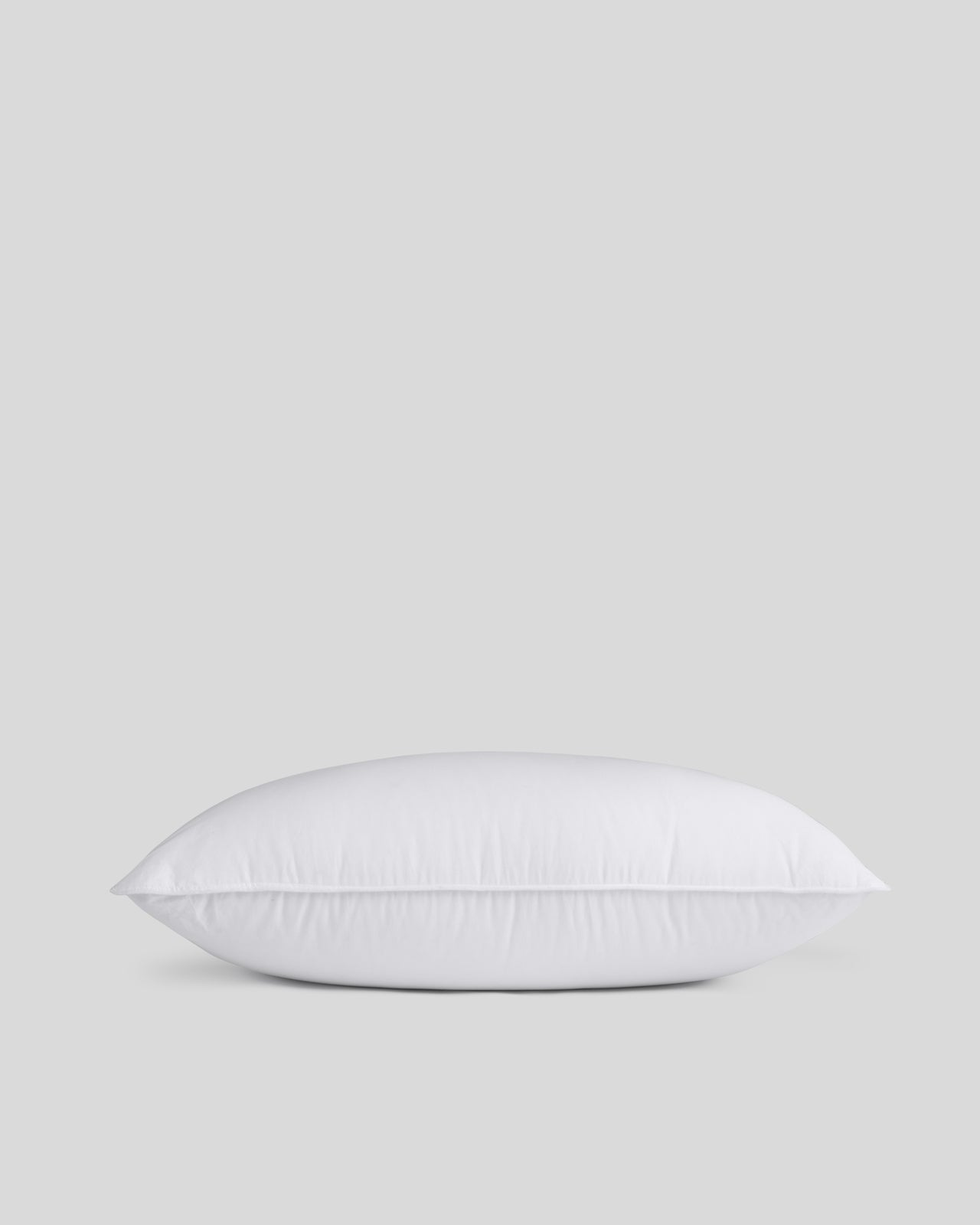
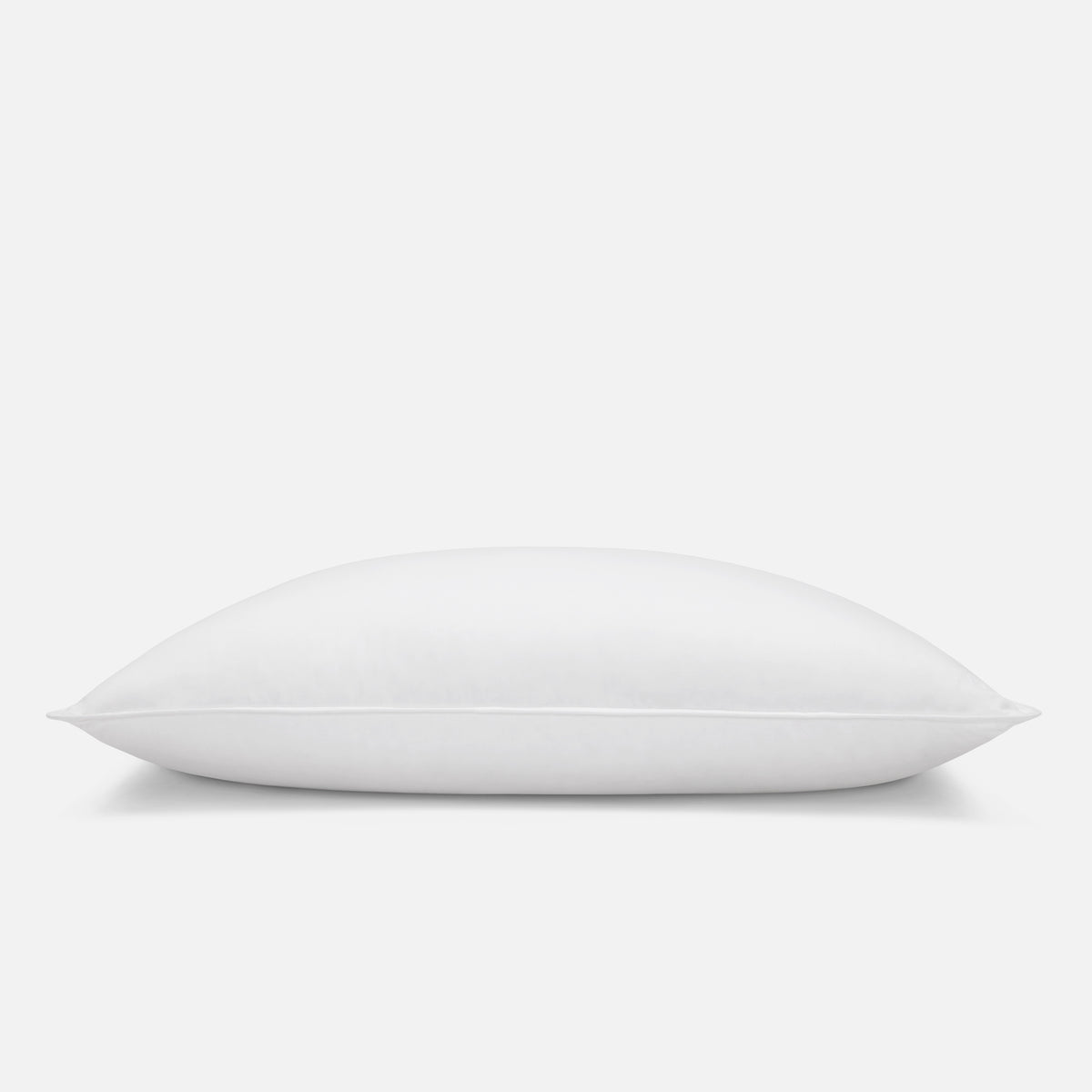
Brooklinen Down Pillow
Down shoppers comparing current Soft, Medium and Firm support choices
FAQ
Is down warmer than feather?
Yes. Down clusters trap more air, so a down pillow insulates more. If you sleep hot, a feather blend or a non-fill material will run cooler.
Why does my feather pillow poke me?
Quill tips are working through the shell weave. It usually means the shell thread count is too low; a firm pillow protector will contain it, but the pillow itself will keep doing it.
Can I wash feather and down pillows?
Usually yes, on a gentle warm cycle with a small amount of detergent, then dried fully on low with dryer balls. Drying is the critical part — damp clusters clump and can mildew.
What does 'down alternative' actually mean?
Polyester microfibre engineered to mimic down loft. It is cheaper, machine washable, and free of sourcing questions, but it flattens sooner and does not re-loft as well.
How long should a down pillow last?
Five years or more is realistic for high fill-power down that is fluffed daily and protected. Feather blends more commonly need replacing at two to three years.
Keep reading
Find the Right Pillow for Your Sleep Style
Get a tailored shortlist based on sleep position, shoulder fit, desired loft and materials using our free Pillow Finder.
Start the Free Pillow Finder →Instant recommendations, no email or signup required. We may earn commissions on some buying links.
Affiliate disclosure: Mr. Squish may earn a commission when you buy through links on this page. Recommendations are based on independent product research; any hands-on test is labelled separately. Learn more.