
How to Make a Pillow Firmer or Softer
A pillow that is nearly right is worth adjusting; a pillow that is badly wrong is worth replacing. The difference is whether the fill still recovers. Press your fist into the center and let go: if it springs back within a second or two, you have something to work with. If it stays dented, no amount of fluffing will fix it.
In this guide
Making a pillow firmer
Firmness and loft are different things, but on most pillows you change them together.
- Adjustable shredded-fill pillows: add fill. Most brands sell refill bags, and adding a handful at a time is the cleanest fix there is.
- Down and down-alternative: run a low-heat dryer cycle with dryer balls to re-loft matted clusters, then fluff by hand every morning.
- Any pillow: use a smaller pillowcase. A queen pillow in a standard case compresses the fill and firms it noticeably.
- Buckwheat: add hulls, and shake them toward the center rather than the corners.
- Solid foam: cannot be made firmer. A firmer pillow is the only fix.
- Layering: putting a thin flat pillow underneath adds height and support without the sliding problem of stacking two full pillows — but check your neck angle afterward.
Making a pillow softer
Softening is easier, and mostly means removing material or breaking it in.
- Adjustable shredded-fill: remove fill in small handfuls. Take out less than you think, sleep on it two nights, then decide.
- Buckwheat: remove hulls. A quarter of the fill makes a dramatic difference.
- New solid foam: it genuinely breaks in over two to four weeks of nightly use. Give it that time before judging.
- Add a soft topper layer: a quilted pillow protector or a folded flannel case softens the surface feel without changing support.
- Latex and solid foam: cannot be softened structurally. Removing the pillow protector and using a thinner cover is the only real lever.
Adjust in small steps, and give it time
The mistake almost everyone makes is adjusting too much at once and then adjusting back. Your neck adapts over a few nights, so a change that feels wrong on night one is often right by night three.
Work in single handfuls of fill, sleep on the change for two or three nights, and note how your neck feels in the first ten minutes after waking — that window tells you more than how the pillow feels when you lie down.
When adjusting will not save it
Some pillows are done, and adjusting them just delays the replacement.
- It stays folded when you fold it in half — the fill has lost all resilience.
- There are permanent lumps that do not break up after a dryer cycle or hand-kneading.
- It smells even after a full wash and complete dry.
- You are refluffing it during the night rather than in the morning.
- It is past roughly 1 to 2 years for polyester, 2 to 3 for foam, 3 or more for latex, down, and buckwheat.
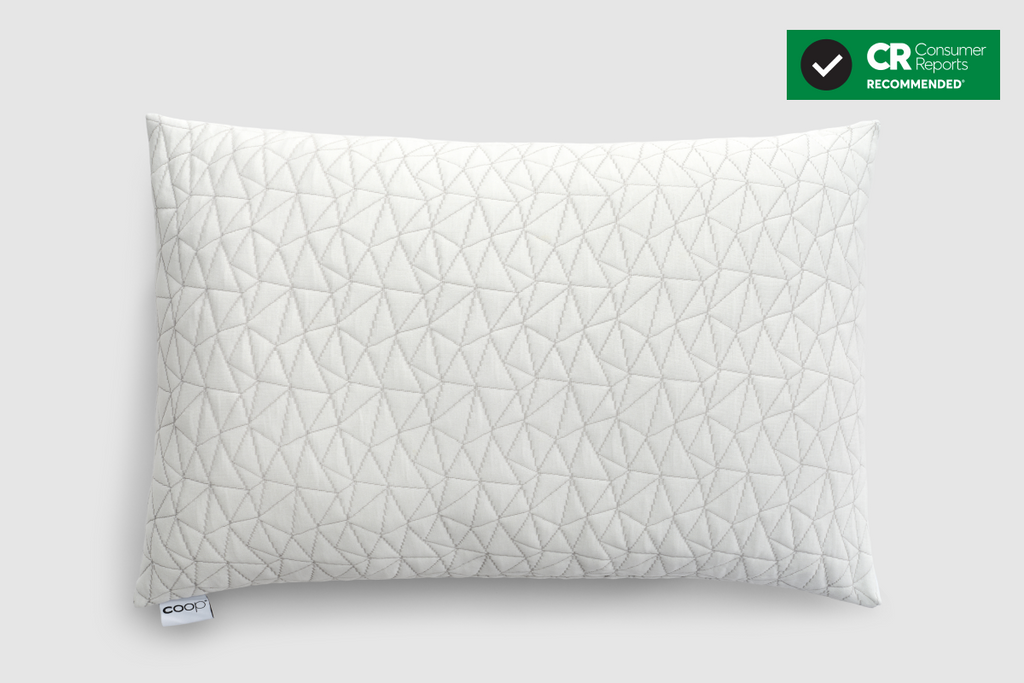
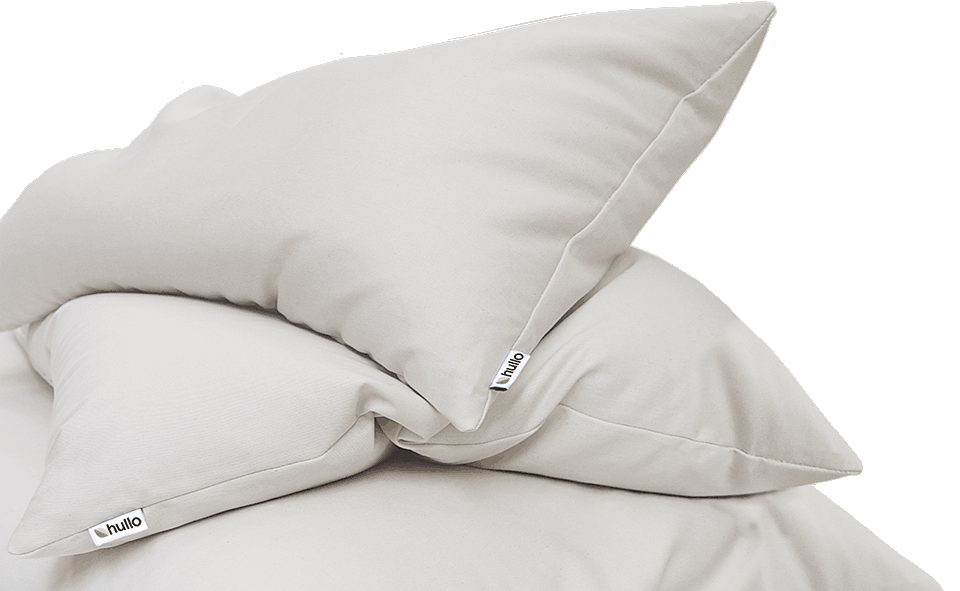
Pillows we recommend for this
Interactive check
Is the pillow actually worn out?
Use age, rebound, flattening, clumping and care history to decide whether to keep it, revive it, or start replacing it.
Open the Pillow Replacement Calculator →FAQ
How do I make my pillow firmer without buying a new one?
Add fill if it is adjustable, tumble it on low heat with dryer balls if it is down or down-alternative, or move it into a smaller pillowcase to compress the fill. Solid foam and latex cannot be firmed up.
Do memory foam pillows soften over time?
Yes, both temporarily and permanently. Foam softens with body heat within minutes of lying down, and breaks in over two to four weeks of nightly use. Beyond that, continued softening means the foam is wearing out.
How much fill should I remove from an adjustable pillow?
One handful at a time, then sleep on it for two or three nights before removing more. Keep what you take out — most people over-remove and want some back.
Keep reading
Find the Right Pillow for Your Sleep Style
Get a tailored shortlist based on sleep position, shoulder fit, desired loft and materials using our free Pillow Finder.
Start the Free Pillow Finder →Instant recommendations, no email or signup required. We may earn commissions on some buying links.
Affiliate disclosure: Mr. Squish may earn a commission when you buy through links on this page. Recommendations are based on independent product research; any hands-on test is labelled separately. Learn more.