
How to Use a Travel Pillow the Right Way
Watch any cabin during boarding and you'll see the same mistake repeated down every row: travel pillows clipped on with the opening facing forward, gap at the back of the neck, thick part under the chin. That orientation supports almost nothing, and it's why so many people decide travel pillows 'don't work.' Positioned correctly, a good travel pillow genuinely holds your head up for hours. This guide covers how to wear each style, how to stop the forward head-drop, and how to pack and clean your pillow so it lasts.
In this guide
The short answer
Wear a U-shaped pillow with the gap at the FRONT, under your chin — the thick part goes at the back and sides of your neck, which is where your head actually falls when you sleep upright. Then cinch the front clasp so the pillow hugs your neck instead of gaping. That single change fixes most 'travel pillows don't work' complaints.
How to position each style
Different designs hold your head differently, and each has one correct orientation.
- U-shaped memory foam: gap facing forward under your chin, clasp cinched snug, head leaning back or to one side — never backward-facing with the gap behind your neck.
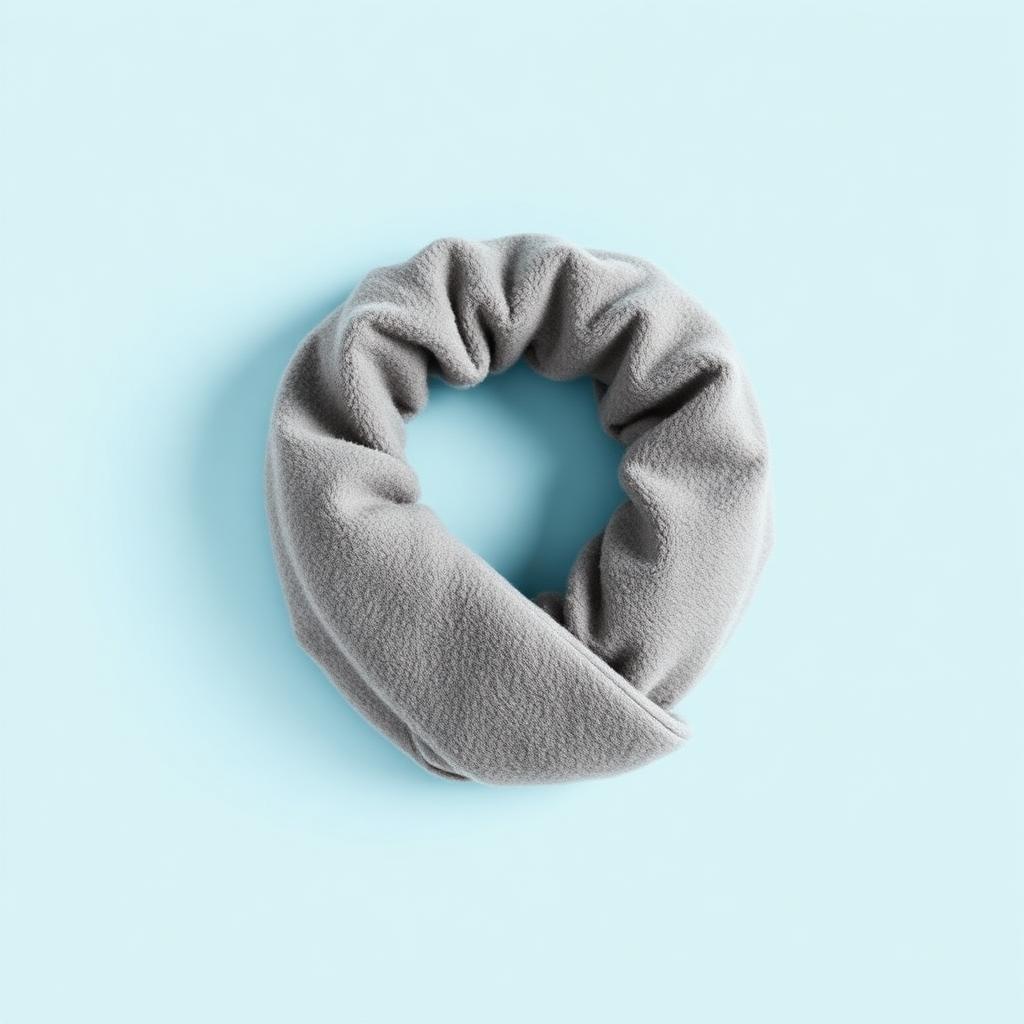
- Wrap styles (like the TRTL): position the internal support on the side you naturally lean toward, wrap snugly, and let your head rest INTO the support, not on top of it.
- Inflatables: underinflate slightly — about 80% — so the pillow has some give; a fully inflated pillow acts like a balloon and rolls your head off.
- Seat-strap designs: loop the straps around the seatback BEFORE you sit down and settle in; adjusting them at cruising altitude means waking your neighbor.
Stopping the forward head-drop
The forward chin-drop is the number-one sleep killer on planes, and pillows alone only half-solve it. The complete fix is a system: a pillow that anchors or props, a seat reclined just two or three degrees (more shifts your lower body forward and makes slumping worse), and an eye mask so your brain commits to sleeping instead of startling awake.
If your pillow has seat straps, use them every time — they're the only mechanical fix for the forward drop. If it doesn't, leaning slightly to your preferred side against a cinched U-pillow is more stable than trying to sleep bolt upright.
Packing and washing
Memory foam travel pillows compress to roughly half size in a stuff case — roll, don't fold, to protect the foam. Wrap styles fold flat into a laptop pocket. Clip either to the outside of your bag if you're tight on space; cabins don't count a neck pillow as a carry-on on any major airline we've flown.
Wash the cover (or the whole pillow, for wrap styles) after every trip of more than a few days. Airplane fabric harbors more than you want against your face. Memory foam cores are spot-clean only — soaking them ruins the foam structure.
Pillows we recommend for this

FAQ
Which way does a travel pillow go?
The gap of a U-shaped pillow faces forward, under your chin — the thick part supports the back and sides of your neck, which is where your head falls when you sleep sitting up.
Do travel pillows count as a carry-on?
Usually not. Many major airlines allow a neck pillow worn or clipped to a bag, but policies vary, so check your carrier before travel.
Why does my head still fall forward with a travel pillow?
Either the pillow is on backward (gap should face forward), it's too loose (cinch the clasp), or it has no anti-slump design — pillows with seat straps or internal support frames fix this mechanically.
Keep reading
Find the Right Pillow for Your Sleep Style
Get a tailored shortlist based on sleep position, shoulder fit, desired loft and materials using our free Pillow Finder.
Start the Free Pillow Finder →Instant recommendations, no email or signup required. We may earn commissions on some buying links.
Affiliate disclosure: Mr. Squish may earn a commission when you buy through links on this page. Recommendations are based on independent product research; any hands-on test is labelled separately. Learn more.