
How to Wash Pillows Without Ruining Them
Most people wash their pillowcases weekly and their pillows never. After a year or two, a pillow holds a meaningful amount of sweat, skin, oils, and dust mites, and it starts to smell faintly of your own head. The catch is that the correct method depends entirely on the fill: the routine that fluffs a down pillow back to life will destroy a memory foam one. Here is the method for each, and the two fills you should never put in a machine.
In this guide
How often to wash a pillow
Wash the pillow itself two to four times a year, and the pillowcase and protector weekly. Bump to four times a year if you have allergies, sweat heavily, sleep with pets, or go to bed with damp hair.
Down and down alternative
These are the only fills that genuinely love a wash. Do two at a time so the drum stays balanced.
- Use a front-loading machine on warm, gentle cycle with a small amount of mild liquid detergent.
- Run a second rinse and an extra spin — trapped detergent is what makes down clump.
- Tumble dry on low with two or three wool dryer balls, and expect 60 to 90 minutes.
- Pull the pillow out and break up damp clumps by hand every 20 minutes.
- It must be bone dry before it goes back on the bed. Damp down grows mildew from the inside.
Memory foam and latex
Never machine-wash or tumble-dry a solid foam or latex core. Agitation tears the cell structure and the pillow crumbles.
- Unzip and machine-wash the cover on its own, cold, and air dry it.
- Spot clean the foam with a cloth dipped in a mild soap-and-water solution, then blot with a clean damp cloth.
- Press out moisture with a towel — do not wring or twist the foam.
- Air dry flat, out of direct sunlight, for at least 8 hours. A fan pointed at it speeds this up a lot.
- Between cleanings, vacuum the foam with an upholstery attachment and sprinkle baking soda on it for an hour to kill odor.
Shredded foam pillows
Shredded fills are more forgiving than a solid block but still not machine-safe as a whole pillow. Empty the fill into a clean pillowcase or bin, wash the inner liner and outer cover, then refill once everything is fully dry. Airing the loose fill out for a few hours also restores loft.
Buckwheat
Buckwheat hulls must never get wet — water makes them swell and rot. Pour the hulls into a bowl, wash the cotton casing on warm, dry it completely, then pour the hulls back in. Spread the hulls on a baking sheet in the sun for a couple of hours first if the pillow smells musty.
Drying is where pillows die
More pillows are ruined by incomplete drying than by any washing mistake. A pillow that feels dry on the surface can still hold moisture in the core, and that is how mildew and permanent odor start. When in doubt, give it another dry cycle or another day of air, and squeeze the center to check.
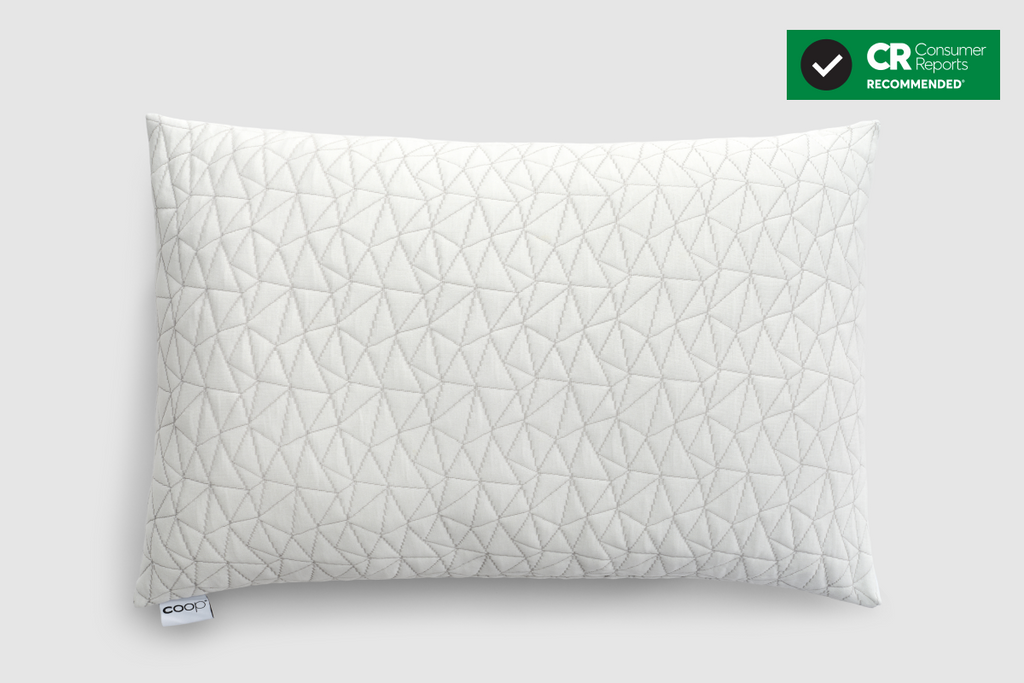
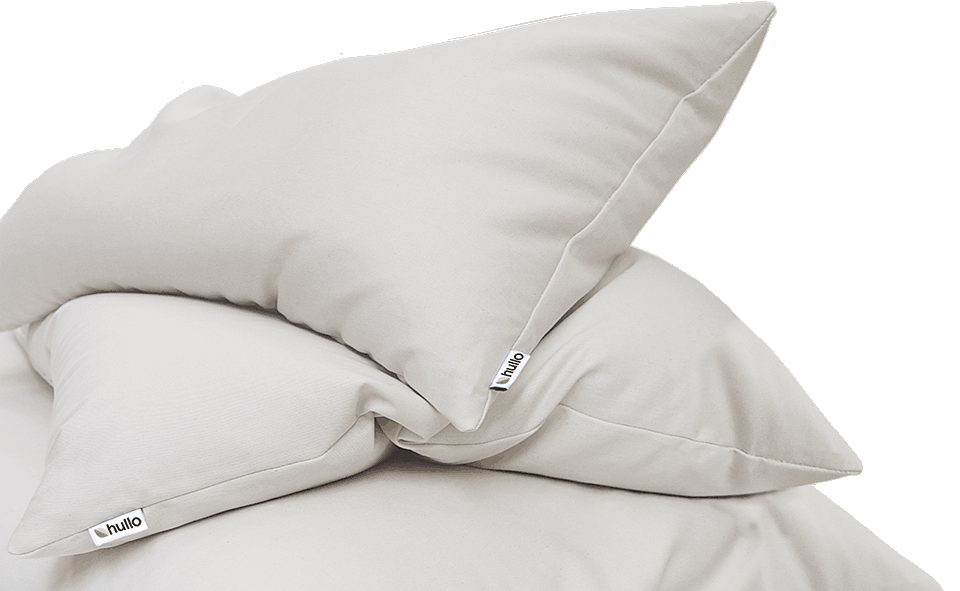
Pillows we recommend for this
FAQ
Can you put pillows in the washing machine?
Down, down alternative, and most polyester pillows can go in a front-loading machine on a gentle warm cycle. Memory foam, latex, and buckwheat pillows cannot — spot clean those and wash only the cover.
How often should you wash your pillows?
Two to four times a year for the pillow, weekly for the pillowcase and protector.
Why do pillows turn yellow?
Sweat and skin oils soak through the case over time. It is cosmetic rather than dangerous, but a zippered pillow protector prevents almost all of it.
How do you dry a pillow fast?
Low-heat tumble drying with wool dryer balls, pausing every 20 minutes to break up clumps. Foam pillows cannot be tumble dried — use a fan and airflow instead.
Can you wash a memory foam pillow?
Not in a machine. Wash the cover separately, spot clean the foam with mild soap and water, blot with a towel, and air dry flat for at least eight hours.
Keep reading
Find the Right Pillow for Your Sleep Style
Get a tailored shortlist based on sleep position, shoulder fit, desired loft and materials using our free Pillow Finder.
Start the Free Pillow Finder →Instant recommendations, no email or signup required. We may earn commissions on some buying links.
Affiliate disclosure: Mr. Squish may earn a commission when you buy through links on this page. Recommendations are based on independent product research; any hands-on test is labelled separately. Learn more.