
How Often Should You Wash Your Sheets?
Once a week is the standard answer, and for most people it is the right one. What that answer hides is that different items in the bed need very different intervals: a pillowcase against your face collects far more oil than a flat sheet, and the pillow inside it needs washing on a scale of months, not days. Here is a schedule that covers the whole bed, and the conditions that should push you to wash more often.
In this guide
The baseline schedule
Use this as the default and adjust upward for the situations in the next section.
- Pillowcases — every 3 to 4 days if you have acne-prone skin or use hair products, otherwise weekly.
- Sheets — weekly.
- Duvet cover — every one to two weeks.
- Pillow protector — every one to two months.
- Pillow itself — every three to six months, if the care label allows washing.
- Duvet or comforter — two to three times a year.
- Mattress protector — every two months.
Wash more often if any of these apply
Each of these adds either moisture, oil, or allergen load to the bed, and all three are what actually make bedding need washing.
- You sweat heavily at night or sleep in a hot room.
- You have dust mite allergies, eczema, or asthma.
- You have acne-prone skin, or you use leave-in hair products or overnight skincare.
- Pets sleep on the bed.
- You go to bed without showering after exercise or a hot commute.
- Someone in the bed has been ill.
Temperature matters for allergies
Dust mites survive a cold wash. Killing them reliably takes hot water at roughly 60°C, or a hot tumble dry cycle after a cooler wash. That is fine for cotton, and too hot for silk, bamboo viscose, and most synthetics — which is a good argument for keeping allergen-sensitive bedding in plain cotton.
Drying is where bedding goes wrong
Putting bedding away even slightly damp is the usual cause of that musty smell people blame on the wardrobe. Dry sheets completely, and dry pillows especially thoroughly — a shredded-fill pillow usually needs two full cycles with dryer balls before the core is dry all the way through.
Make it easier to actually do
Two sheet sets in rotation is the single change that makes a weekly schedule stick, because the bed gets remade immediately instead of waiting on a dryer. A pillow protector under the case does the same job for the pillow: it is quick to wash and it means the pillow itself needs washing far less often.
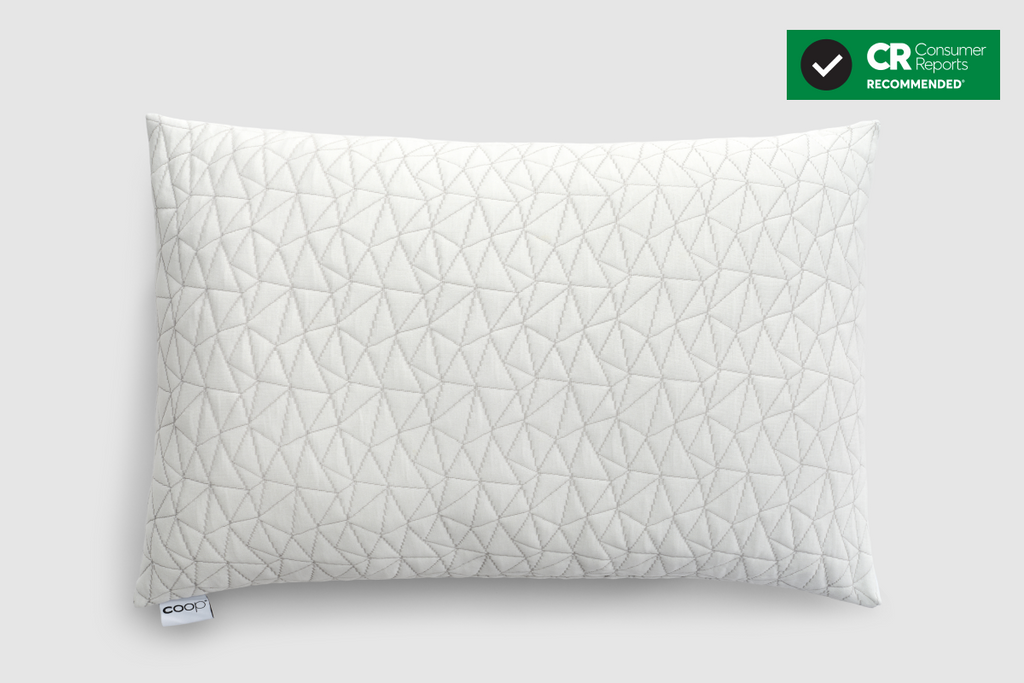
Pillows we recommend for this
FAQ
Is once a week really necessary?
For most people, yes. A week is roughly the point at which sweat, skin cells, and oil build up enough to matter for skin and for dust mite populations.
How often should I wash my pillowcase?
Weekly at minimum, and every three to four days if you have acne-prone skin, oily hair, or use overnight hair or skin products.
What temperature kills dust mites?
Around 60°C in the wash, or a hot tumble dry cycle after washing cooler. Check the care label first — silk, bamboo viscose, and many synthetics cannot take that heat.
How often should I wash the pillow itself?
Every three to six months if the care label allows it, and replace the pillow entirely when it no longer holds its shape after washing.
Do I need to wash new sheets before using them?
Yes. A first wash removes manufacturing finishes and sizing, and it is also when cotton does most of its initial softening and shrinking.
Keep reading
Find the Right Pillow for Your Sleep Style
Get a tailored shortlist based on sleep position, shoulder fit, desired loft and materials using our free Pillow Finder.
Start the Free Pillow Finder →Instant recommendations, no email or signup required. We may earn commissions on some buying links.
Affiliate disclosure: Mr. Squish may earn a commission when you buy through links on this page. Recommendations are based on independent product research; any hands-on test is labelled separately. Learn more.