
Hypoallergenic Pillows and Dust Mites
If you wake with a blocked nose, itchy eyes, or a cough that fades by mid-morning, your pillow is a reasonable suspect. Not because of what it is made of, but because of what lives in it. Dust mites feed on shed skin and thrive in the warm, humid microclimate a head creates over eight hours. Their waste proteins are the allergen, and they accumulate in any pillow left unprotected and unwashed. Meanwhile the word hypoallergenic on the packaging is unregulated — it means the manufacturer believes the product is less likely to cause a reaction, and nothing more. This guide covers what genuinely reduces exposure and what is just a label.
In this guide
What hypoallergenic means (and does not)
There is no legal definition, no certification body, and no test a pillow must pass before the word goes on the box. A polyester pillow with a loose cover can be sold as hypoallergenic even though mites will colonize it within months.
What does carry meaning are specific, checkable properties: a cover weave tight enough to block mite allergen, a fill rated for hot washing, certification for low chemical emissions such as CertiPUR-US or OEKO-TEX, and the absence of a specific protein you personally react to — feather down being the obvious one.
Dust mites are the real target
Allergy specialists treat bedding as a mite-reduction problem, not a fabric problem. Mites need warmth, humidity above roughly 50 percent, and a food supply of skin cells. A pillow supplies all three every night.
That is why the two highest-impact interventions are physical rather than material: an encasement that mites and their allergen cannot cross, and regular hot washing of everything outside that encasement.
- Use a zippered allergen-barrier encasement on the pillow, not just a pillowcase. Look for a stated pore size at or below 6 microns, or a tightly woven fabric explicitly sold as allergen-blocking.
- Wash pillowcases and the outer cover weekly at 130°F (54°C) or hotter — cooler washes remove allergen but do not kill mites.
- Keep bedroom humidity below 50 percent; mites cannot survive dry air for long.
- Replace pillows that cannot be washed every one to two years, sooner if symptoms are persistent.
Are bamboo pillows hypoallergenic?
Partly, and mostly for the wrong reason. Bamboo-derived rayon covers are smooth, breathable, and move moisture well, which makes the pillow interior less humid and therefore less hospitable to mites. That is a genuine if modest benefit.
The claim that bamboo is inherently antimicrobial does not survive the manufacturing process — the viscose conversion destroys the plant's natural compounds. Judge a bamboo pillow on its cover weave and whether the shredded foam inside can be washed, not on the marketing.
Are buckwheat pillows hypoallergenic?
Buckwheat hulls are one of the better options for mite-sensitive sleepers. The hulls are hard, dry, and airy, so the fill never holds the humidity mites need, and hulls can be emptied out and aired in the sun while the case is washed hot.
Two cautions. Buckwheat is a distinct plant from wheat, so it is not a gluten issue, but a genuine buckwheat allergy does exist and rules the pillow out. And hull quality matters — buy from a maker that cleans its hulls thoroughly, because dust from poorly processed hulls is its own irritant.
Are down-alternative pillows hypoallergenic?
For anyone reacting to feathers specifically, yes — microfiber clusters contain no feather protein at all, which is the main reason people switch. They are also fully machine washable, which matters more than the fill type for mite control.
The catch is that down alternative traps skin cells as readily as anything else. Its advantage is that you can wash it hot, so the routine is what protects you, not the material.
What about latex and memory foam?
Latex is naturally resistant to mites and mold, and its dense structure gives allergen little room to accumulate. It cannot be washed, so it must live inside an encasement — but it does not need washing to stay clean the way a fiber fill does. People with a diagnosed latex allergy should avoid it, though reactions to a sealed pillow core inside a cover are uncommon.
Memory foam is similarly inhospitable to mites, but new foam can off-gas for a few days and some people react to that rather than to any allergen. A CertiPUR-US or OEKO-TEX certified foam and a week of airing before use handles most of it.
A routine that actually works
The pillow you buy matters less than the system around it. Encase the pillow, wash the outer layers weekly and hot, keep the room dry, and replace fills you cannot clean. Do that and almost any well-built pillow becomes allergy-friendly; skip it and the most expensive hypoallergenic pillow on the market ends up just as colonized as a cheap one.
Pillows we recommend for this
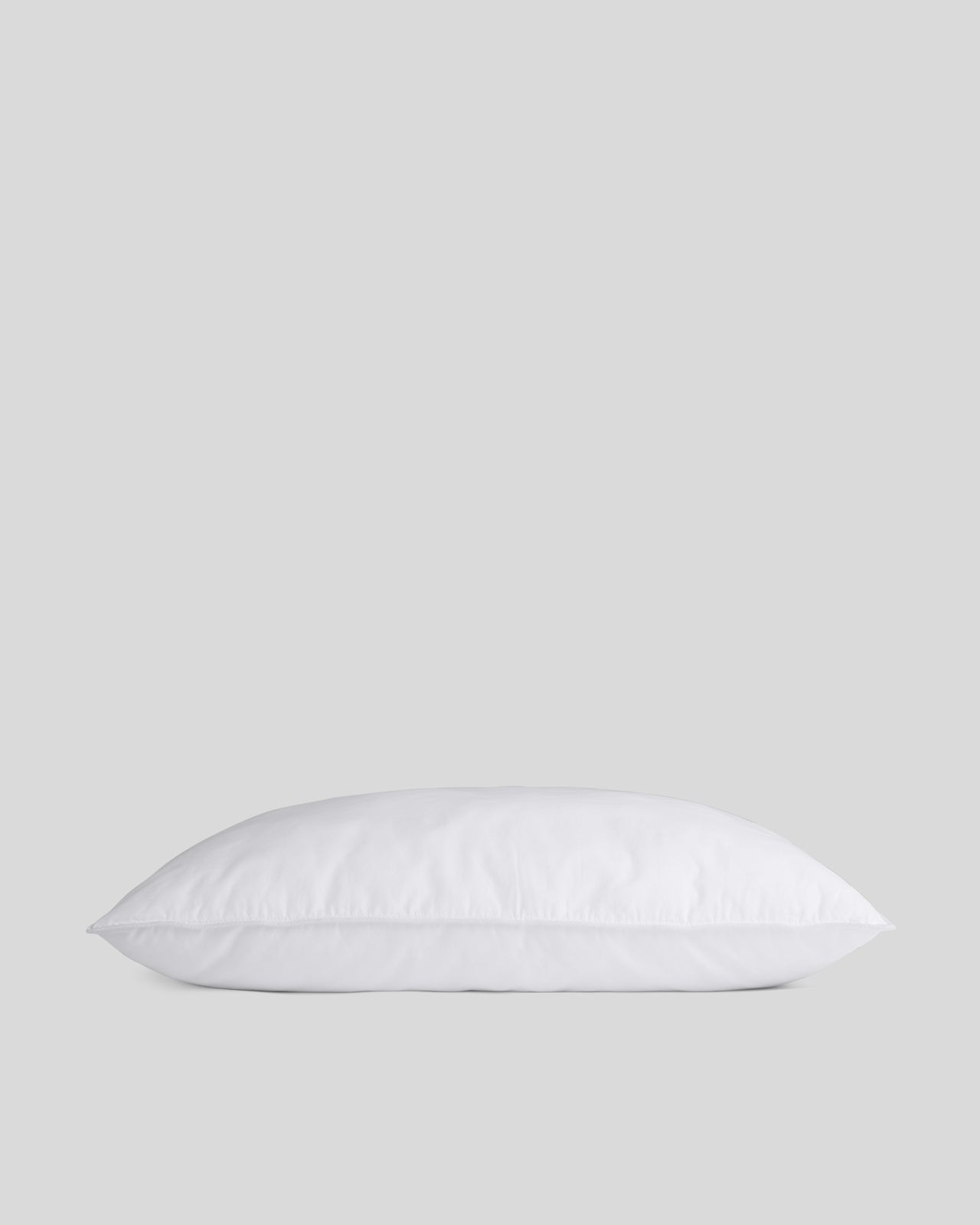
Parachute Down Alternative Pillow
Allergy-prone sleepers who still want a plush, moldable pillow
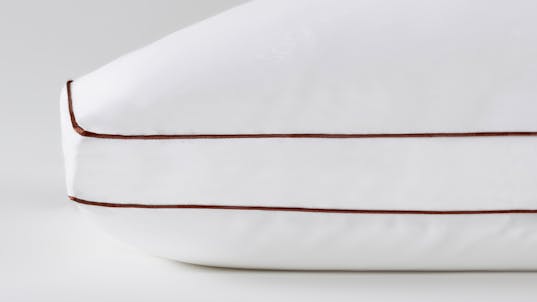
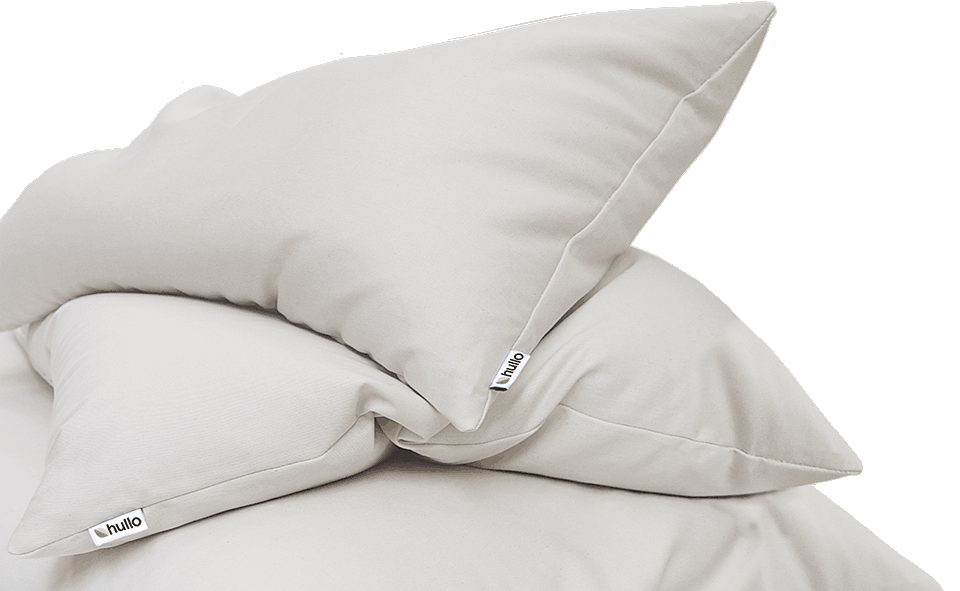
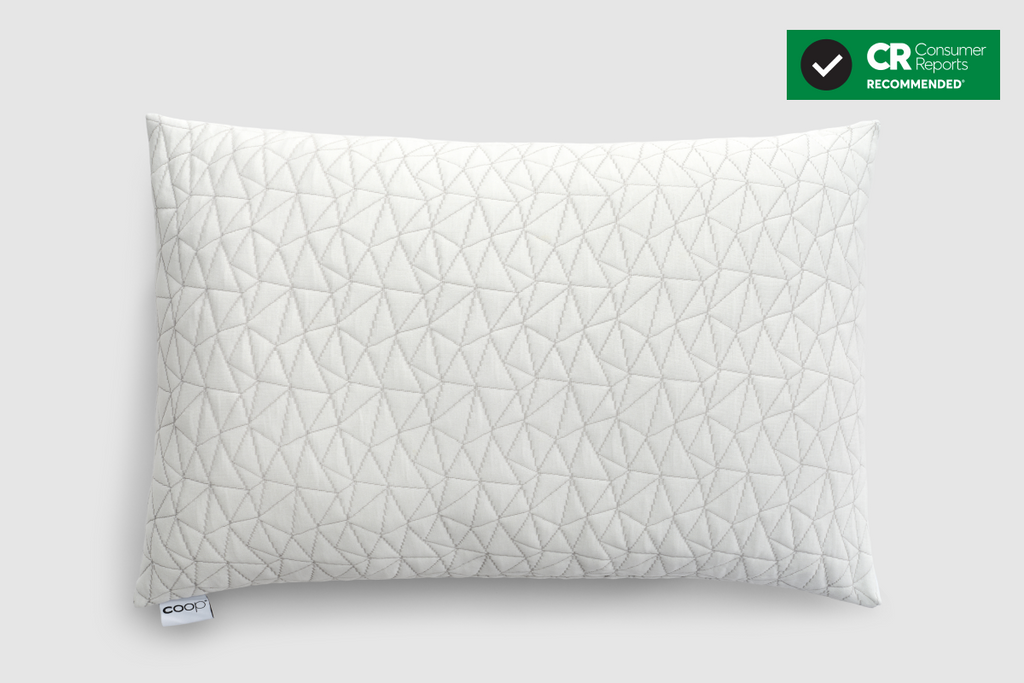
FAQ
What does hypoallergenic actually mean on a pillow?
It is an unregulated marketing term meaning the maker believes the product is less likely to trigger a reaction. There is no standard or test behind it. Look instead for a tight cover weave, hot-washability, and emissions certification such as CertiPUR-US or OEKO-TEX.
Do hypoallergenic pillow covers work?
Zippered allergen-barrier encasements do, and they are the single most effective thing you can add. They stop mites and their waste proteins crossing between the fill and your face. An ordinary pillowcase does not — the weave is far too open.
Are bamboo pillows hypoallergenic?
Their moisture-wicking covers keep the pillow drier, which discourages mites, but bamboo viscose is not inherently antimicrobial. Treat it as a modest advantage rather than allergy protection.
Are buckwheat pillows good for allergies?
Generally yes. The dry, airy hulls do not hold the humidity mites need, and hulls can be aired while the case is washed. Avoid them if you have a buckwheat allergy, and buy from a maker that cleans its hulls thoroughly.
Are down-alternative pillows hypoallergenic?
They contain no feather protein, so they suit people who react to down, and they machine wash easily. They still collect skin cells, so hot washing every couple of months is what keeps them allergy-friendly.
How often should an allergy sufferer replace a pillow?
Every one to two years for fills you cannot wash, and longer for latex or buckwheat kept inside an encasement. Wash the encasement and pillowcase weekly regardless.
Keep reading
Find the Right Pillow for Your Sleep Style
Get a tailored shortlist based on sleep position, shoulder fit, desired loft and materials using our free Pillow Finder.
Start the Free Pillow Finder →Instant recommendations, no email or signup required. We may earn commissions on some buying links.
Affiliate disclosure: Mr. Squish may earn a commission when you buy through links on this page. Recommendations are based on independent product research; any hands-on test is labelled separately. Learn more.