
Silk vs. Satin Pillowcases: What's the Actual Difference?
Walk through any bedding aisle and you will find "satin" pillowcases promising the same hair and skin benefits as silk for a tenth of the price. Some of that is true and some of it is marketing fog, because satin and silk are not two versions of the same thing — they are not even the same category of thing. One is a fiber, the other is a weave pattern. This guide untangles the terminology, compares what each actually does for your hair, skin, and sleep temperature, and tells you when the cheap option is genuinely fine.
In this guide
The short answer
Silk is a natural protein fiber produced by silkworms. Satin is a weaving technique that creates a glossy surface — and the satin pillowcases on the market are almost always woven from polyester. So "silk vs. satin" really means "natural silk fiber vs. synthetic fabric with a shiny weave."
Both reduce friction on hair compared with cotton, which is the main benefit people are after. Silk goes further: it is less absorbent, so it keeps moisture in your skin and hair, it regulates temperature better, and it does not build static. Polyester satin wins on price and wash-and-dry convenience — you can treat it exactly like any other laundry.
What momme means (and why thread count doesn't apply)
Silk quality is measured in momme, a weight unit — think of it as silk's version of thread count. Under 19 momme, silk is delicate and wears thin fast. 19 to 22 momme is the sweet spot for pillowcases: durable enough for nightly use, still soft and fluid. Above 25 momme you are paying for heaviness you do not need on a bed.
When a listing says only "silky" or "satin silk" with no momme number and no mention of mulberry silk, it is polyester. Genuine silk sellers state the fiber (mulberry silk), the grade (6A is the top commercial grade), and the momme weight.
Hair and skin: where the difference shows up
For hair, both fabrics beat cotton on friction — the smooth surface lets hair slide instead of snagging, which means less frizz, fewer tangles, and longer-lasting blowouts and curls. On this one axis, polyester satin delivers a meaningful share of the silk benefit at a fraction of the price.
For skin, silk pulls ahead. Polyester satin is essentially plastic: it absorbs less moisture than cotton but far more than silk, it traps heat, and it generates static. Silk's low absorbency keeps night cream on your face and reduces the sleep-crease effect, and its temperature regulation keeps the surface cooler against your cheek.
Care and lifespan
Polyester satin is indestructible by bedding standards: hot wash, dryer, no fuss. Silk asks for cold water, a gentle cycle or hand wash, mild detergent, and air drying — and repays the effort with two to three years of nightly use before thinning.
If your household runs everything through one hot wash, polyester satin is the honest choice. A silk case washed like a beach towel will be ruined in months.
Which should you buy?
Buy silk if hair and skin benefits are the point, if you sleep hot, or if you want the premium feel — and budget roughly $60 to $90 for genuine 22-momme mulberry silk. Buy polyester satin if you are testing whether a smooth pillowcase helps your hair at all, if you need something kid-proof, or if easy washing is non-negotiable.
Either way, skip anything in between priced like silk but labeled like satin — that is polyester with a marketing budget.
Pillows we recommend for this


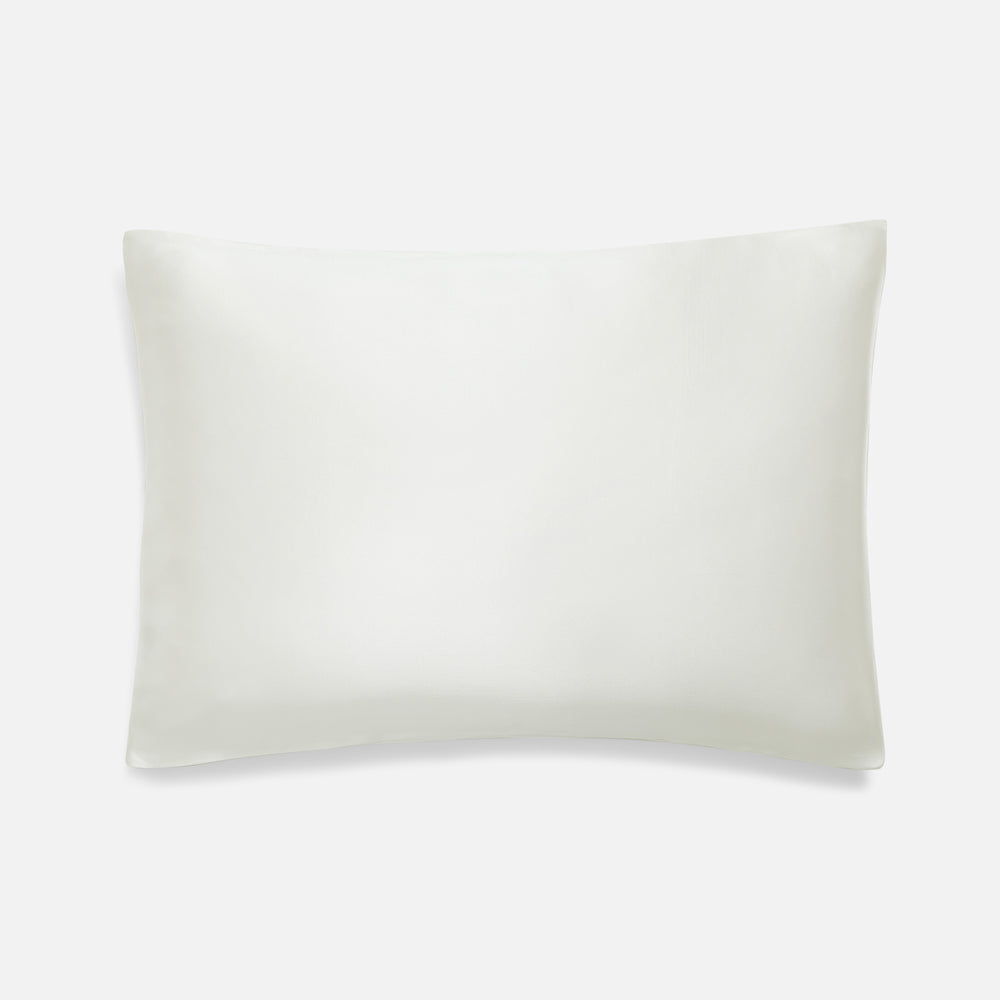
Direct comparison
Blissy vs Kitsch Pillowcase
Compare the two products side by side using their published construction, fit, care, and price information.
Read the head-to-head →FAQ
Is satin as good as silk for hair?
Partially. Both reduce friction compared with cotton, which is the main mechanism behind less frizz and breakage. Silk adds lower absorbency, no static, and better temperature regulation, but a polyester satin case delivers a real share of the hair benefit for much less money.
How can I tell if a pillowcase is real silk?
Real silk listings state the fiber (mulberry silk), the grade (such as 6A), and the momme weight (19–25). "Silky," "satin silk," or "silk-like" with no momme number means polyester.
What momme is best for a silk pillowcase?
22 momme is the sweet spot — durable enough for nightly use and regular washing without losing the soft, fluid feel. Under 19 momme wears out quickly.
Is a silk pillowcase worth it?
If you have frizz-prone, curly, or treated hair, sleep hot, or want to reduce sleep creases, yes — genuine silk delivers measurable friction and moisture benefits. If you just want to try a smooth surface cheaply, start with polyester satin.
Keep reading
Find the Right Pillow for Your Sleep Style
Get a tailored shortlist based on sleep position, shoulder fit, desired loft and materials using our free Pillow Finder.
Start the Free Pillow Finder →Instant recommendations, no email or signup required. We may earn commissions on some buying links.
Affiliate disclosure: Mr. Squish may earn a commission when you buy through links on this page. Recommendations are based on independent product research; any hands-on test is labelled separately. Learn more.