
Match firmness to position
Softer options suit lower-loft needs; side sleepers generally need a firmer and more heavily filled design.
Pillow material guide
Down pillows can range from low, compressible stomach-sleeper models to firmer chambered designs. This hub explains fill power, firmness, sourcing, care, and the reviewed options that belong on a serious shortlist.
Start with the fundamentals
Softer options suit lower-loft needs; side sleepers generally need a firmer and more heavily filled design.
Down, feather, and blended chambers behave differently, while fill power does not state total support by itself.
Review animal-welfare certifications, shell construction, cleaning instructions, and return restrictions.
Research shortlist
These are research picks based on manufacturer specifications, documentation, and owner-feedback patterns—not hands-on testing.
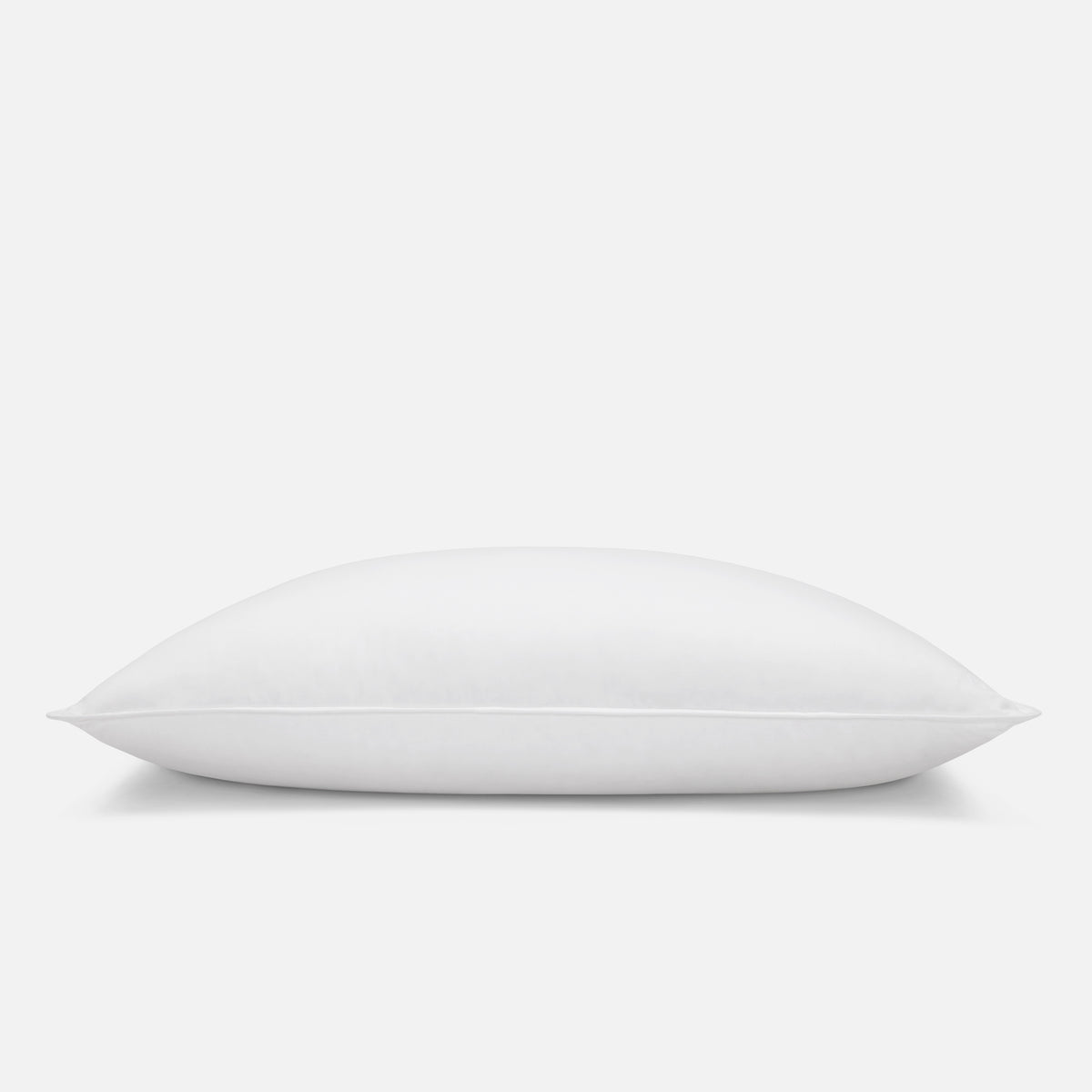
Best for: Hotel-pillow lovers who want real down at three firmness levels
A classic chambered down pillow with Canadian white down clusters and a smooth cotton sateen shell, offered in Plush, Mid-Plush, and Firm.
Read Review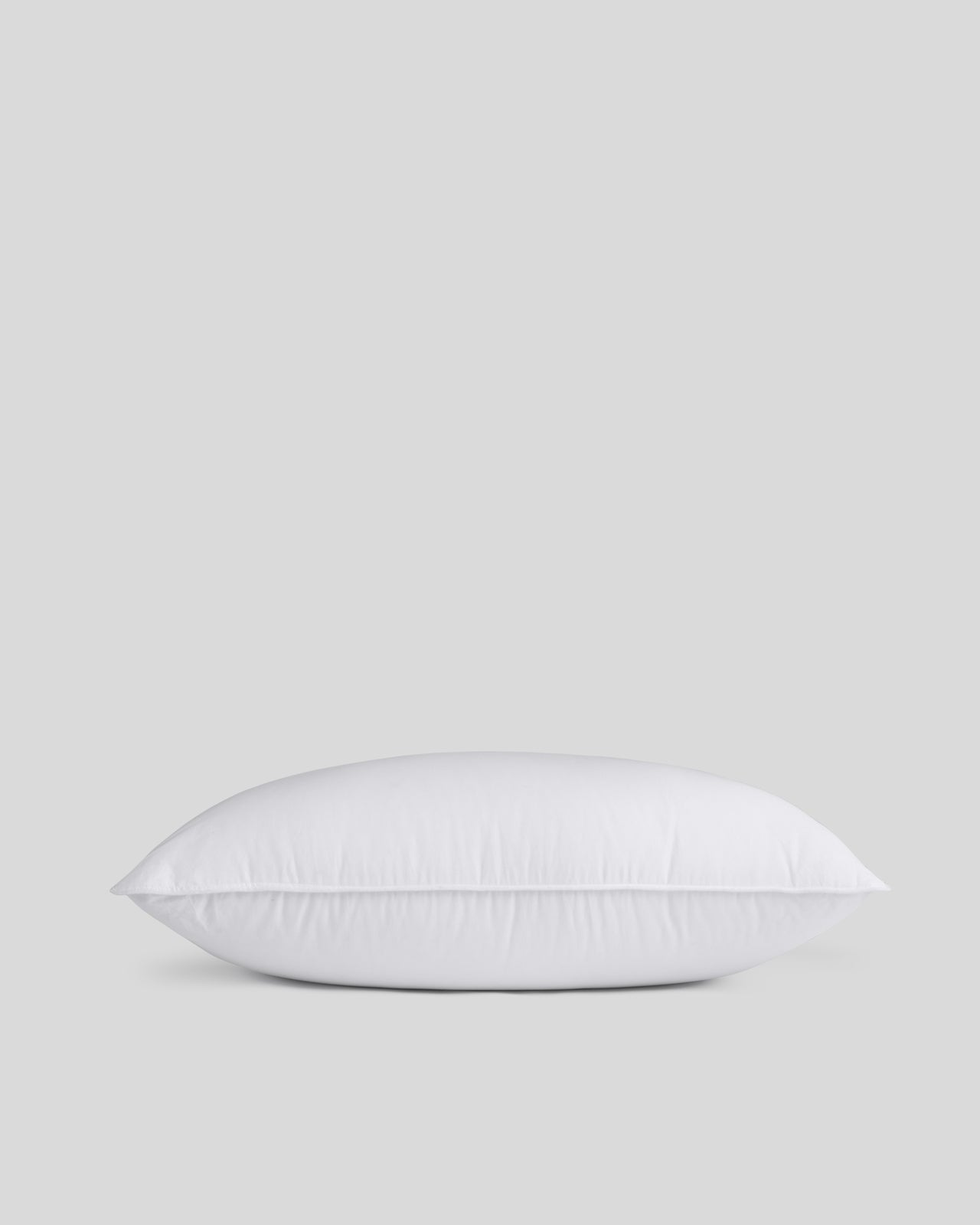
Best for: Plush sleepers who love a hotel feel
European white down with a 750 fill power and a smooth sateen cotton shell. Available in soft, medium, and firm.
Read Review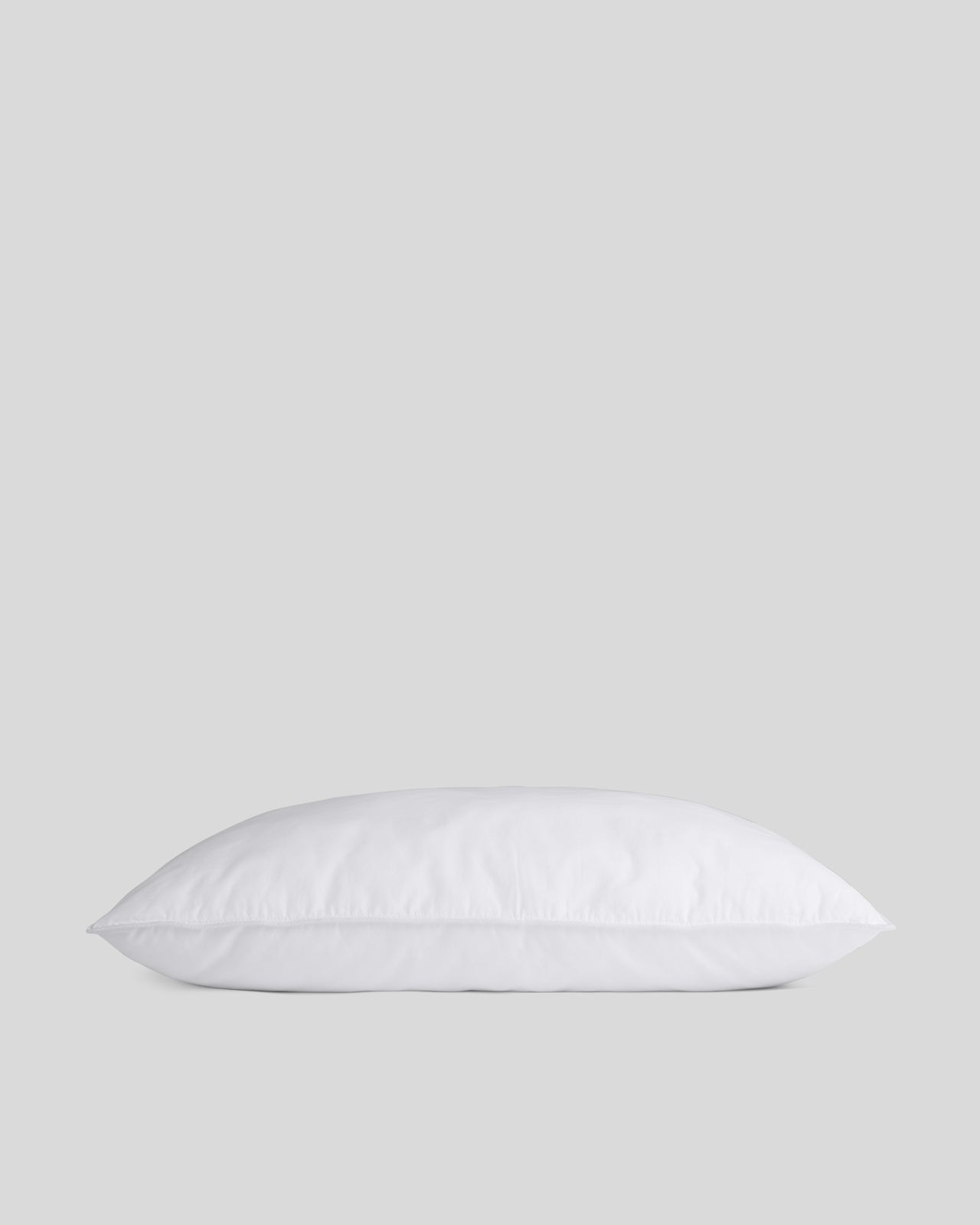
Best for: Allergy-prone sleepers who still want a plush, moldable pillow
A hypoallergenic microfiber fill that mimics the loft and squish of down without feathers, in soft, medium, and firm densities.
Read ReviewHow real down and synthetic down alternative compare on feel, support, cooling, allergies, care, price, and lifespan.
Kapok is a plant fibre that feels remarkably like down. Here's how kapok pillows behave, how they age, and how they compare to down and latex.
Stomach sleepers need the thinnest pillow possible — usually 1 to 3 inches — with a soft, compressible fill. Here's how to pick loft, fill, and shape without waking up with a sore neck.