
What Type of Pillow Is Best for Stomach Sleepers?
Sleeping on your stomach is the least common sleep position, but it is also the hardest on your neck. With your head turned to one side all night, your cervical spine is already rotated; add a tall pillow and you are cranking it even further. The best pillow for a stomach sleeper is barely there — thin, soft, and low enough that your head stays close to the mattress. This guide covers the loft, fill, and shape that keep stomach sleeping as comfortable as it can be, and how to tell if your current pillow is making things worse.
In this guide
The short answer
For most stomach sleepers, the best pillow is a thin, soft pillow with a loft of roughly 1 to 3 inches. The goal is to take the edge off the mattress without lifting your head. Compressible fills like down, down alternative, or a very small amount of shredded foam work best because they flatten under the light weight of your head.
Adjustable shredded-foam pillows are also a good choice if you remove most of the fill. That lets you fine-tune the height instead of hoping a labeled 'stomach sleeper' pillow is actually thin enough. Avoid thick contour pillows and high-loft memory foam blocks — they push your neck into an uncomfortable angle.
How low should the loft be?
Stomach sleepers need the lowest loft of any position. Your head should sit almost flat against the mattress surface. Use a mirror or a photo taken from the side while you lie on your stomach.
- Neutral: your forehead is nearly level with the mattress and your chin is not pressed into your chest.
- Too tall: your head is lifted, increasing the rotation of your neck and straining the upper traps.
- Too flat: your face is pressed into the mattress and breathing feels restricted.
- Starting point: 1–2 inches if you are petite or have a soft mattress, 2–3 inches if you are larger or sleep on a firm surface.
Fill types, ranked for stomach sleeping
The best fills for stomach sleepers compress easily and stay cool, since your face is buried in the pillow.
- Down and down alternative — best overall. Naturally thin, soft, and easy to smoosh flat. Down alternative is more affordable and easier to wash.
- Adjustable shredded foam — best if you want control. Remove fill until the pillow is just a thin cushion; keep the extra fill in a bag for later.
- Soft polyester — cheap and thin, but tends to flatten permanently within a few months.
- Solid memory foam — usually too thick and slow to compress. Only works if it is specifically designed as an ultra-thin slab.
- Buckwheat and latex — too firm and resilient for most stomach sleepers; they hold loft instead of giving under pressure.
Shape and size considerations
A standard rectangular pillow works fine as long as it is thin. Some stomach sleepers do better with a smaller pillow — a travel-size or a half-size pillow — because it supports only the forehead and cheek without pushing the neck up. If you often shift between stomach and side, look for a pillow with a low center and slightly higher edges so it adapts as you roll.
Firmness and cooling
Stomach sleepers should choose soft to medium-soft firmness. A firm pillow keeps your head too high and creates pressure on your face and jaw. Since much of your face contacts the pillow, breathability matters: down alternative and cotton covers sleep cooler than dense synthetic fills. If you wake up with a sweaty cheek, switch to a lighter fill or a cover with cotton or Tencel.
Common mistakes
Most stomach-sleeper pillow complaints come down to one of these.
- Using a pillow meant for side sleepers. A 5-inch loft is fine on your side but disastrous on your stomach.
- Keeping a pillow that has gone flat and lumpy. A flat pillow is good; a lumpy one props your head unevenly.
- Sleeping with arms under the pillow. That raises the effective loft and strains your shoulders.
- Ignoring the mattress. A soft mattress lets your upper body sink, which means you need even less pillow height.
- Expecting one pillow to work for stomach and side sleeping. If you switch positions, an adjustable fill is the only practical fix.
A one-week test you can run tonight
Sleep on your thinnest pillow for seven nights and rate each morning: neck stiffness, jaw pressure, and whether you tossed to avoid the pillow. If your neck feels better by day three, you are on the right track. If your jaw or face hurts, the pillow is still too firm or too tall. Adjust one variable — usually loft — and repeat the week.
Pillows we recommend for this
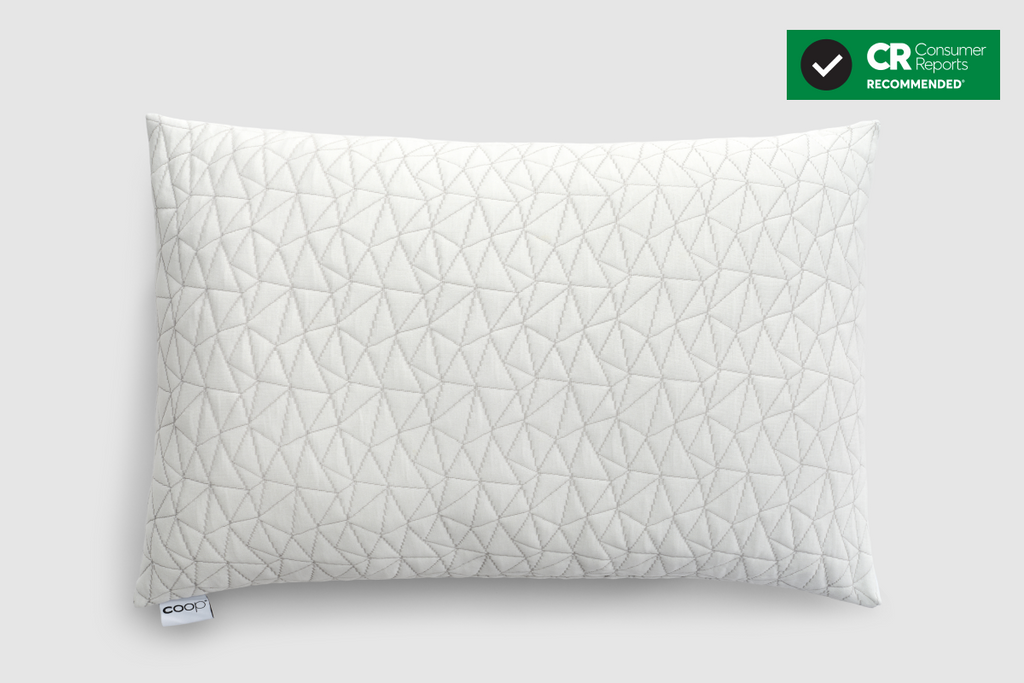
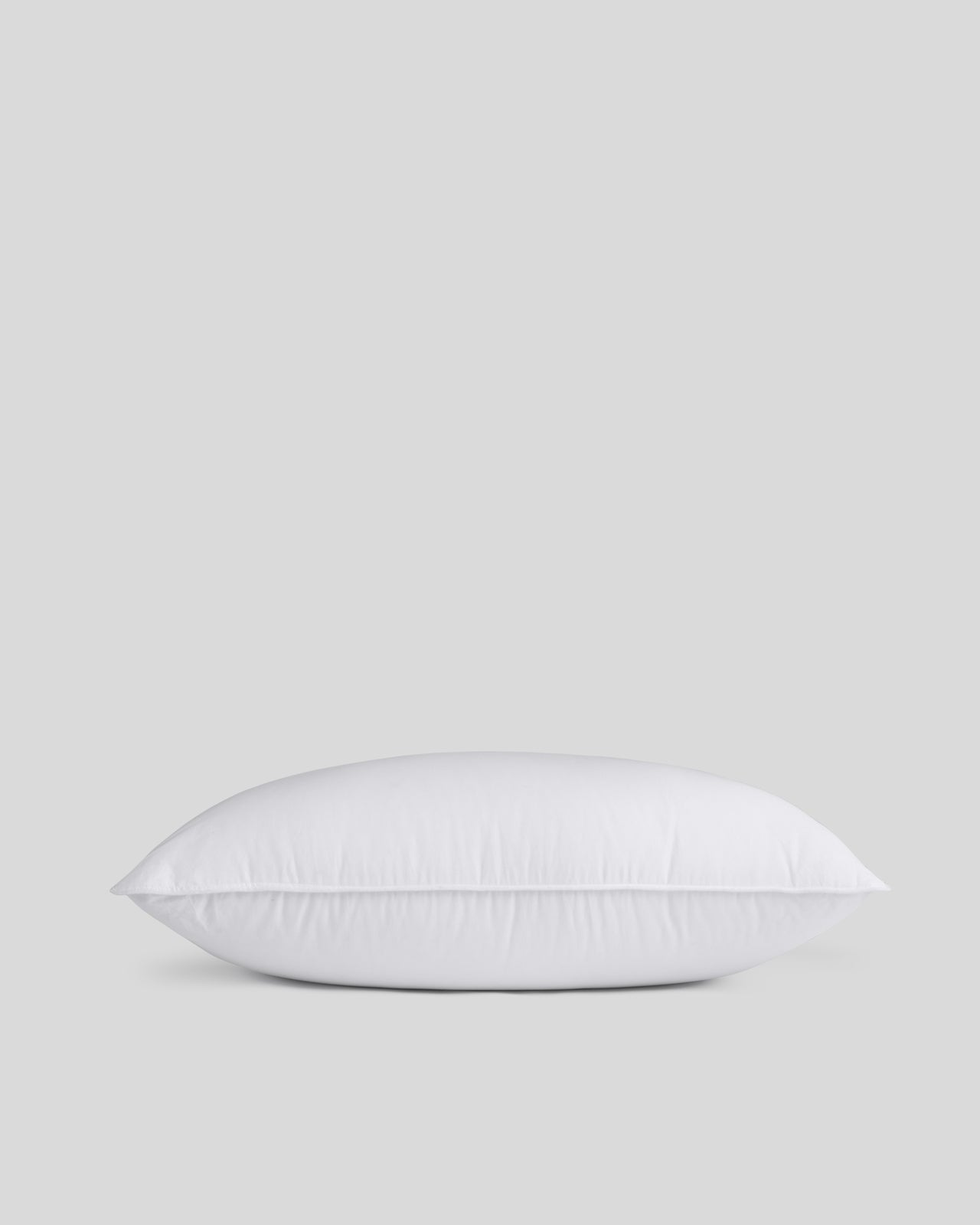
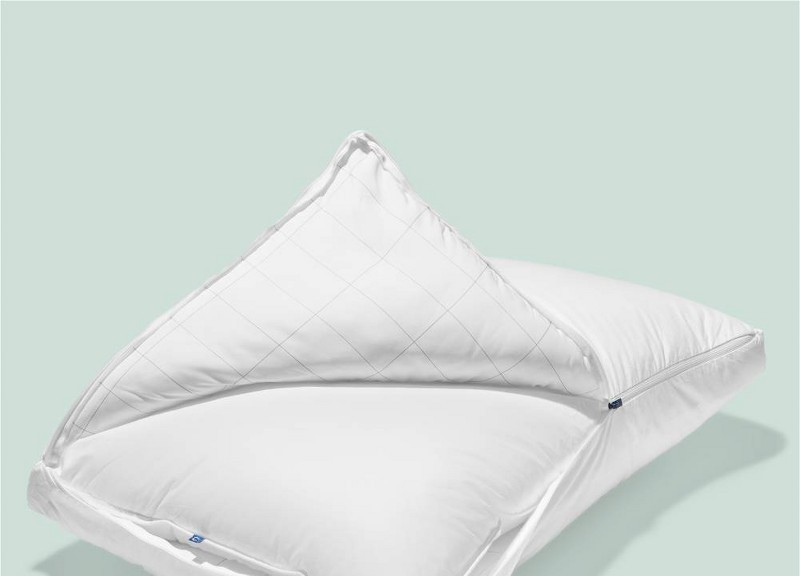
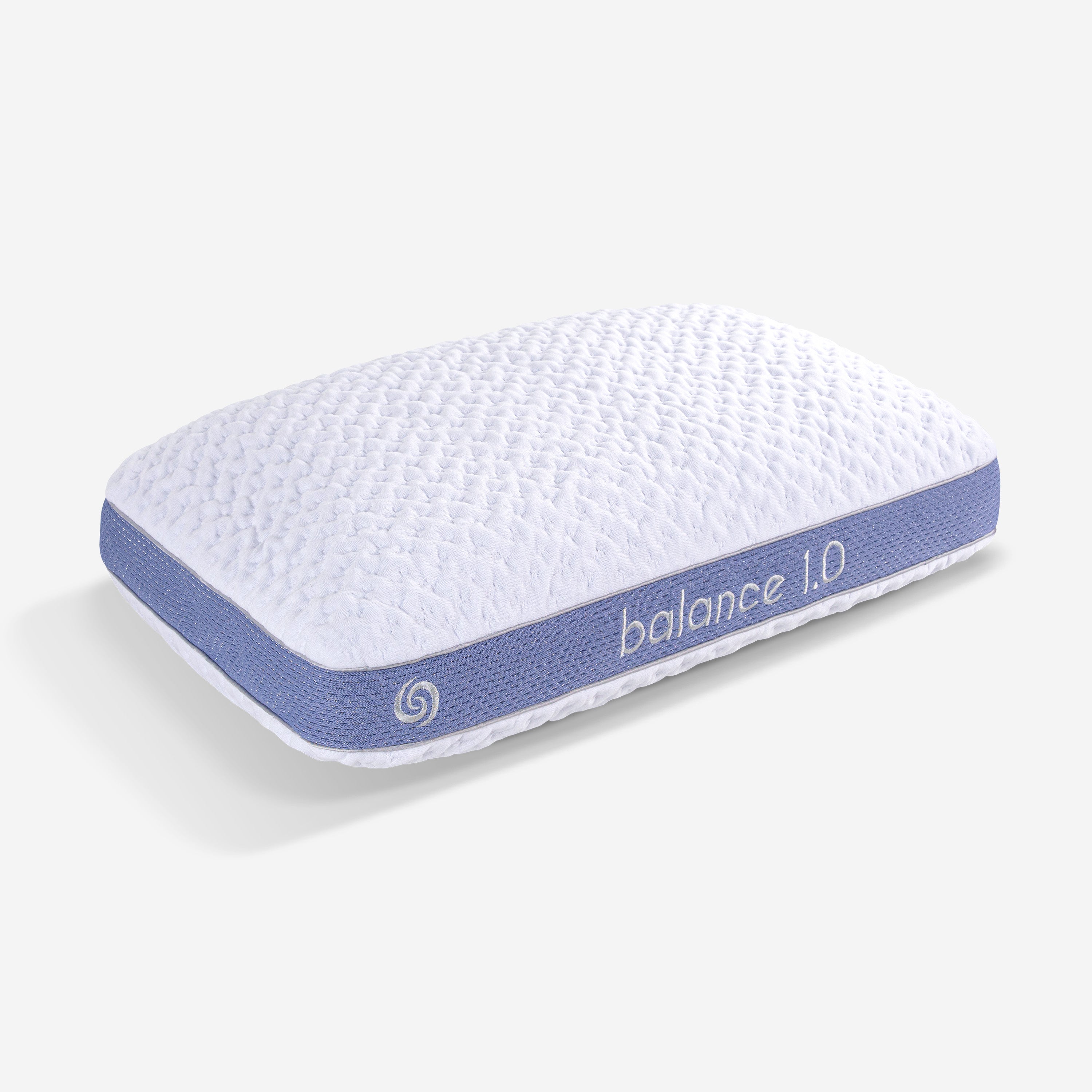
Bedgear Balance Performance Pillow
Sleepers comparing moisture-wicking covers and preset heights
FAQ
How thin should a stomach sleeper pillow be?
Usually 1 to 3 inches of loft. The goal is to keep your head close to the mattress so your neck is not cranked upward while your head is turned.
Is memory foam bad for stomach sleepers?
Thick, solid memory foam is usually too lofty and slow-responding for stomach sleeping. A thin, soft shredded-foam pillow with most of the fill removed can work.
Should stomach sleepers use a pillow at all?
Some stomach sleepers are comfortable with no head pillow, especially on a soft mattress. A very thin pillow is fine if the mattress surface feels too hard against your face.
What is the best pillow fill for stomach sleepers?
Down alternative or a small amount of shredded foam. Both compress easily, stay thin under your head, and are easy to wash.
Can a stomach sleeper use a contour pillow?
Generally no. Contour pillows are designed to support the neck curve, which is the opposite of what a stomach sleeper needs. They tend to be too tall and too firm.
Keep reading
Find the Right Pillow for Your Sleep Style
Get a tailored shortlist based on sleep position, shoulder fit, desired loft and materials using our free Pillow Finder.
Start the Free Pillow Finder →Instant recommendations, no email or signup required. We may earn commissions on some buying links.
Affiliate disclosure: Mr. Squish may earn a commission when you buy through links on this page. Recommendations are based on independent product research; any hands-on test is labelled separately. Learn more.