
Are Microfibre Pillows Any Good?
Microfibre — very fine polyester fibre, often sold as down alternative — fills more pillows than any other material, mostly because it is inexpensive, machine washable, and free of allergen and sourcing concerns. It is also the material most likely to disappoint after six months. Whether it is a good buy depends almost entirely on fibre quality and construction, two things the packaging rarely tells you, so it helps to know what separates a decent microfibre pillow from a bad one.
In this guide
What microfibre does well
It is genuinely washable, which no other soft fill manages as easily. It is hypoallergenic in the practical sense that it holds no animal protein, and a tightly woven shell makes it hostile to dust mites. It is soft immediately, with no break-in period and no off-gassing smell. And it is cheap enough that replacing it annually is realistic.
Where it falls down
Polyester fibres take a permanent set under repeated compression. That is why a microfibre pillow that felt plush in month one is a flat pad by month eight, and why washing it revives it only partially. It also traps heat: polyester does not wick or breathe well, so it runs warmer than latex, buckwheat, or a grid structure.
Clumping is the other common complaint, and it is largely a laundry problem. Fibres that get wet and are not fully dried mat together into lumps that no amount of fluffing separates.
How to spot a better one
Not all polyester fill is equal, and a handful of details reliably predict how long it will last.
- Gel-fibre or cluster-fibre fill, where the fibres are siliconised into small balls, resists flattening far better than loose staple fill.
- A stated fill weight — heavier means denser and slower to pack down.
- A cotton shell rather than polyester, for breathability.
- Gusseted sides, which help the pillow hold shape rather than pancaking at the edges.
- A care label that permits tumble drying, since drying is what restores loft.
Who should and should not buy one
Microfibre is a sensible choice for guest beds, children's rooms, stomach sleepers who want low loft anyway, anyone on a tight budget, and anyone who wants to launder their pillow frequently.
It is a poor choice if you are a side sleeper who needs sustained loft, if you sleep hot, or if you want a pillow that will still be right in three years. In those cases shredded memory foam, latex, or an adjustable pillow costs more upfront and lasts several times longer.
Pillows we recommend for this
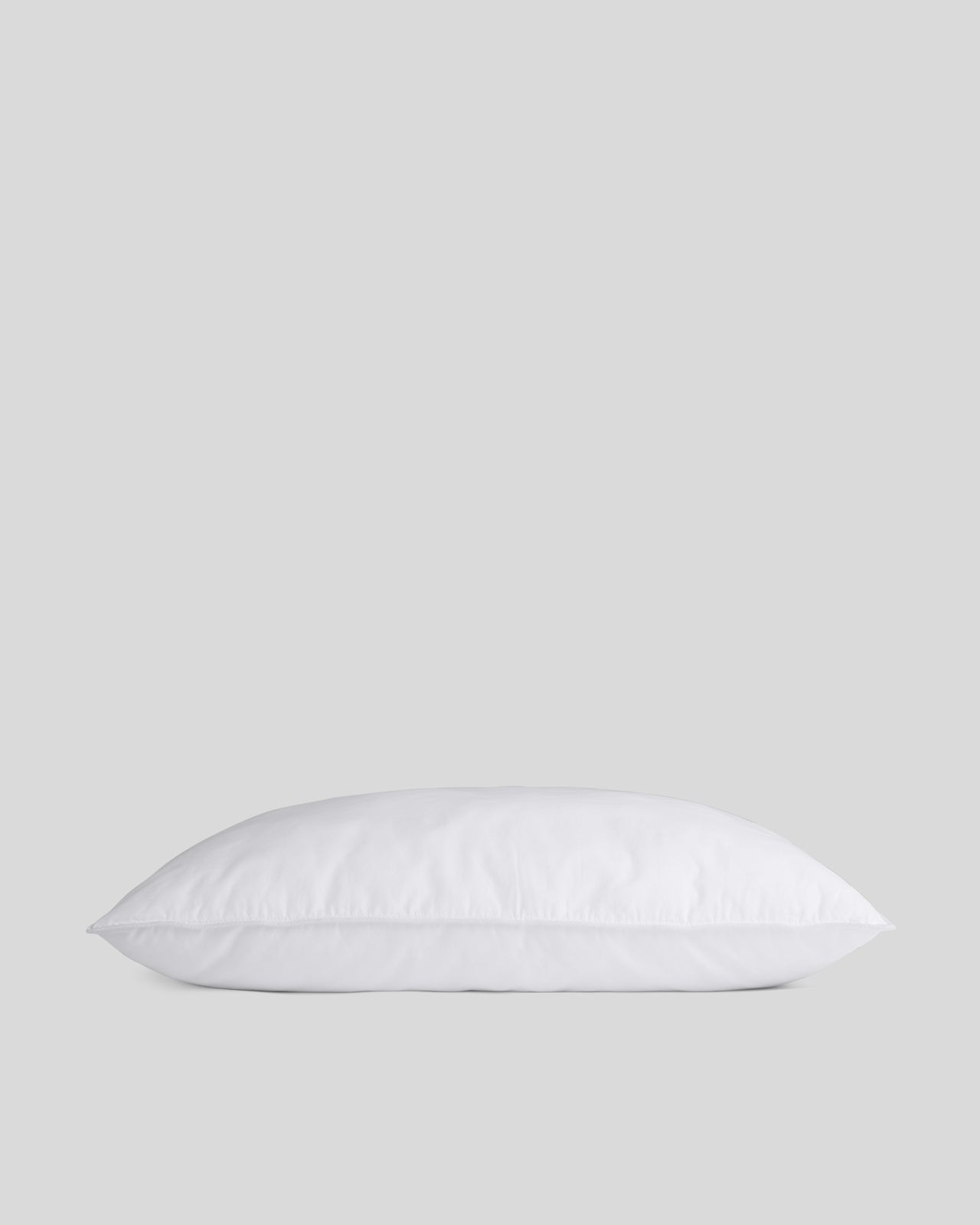
Parachute Down Alternative Pillow
Allergy-prone sleepers who still want a plush, moldable pillow
FAQ
How long does a microfibre pillow last?
Typically one to two years before it no longer re-lofts. Cluster-fibre versions can reach three with regular washing and thorough drying.
Is microfibre the same as down alternative?
Effectively yes. Down alternative is a marketing name for polyester fill engineered to imitate down loft.
Why did my microfibre pillow go lumpy in the wash?
It was not dried fully. Run it through a second low-heat cycle with a few dryer balls and break up clumps by hand between cycles.
Are microfibre pillows good for allergies?
They help, because there is no animal protein and they can be washed hot. Pair one with a zippered protector for the dust-mite side of the problem.
Do microfibre pillows sleep hot?
Warmer than latex, buckwheat, or grid pillows, yes. Polyester insulates and does not move much air.
Keep reading
Find the Right Pillow for Your Sleep Style
Get a tailored shortlist based on sleep position, shoulder fit, desired loft and materials using our free Pillow Finder.
Start the Free Pillow Finder →Instant recommendations, no email or signup required. We may earn commissions on some buying links.
Affiliate disclosure: Mr. Squish may earn a commission when you buy through links on this page. Recommendations are based on independent product research; any hands-on test is labelled separately. Learn more.