
How to Store Pillows Without Ruining Them
Most pillow damage in storage comes down to three things: putting it away damp, compressing it for months, and sealing it in airtight plastic. All three are avoidable, and none of them takes extra effort once you know about them.
Before you store anything
Preparation matters more than the container.
- Wash or air the pillow first. Skin oils left in the fill oxidize and yellow, and they smell worse after months than they did on the bed.
- Make sure it is bone dry through the core. Any residual moisture becomes mildew in a closed container.
- Air it in a breezy spot or in sun for a few hours as a final step.
- Put a clean cover on it so you are not storing bare fill fabric.
Containers: what works and what does not
Natural fills need to breathe; the goal is dust protection with airflow, not a hermetic seal.
- Best: a cotton storage bag, an old pillowcase, or a breathable zippered bedding bag.
- Acceptable: a plastic bin with the lid loosely set rather than snapped shut, in a dry room.
- Avoid: vacuum compression bags for down, latex, and foam. Down loses loft it may never fully recover, and foam and latex take a compression set.
- Avoid: sealed plastic bags of any kind for long periods — trapped humidity has nowhere to go.
- Avoid: garages, basements, and attics. Damp and temperature swings are what actually kill stored bedding.
Position and duration
Store pillows flat and unfolded wherever possible, with nothing heavy stacked on top. Standing them on edge in a closet is fine; folding a foam or latex pillow for months is not, because the crease can become permanent.
For long storage, take pillows out every few months, fluff them, and let them air for a few hours. When you bring one back into rotation, give it a low-heat dryer cycle with dryer balls if the fill allows, or a few hours in fresh air if it does not.
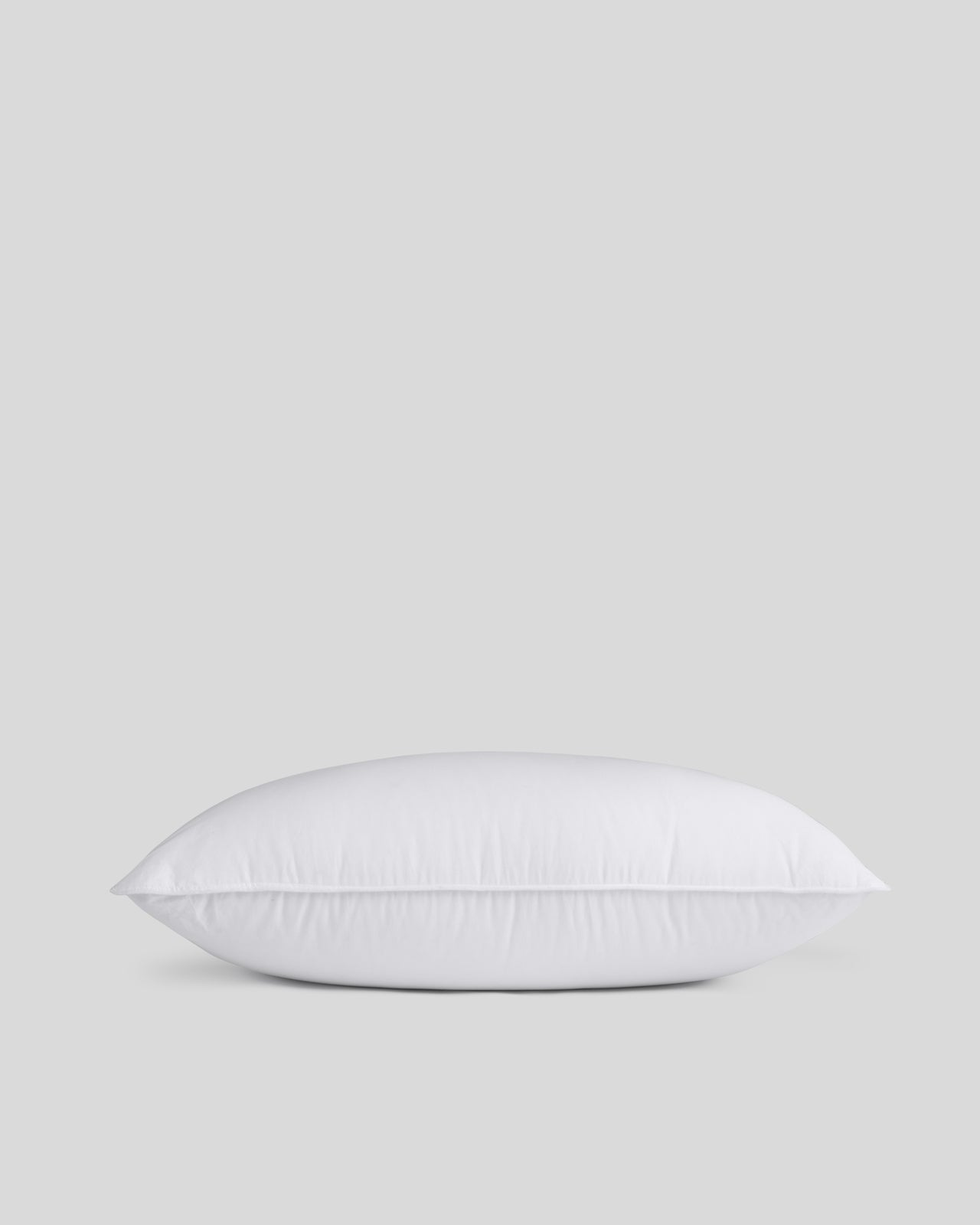
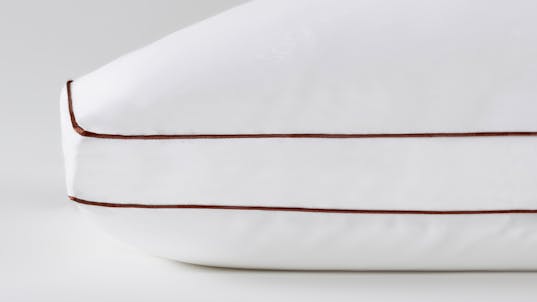
Pillows we recommend for this
FAQ
Can you vacuum seal pillows for storage?
You can for polyester and down-alternative pillows short term, but avoid it for down, latex, and memory foam. Down may not recover its loft, and foam and latex can take a permanent compression set.
How long can you store a pillow?
A clean, dry pillow stored in a breathable bag in a climate-controlled closet keeps for years. The pillow's usable lifespan clock is about nights slept on, not months in a closet — but mildew and compression in bad storage can end it early.
Where should you store spare pillows?
An interior closet or under-bed drawer in a heated, dry part of the house. Not a garage, basement, or attic.
Keep reading
Find the Right Pillow for Your Sleep Style
Get a tailored shortlist based on sleep position, shoulder fit, desired loft and materials using our free Pillow Finder.
Start the Free Pillow Finder →Instant recommendations, no email or signup required. We may earn commissions on some buying links.
Affiliate disclosure: Mr. Squish may earn a commission when you buy through links on this page. Recommendations are based on independent product research; any hands-on test is labelled separately. Learn more.