
How to Choose a Pillow for a Child
Children are not scaled-down adults when it comes to pillows. Their heads are proportionally larger and their necks are shorter, so an adult pillow that feels medium to you sits far too tall under a seven-year-old and pushes their chin toward their chest all night. The good news is that a child's pillow needs are simple: low loft, small footprint, washable everything, and a fill that does not flatten in six months.
In this guide
Loft by age, roughly
These are starting points, not rules — a tall ten-year-old with broad shoulders needs more pillow than a small one. Check the same way you would for an adult: look at your child from the side while they lie down and see whether their nose lines up with the centre of their chest.
- Ages 2–4 (toddler pillow) — about 2 to 3 inches of loft, 13x18 in size.
- Ages 5–8 — about 3 to 4 inches. A toddler pillow starts to feel too flat somewhere in here.
- Ages 9–12 — about 4 to 5 inches, or a standard adult pillow with fill removed.
- Side-sleeping children need slightly more loft than back-sleeping ones, same as adults.
Why adjustable fill is the smart buy
Children grow out of pillow heights faster than they grow out of shoes. An adjustable shredded-fill pillow lets you remove a handful of fill for a small child and add it back over the following years, which means one pillow covers a span that would otherwise take two or three purchases. It also lets you fix a wrong guess without a return.
If you buy adjustable, keep the removed fill in the zip bag it came in and label it. Everyone throws it away and then wants it back two years later.
Size and fit
A toddler pillow is 13x18 inches; a standard adult pillow is 20x26. The in-between years are awkward because there is no widely sold intermediate size, so most families move straight from a toddler pillow to a standard one and choose a low-loft standard rather than a mid-size.
Whatever size you pick, buy pillowcases to match. A pillow swimming inside an oversized case bunches up under the head and undoes the loft you carefully chose.
Fill types that work for kids
Durability and washability matter more than fancy materials here, because a child's pillow will meet juice, nosebleeds, and illness.
- Shredded memory foam — adjustable, supportive, holds loft. Usually spot-clean only, so pair it with a washable protector.
- Down alternative / polyester — cheap and fully machine washable, but it flattens fastest. Fine as a spare or for a child who is hard on bedding.
- Solid memory foam — supportive but often too tall out of the box for under-eights, and it traps heat.
- Down and feather — soft, but too plush to support a side-sleeping child and a common allergy concern. Skip it.
- Latex — durable, cool, naturally resistant to dust mites. The most expensive route and often too firm for small children.
Safety rules that still apply
Pediatric guidance is clear that babies should sleep on a flat, firm surface with no pillow, blanket, or soft bedding in the sleep space. Most families introduce a first pillow somewhere around 18 months to 2 years, once the child has moved out of a crib into a toddler bed. If you have any doubt about timing for your child, ask your pediatrician rather than a pillow website.
- No pillow in a crib, at any age, until the child has transitioned to a bed.
- Firm and thin beats soft and thick — a soft pillow a young child can bury their face in is the risk you are avoiding.
- Check for a certification such as CertiPUR-US or OEKO-TEX for foam and fabric emissions, and air out any new foam pillow for a day before use.
- Wash the cover weekly and replace the pillow itself every 18 to 24 months; children's pillows wear out faster than adults'.
Signs the pillow is wrong
Children rarely say 'my loft is too high.' They say their neck hurts, or you find them sleeping on top of the pillow, beside it, or with it folded in half. Sleeping on top of the pillow means it is too tall; folding it in half means it is too flat. Both are useful information and both are fixable by adjusting fill rather than buying again.
Pillows we recommend for this
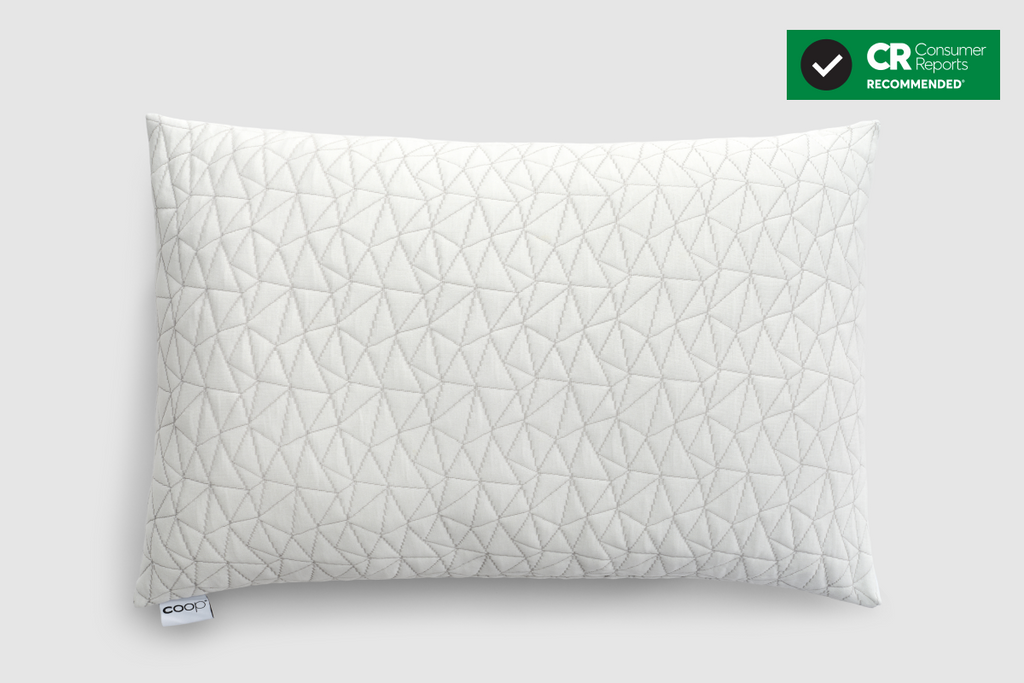


KeaBabies Toddler Pillow
Budget picks, daycare naps, and buying two so one is always clean
FAQ
What age can a child use a regular pillow?
Most children move to a standard-size, low-loft pillow somewhere between ages 5 and 8, though the fit depends on their frame rather than a birthday.
How thick should a kid's pillow be?
Roughly 3 to 4 inches for ages 5 to 8, and 4 to 5 inches for ages 9 to 12. Side sleepers need the higher end of the range.
Are memory foam pillows safe for children?
Yes, for children old enough to have a pillow at all, provided the foam is certified for emissions and the loft is low enough that their neck stays neutral.
How often should you replace a child's pillow?
Every 18 to 24 months, sooner if it has been through illness, has stains that will not wash out, or no longer springs back when folded.
Should a child's pillow be firm or soft?
Medium-firm. Firm enough that they cannot bury their face in it, soft enough that it does not create a pressure point on the ear.
Keep reading
Find the Right Pillow for Your Sleep Style
Get a tailored shortlist based on sleep position, shoulder fit, desired loft and materials using our free Pillow Finder.
Start the Free Pillow Finder →Instant recommendations, no email or signup required. We may earn commissions on some buying links.
Affiliate disclosure: Mr. Squish may earn a commission when you buy through links on this page. Recommendations are based on independent product research; any hands-on test is labelled separately. Learn more.