
How to Sleep With Sciatica
Sciatica is not a diagnosis so much as a symptom: pain that radiates from the lower back through the buttock and down the back of one leg, caused by irritation or compression of the sciatic nerve. Nights are often the worst part, because eight hours in a position that rotates your pelvis or compresses the lumbar spine gives the nerve no chance to settle. The good news is that positioning is one of the most effective levers you have, and it costs less than almost any other intervention.
In this guide
Side sleeping: always put a pillow between your knees
Side sleeping is the position most people with sciatica land on, and it works — but only with support between the knees. Without it, your top leg slides forward and down, which rotates the pelvis, torques the lumbar spine, and tightens the piriformis muscle that the sciatic nerve passes beneath. A contoured knee pillow restores the stack: knees together, hips level, spine straight.
Sleep on the side that hurts less. If your left leg is the painful one, lie on your right. Keep a slight bend in both knees rather than curling into a tight fetal position, which can flatten the lumbar curve more than most people find comfortable.
- Contoured knee pillow between the knees, not a folded blanket that slips out
- Small towel roll at the waist if your mattress lets your hip sink
- Pick a head pillow tall enough that your neck stays level with your spine
Back sleeping: elevate the knees
Back sleeping can be excellent for sciatica if you break the flat-leg position. Lying with legs straight tilts the pelvis forward and increases lumbar extension, which narrows the space the nerve roots exit through. Putting a pillow or wedge under your knees flexes the hips slightly, flattens that excess curve, and immediately reduces pull on the nerve.
Start with about 15 to 20 degrees of knee flexion — a standard pillow or a low wedge. Some people with stenosis-driven sciatica do better with more elevation, and a wedge system that lifts the whole lower body is worth trying if a single pillow does not help.
The fetal position question
Curling up tightly is a common instinct, and for sciatica caused by spinal stenosis it can genuinely help — flexing the spine opens the canal and takes pressure off the nerve roots. For sciatica caused by a herniated disc, the opposite is often true: deep flexion increases pressure inside the disc and can make the leg pain worse. If curling up feels better within a minute or two, it is probably fine for your case. If it makes the leg symptoms sharper, straighten out and use the knee-pillow setup instead.
Avoid stomach sleeping
Stomach sleeping is the worst position for sciatica. It forces the lumbar spine into extension, presses the pelvis into the mattress, and requires you to rotate your neck for hours. If you cannot break the habit immediately, place a thin pillow under your pelvis and lower abdomen to reduce the arch, use the flattest possible head pillow, and work toward transitioning to your side with a body pillow to hug.
Pregnancy sciatica
Sciatic pain in pregnancy is usually mechanical: the growing uterus shifts the center of gravity, relaxin loosens the pelvic joints, and the pelvis rotates more easily. Left-side sleeping is recommended in later pregnancy for circulation, and a full-length body pillow does the work of three separate pillows — supporting the belly, keeping the top knee elevated, and stopping the roll onto the back.
Mattress and getting out of bed
A mattress that lets your hips sink far below your shoulders undoes any pillow setup. Medium-firm is the range most studies on chronic back pain point to. A sagging mattress can be temporarily improved with a firm topper or a board underneath, though that is a stopgap rather than a fix.
How you get up matters more than people expect. Roll onto your side, drop your legs off the edge of the bed, and push up with your arms so your spine stays neutral. Sitting straight up from flat loads the lumbar spine at the exact moment it is stiffest.
When to see a professional
Positioning manages symptoms; it does not treat the underlying compression. See a clinician if the pain lasts more than a few weeks, is worsening, follows an injury, or comes with progressive weakness. Seek care immediately for numbness in the groin or inner thighs, or loss of bladder or bowel control — those can signal cauda equina syndrome, a surgical emergency.
Pillows we recommend for this
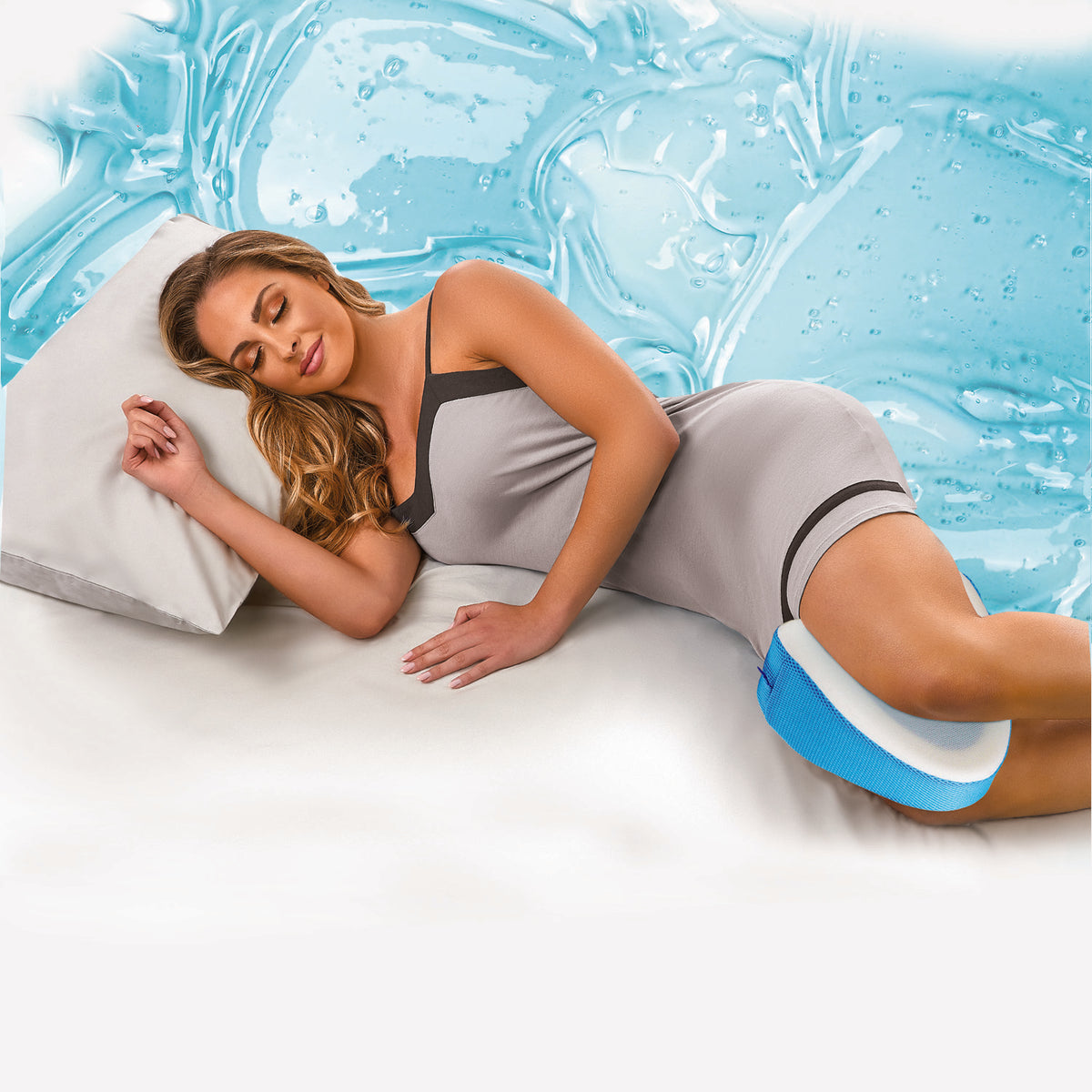

Everlasting Comfort Knee Pillow
Side sleepers who want a strapped-in knee pillow that stays put
FAQ
What is the best sleeping position for sciatica?
On your side with a contoured pillow between your knees, lying on the less painful side, or on your back with a pillow or wedge under your knees. Both positions keep the pelvis level and reduce compression around the sciatic nerve.
Should I sleep on the side that hurts?
Generally no. Sleeping on the painful side concentrates pressure on the hip and the muscles the sciatic nerve passes through. Lie on the opposite side with a knee pillow to keep the hips stacked.
Does a knee pillow really help sciatica?
Yes, and it is the single highest-impact change for side sleepers. Without it, the top leg drops forward and rotates the pelvis, twisting the lumbar spine for hours. A contoured foam pillow keeps the knees and hips aligned all night.
Is a firm mattress better for sciatica?
Medium-firm is the sweet spot in most research on chronic back pain. Too soft lets the hips sink and the spine sag; too firm creates pressure points at the hip and shoulder that push you into worse positions.
Why is my sciatica worse at night?
Two reasons: hours in one position without the small movements that relieve nerve pressure during the day, and inflammatory changes that peak overnight. A position that keeps the pelvis level and the lumbar spine neutral is the main thing you can control.
Keep reading
Find the Right Pillow for Your Sleep Style
Get a tailored shortlist based on sleep position, shoulder fit, desired loft and materials using our free Pillow Finder.
Start the Free Pillow Finder →Instant recommendations, no email or signup required. We may earn commissions on some buying links.
Affiliate disclosure: Mr. Squish may earn a commission when you buy through links on this page. Recommendations are based on independent product research; any hands-on test is labelled separately. Learn more.