
How to Stop Drooling in Your Sleep
You produce saliva all night; the only question is whether it goes down your throat or onto your pillow. Drooling happens when your mouth falls open and gravity does the rest, so the two things that matter are why your mouth is open and which way your head is tilted. Both have practical fixes, and a small number of causes are worth ruling out with a doctor.
In this guide
Why it happens
Swallowing continues during sleep but at a much lower rate, so saliva pools. With your lips sealed it drains backward and you swallow it. With your mouth open — which is what mouth breathing means — it runs forward instead.
- Mouth breathing: the leading cause, usually driven by nasal congestion, allergies, a deviated septum, or enlarged tonsils and adenoids.
- Side and stomach sleeping: gravity carries pooled saliva out the low corner of the mouth.
- Blocked nose from allergies or a cold: forces mouth breathing for as long as the congestion lasts.
- Acid reflux: can increase saliva production, and reflux is worse lying flat.
- Some medications: sedatives, certain antipsychotics, and some Alzheimer's medications increase saliva.
- Sleep apnea: often involves open-mouth breathing, and drooling can be one visible sign among others like loud snoring and daytime sleepiness.
What actually helps
Work through these in order — the first two solve most cases.
- Clear your nose before bed: saline rinse or spray, and treat allergies properly if that is the driver. Nasal breathing is the whole game.
- Try sleeping on your back if you can tolerate it. Saliva then drains backward rather than out. This is the single most direct fix, though back sleeping is not suitable if you have significant snoring or apnea.
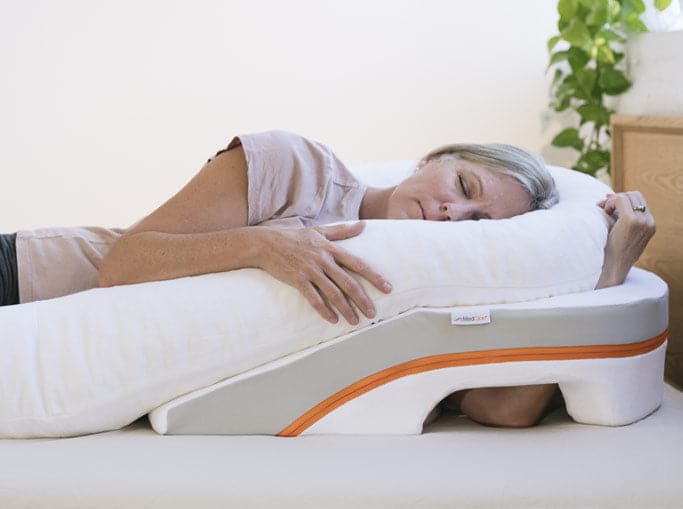
- Elevate your head slightly with a modestly higher pillow or a small wedge, so the pooled saliva does not sit at the front of the mouth. Do not stack two pillows to do this — the neck angle is not worth it.
- Stay hydrated. Dehydration produces thicker saliva that is harder to swallow and more likely to pool.
- Skip alcohol close to bedtime: it deepens muscle relaxation, which means a slacker jaw and more open mouth.
- Treat reflux if you have it — later dinners and torso elevation both help.
Position, and what to do if back sleeping is not an option
Many people cannot or should not switch to back sleeping — it worsens snoring and obstructive sleep apnea for some. If side sleeping is the right position for you, the goal shifts to keeping the mouth closed and protecting the pillow.
Correct loft matters here too: a pillow that is too flat drops the head and lets the jaw hang open, while correct loft keeps the head neutral and the jaw more naturally closed. A washable pillow protector is a sensible practical measure, since saliva soaking into the fill is a common cause of pillow odor and yellowing.
When to talk to a clinician
Drooling that is new, heavy, or paired with other symptoms is worth investigating rather than managing with pillow tweaks.
- Loud snoring, witnessed pauses in breathing, gasping, or heavy daytime sleepiness — this pattern suggests obstructive sleep apnea and needs assessment.
- Drooling that starts suddenly with no change in congestion or medication.
- Difficulty swallowing, a hoarse voice, or drooling while awake.
- Facial weakness, slurred speech, or any new neurological symptom — seek urgent care.
- Persistent nasal blockage that never clears, which an ENT can assess for structural causes.
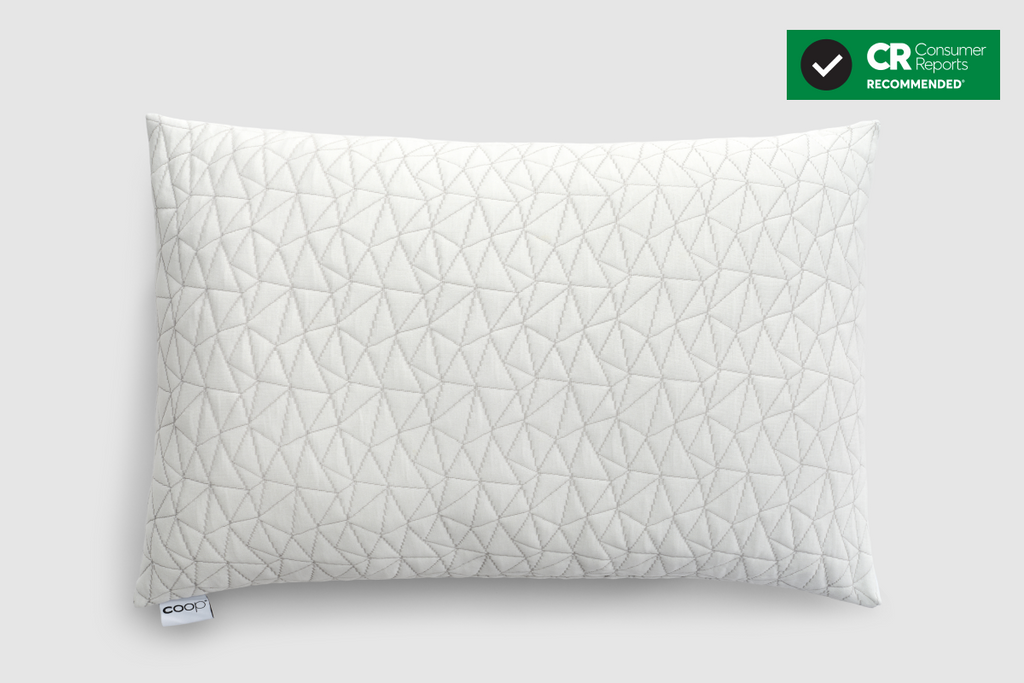
Pillows we recommend for this
FAQ
Why do I only drool when I sleep on my side?
Gravity. On your side or front, pooled saliva runs out of the low corner of your mouth instead of draining backward for you to swallow. Back sleeping is the direct fix, if it suits you otherwise.
Does drooling in your sleep mean you have sleep apnea?
Not on its own — mouth breathing from simple congestion is far more common. But drooling combined with loud snoring, witnessed breathing pauses, or daytime sleepiness is a combination worth having assessed.
Is sleep drooling a sign of good sleep?
It is sometimes described as a sign of deep or REM sleep, because muscle relaxation is greatest then. That is a partial truth at best — the mechanical cause is an open mouth, and plenty of people reach deep sleep without drooling at all.
How do I stop saliva ruining my pillow?
Use a washable pillow protector under the case and wash both regularly. Saliva absorbed into the fill is a leading cause of yellowing and persistent odor, and once the fill is saturated no washing fully removes it.
Keep reading
Find the Right Pillow for Your Sleep Style
Get a tailored shortlist based on sleep position, shoulder fit, desired loft and materials using our free Pillow Finder.
Start the Free Pillow Finder →Instant recommendations, no email or signup required. We may earn commissions on some buying links.
Affiliate disclosure: Mr. Squish may earn a commission when you buy through links on this page. Recommendations are based on independent product research; any hands-on test is labelled separately. Learn more.