
Why Does My Neck Hurt After Sleeping?
Waking with a stiff, sore neck that eases as the day goes on is the signature of a mechanical problem: something held your neck out of neutral for seven hours. In the large majority of cases the cause is pillow loft, sleep position, or a combination of the two, and both are fixable within a couple of weeks. This guide walks through the causes in order of likelihood, how to test each one, and the red flags that mean the pillow is not the story.
In this guide
The pattern tells you a lot
Before changing anything, notice the shape of the pain. It narrows the cause considerably.
- Worst on waking, better within an hour of moving: mechanical and posture-related. Pillow and position are the first suspects.
- Worse as the day goes on, better in the morning: more likely daytime posture, desk setup, or stress-related muscle tension than your pillow.
- One side only, with a pull toward the shoulder: usually loft that is wrong for the side you sleep on.
- Base of the skull with a headache attached: often chin-tucked-forward posture from too much loft.
- Pain with numbness, tingling, or weakness running down an arm: nerve involvement — see the red flags below.
Cause 1: pillow loft is wrong for your position
This is the most common cause by a wide margin. Your pillow has to fill the gap between your head and the mattress exactly; too much or too little and your cervical spine bends all night while your muscles hold the strain.
The gap depends on your position and your shoulder width, not your height. A side sleeper needs roughly 5 to 6 inches of loft, a back sleeper 3 to 5, a stomach sleeper close to zero. If you switch positions overnight, one pillow height cannot be right for all of them, which is why adjustable pillows suit combination sleepers.
- Too tall: chin tucks toward the chest, the back of the neck feels compressed, and pain sits at the base of the skull.
- Too flat: the head tips down toward the mattress and the pull runs along the upper side of the neck and into the shoulder.
- Test it: have someone photograph you from behind while you lie in your normal position. Your nose should point straight ahead and your ear, shoulder, and hip should line up.
Cause 2: sleep position
Stomach sleeping is the position most reliably associated with morning neck pain, because it forces your head to rotate 90 degrees for hours. No pillow fixes rotation; only changing position does, and the practical route is a very thin pillow under the head plus a pillow under the hips to discourage rolling fully onto the front.
Side and back sleeping are both neck-friendly when the loft is right. Side sleepers should watch for the shoulder getting crushed under them — a shoulder that collapses drops the head lower and effectively reduces loft mid-night.
Cause 3: the pillow is worn out
A pillow that was correct two years ago may have lost an inch of loft, and that inch is enough. Fold the pillow in half and let go: if it stays folded, the fill has no resilience left and it is no longer supporting anything.
Typical replacement points are 1 to 2 years for polyester, 2 to 3 for memory foam, and 3 or more for latex, buckwheat, and good down. Pain that came on gradually over months, rather than after one bad night, fits a pillow that is quietly flattening.
Cause 4: everything that is not the pillow
If loft, position, and pillow age all check out, look wider.
- Mattress sag: a mattress that dips at the shoulders changes the effective loft of any pillow.
- Daytime posture: hours of looking down at a phone or a low monitor loads the same muscles that then ache at night.
- Stress and clenching: jaw clenching and general muscle guarding are common causes of tight upper trapezius and morning stiffness.
- Cold drafts: sleeping under an air-conditioning vent or fan pointed at the neck is a real and underrated trigger.
- A single bad night: an acute wry neck from an awkward position typically settles within a few days with gentle movement and heat.
A two-week fix protocol
Change one thing at a time so you know what worked.
- Week 1: correct the loft. Adjust or replace the pillow so your neck sits neutral in your main position, and give it at least three nights before judging — your neck needs a few nights to adapt to a change.
- Keep a one-line note each morning: how bad, which side, how long it took to ease.
- Week 2: if there is no improvement, address position. Stomach sleepers, move toward side sleeping with a body pillow to hug.
- Keep the neck warm and moving during the day — gentle range-of-motion beats rest for mechanical neck pain.
- If two weeks of correct loft and position produce no change at all, the pillow is not the cause and it is worth a clinical assessment.
When to see a clinician
Some symptoms are not a pillow problem, and delaying assessment for them is the wrong trade.
- Numbness, tingling, or weakness in an arm or hand that does not resolve within minutes of getting up.
- Neck pain following a fall, collision, or any head or neck injury.
- Fever, unexplained weight loss, or night pain that wakes you and is unrelated to position.
- A severe sudden headache, visual changes, or trouble with balance or coordination.
- Pain that has persisted beyond six weeks despite fixing loft and position.
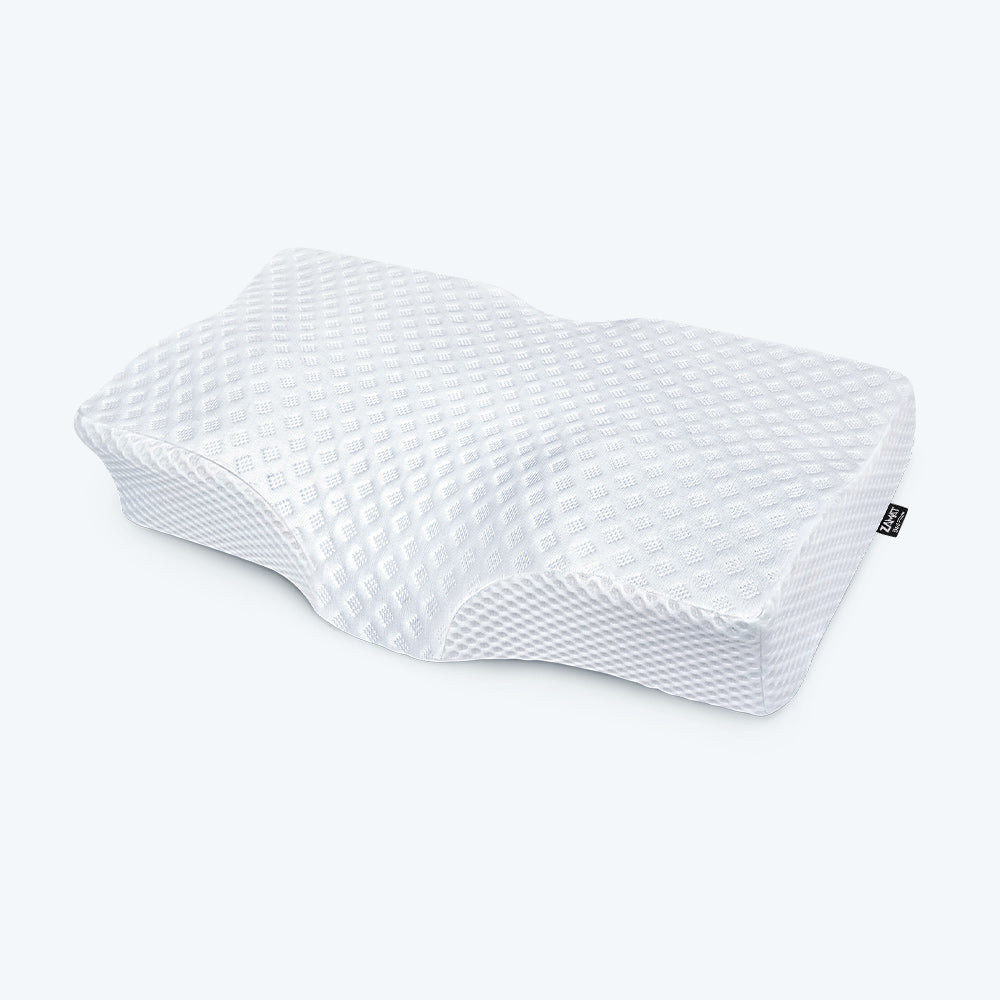
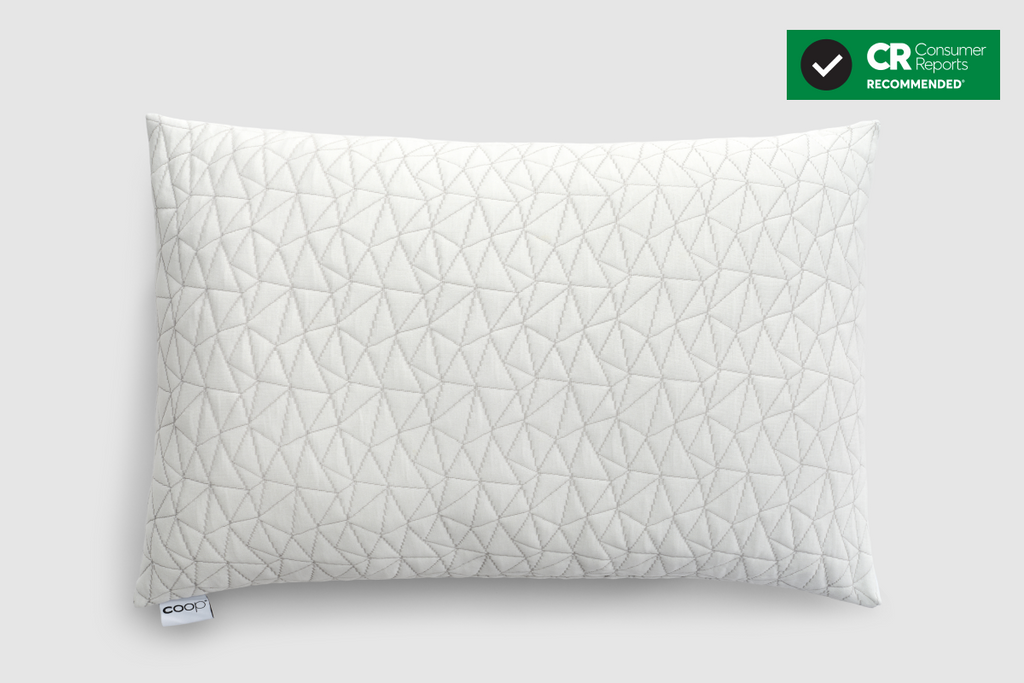
Pillows we recommend for this

FAQ
Can a pillow cause neck pain?
Yes — it is the most common single cause of pain that is worst on waking and eases through the morning. Either the loft is wrong for your sleep position or the fill has flattened enough that the support has gone.
What pillow height should I use for neck pain?
Roughly 5 to 6 inches for side sleepers, 3 to 5 for back sleepers, and as thin as possible for stomach sleepers. Shoulder width matters more than height: broad shoulders need more loft, narrow shoulders need less.
How long does it take a new pillow to help neck pain?
Give any change three nights before judging it and two weeks before concluding it did not work. Necks adapt slowly, and a correct pillow can feel odd on the first night.
Is a cervical contour pillow better for morning neck pain?
It helps people who know their loft is right but want the shape decided for them, and it suits back sleepers particularly well. It is not automatically better than a correctly adjusted shredded-fill pillow, and its fixed shape is a drawback if you change position a lot overnight.
Should I sleep without a pillow if my neck hurts?
Only if you are a stomach sleeper. For side and back sleepers, removing the pillow leaves the head unsupported and generally makes mechanical neck pain worse.
Keep reading
Find the Right Pillow for Your Sleep Style
Get a tailored shortlist based on sleep position, shoulder fit, desired loft and materials using our free Pillow Finder.
Start the Free Pillow Finder →Instant recommendations, no email or signup required. We may earn commissions on some buying links.
Affiliate disclosure: Mr. Squish may earn a commission when you buy through links on this page. Recommendations are based on independent product research; any hands-on test is labelled separately. Learn more.