
Is Memory Foam Toxic? A Straight Answer About Off-Gassing
Unbox a memory foam pillow and you get a distinct chemical smell that can fill a bedroom for a day or two. That smell is real, and the worry it triggers is reasonable. But 'it smells like chemicals' and 'it is toxic' are different claims, and most of what is written online collapses the two. This guide separates what is measured from what is marketed, so you can decide whether to air out a foam pillow or buy a natural fill instead.
In this guide
What off-gassing actually is
Memory foam is a polyurethane foam made by reacting polyols with isocyanates. The finished foam holds small amounts of leftover reaction products and processing aids, and those evaporate slowly at room temperature. The evaporating compounds are called volatile organic compounds, or VOCs, and the smell you notice when you open the bag is those VOCs leaving the foam.
Off-gassing is heaviest in the first 24 to 72 hours after unwrapping, because the pillow has been compressed and sealed in plastic since it left the factory, and everything that would normally have dissipated has been trapped inside with it. The rate drops quickly after that.
What the research does and does not show
Peer-reviewed testing of polyurethane foam bedding has consistently found that the VOCs released are measurable and that the concentrations are low — generally well below occupational exposure limits, and falling substantially within the first week. The compounds identified in these studies are typically things like toluene, acetone, and dimethylformamide at trace levels.
What the research does not support is the stronger claim you often see repeated: that a memory foam pillow releases dangerous quantities of formaldehyde or flame retardants during normal use. Modern foam sold in the US and EU is not treated with PBDE flame retardants, which were phased out, and pillows in most markets are not subject to the open-flame standards that drive heavy chemical treatment in mattresses.
The honest summary is this: for most people the health risk from a new foam pillow appears to be low, the smell is temporary, and the main documented effects are irritation-type symptoms — headache, throat irritation, nausea — in sensitive people during the first days. If you have asthma, chemical sensitivity, or a newborn in the room, that is a genuine reason to choose a different fill rather than tough it out.
How to air out a new foam pillow
If you already own the pillow, the fix is mostly time and airflow.
- Unwrap it in a room you are not sleeping in, ideally with a window open, and leave it there 48 to 72 hours before first use.
- Warmth speeds evaporation — a sunny spot or a mildly warm room clears the smell faster than a cold one.
- Do not seal it back inside plastic or a zippered protector during the airing period; that traps everything you are trying to release.
- Wash the removable cover before first use if the care label allows it.
- If a strong smell is still obvious after two weeks, that is unusual and worth a return rather than another week of waiting.
Certifications worth looking for
Certifications do not make foam natural, but they do put a third party between you and the marketing copy.
- CertiPUR-US: tests polyurethane foam for low VOC emissions and for the absence of PBDE flame retardants, formaldehyde, and certain heavy metals. Specific to foam.
- OEKO-TEX Standard 100: tests the finished textile — usually the cover — for a long list of harmful substances. Common and meaningful, but it is not a foam test.
- GREENGUARD Gold: a chemical-emissions standard with limits strict enough that it is used for schools and healthcare settings. The strongest of the three for off-gassing specifically.
- GOLS and GOTS: organic certifications for latex and for textiles respectively. These apply to natural-fill pillows, not to memory foam.
If you would rather skip foam entirely
Natural fills avoid the question rather than answering it. Each has a real trade-off, so pick based on how you sleep rather than on how clean the material sounds.
- Natural latex: supportive, springy, durable, and it has a mild rubbery smell of its own that fades. Heavier and pricier than foam. Not for latex allergies.
- Buckwheat hulls: extremely breathable and firmly supportive, fully adjustable by removing hulls, but heavy and audibly rustly.
- Kapok: a soft plant fiber with a down-like feel, often blended with latex. Compresses over time and needs fluffing.
- Wool: temperature-regulating and naturally dust-mite resistant, but it packs down and is rarely available as a whole-pillow fill.
- Down and feather: soft and moldable, animal-derived, and the least supportive option for side sleepers.
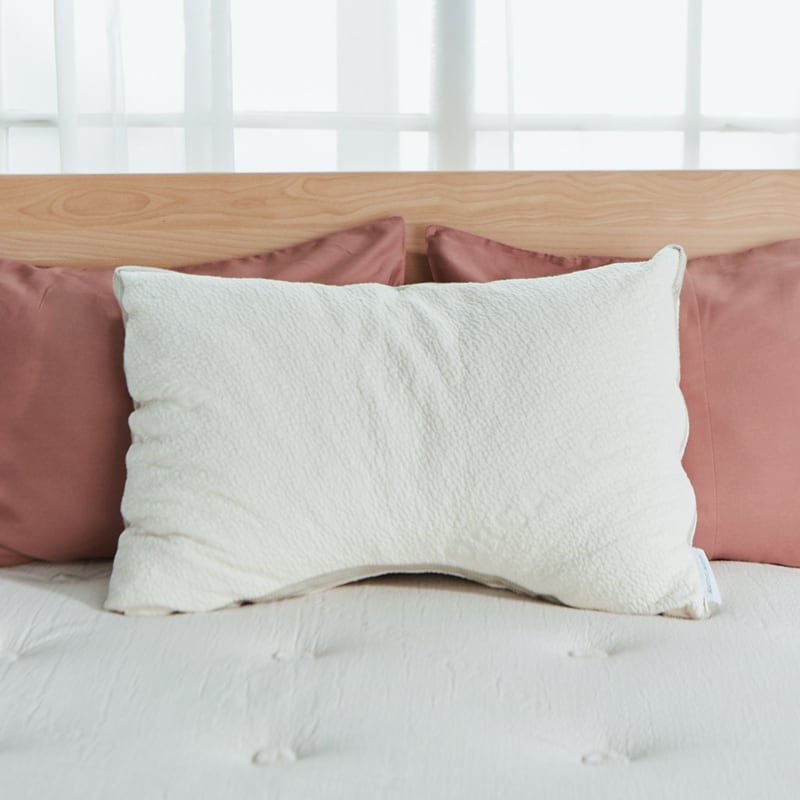
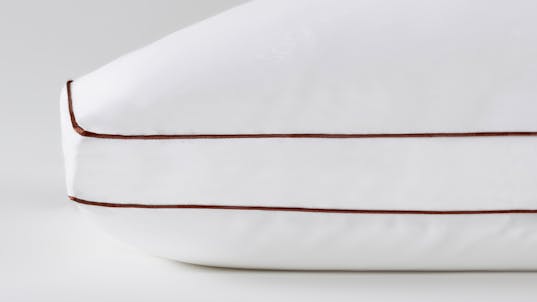
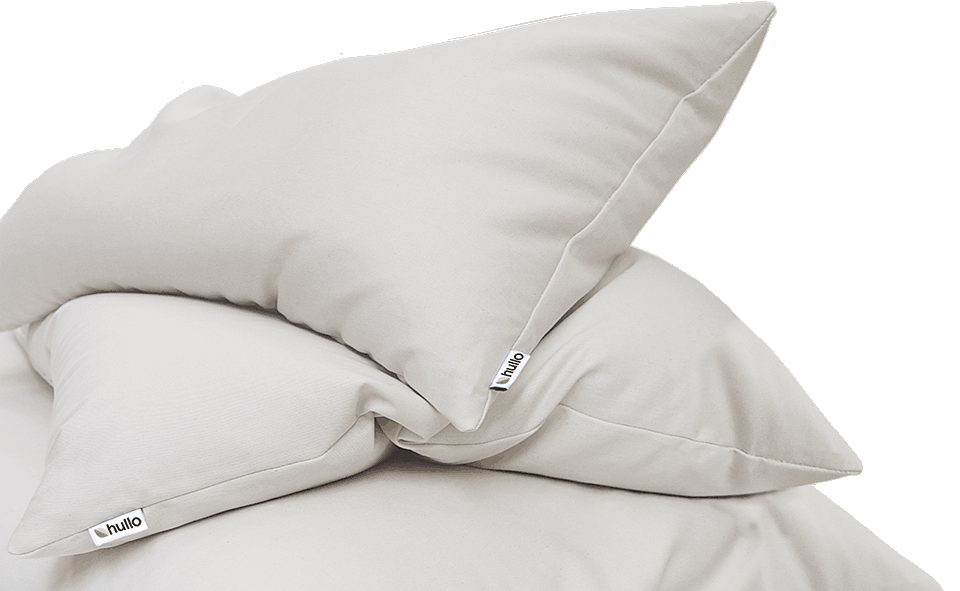
Pillows we recommend for this
FAQ
How long does memory foam off-gas?
The strong smell usually fades within 24 to 72 hours of unwrapping and is typically unnoticeable within one to two weeks. A smell that is still strong after two weeks is unusual — return the pillow rather than continuing to wait.
Is CertiPUR-US foam safe?
CertiPUR-US certification means the foam has been tested for low VOC emissions and does not contain PBDE flame retardants, formaldehyde, mercury, lead, or ozone depleters. It is a meaningful emissions and content standard, but it is a foam industry program rather than a government safety approval, so treat it as a good filter rather than a guarantee.
Can memory foam cause headaches?
Some people do report headaches, throat irritation, or nausea during the first days with a new foam product, consistent with irritation from VOC exposure. Airing the pillow out before use usually prevents it. If symptoms persist after the smell is gone, the more likely cause is loft and neck position, not chemistry.
Is memory foam safe for babies and toddlers?
Pillows of any kind are not recommended before about 18 months to 2 years because of suffocation risk, and that guidance has nothing to do with off-gassing. When a pillow becomes appropriate, a firm, flat, washable natural-fill or down-alternative toddler pillow is the more conservative choice.
Does memory foam contain formaldehyde?
Formaldehyde is not an intentional ingredient in polyurethane foam, and certified foam is tested for it. Trace amounts have been detected in some testing of uncertified products, which is the main practical argument for buying certified foam.
Keep reading
Find the Right Pillow for Your Sleep Style
Get a tailored shortlist based on sleep position, shoulder fit, desired loft and materials using our free Pillow Finder.
Start the Free Pillow Finder →Instant recommendations, no email or signup required. We may earn commissions on some buying links.
Affiliate disclosure: Mr. Squish may earn a commission when you buy through links on this page. Recommendations are based on independent product research; any hands-on test is labelled separately. Learn more.