
Is Your Pillow Too High? 7 Signs and How to Fix It
A pillow that is too high holds your neck in flexion or side-bend for hours — the sleep equivalent of looking down at your phone all night. It is one of the most common pillow fit errors, and one of the easiest to fix once you know the signs. Here is how to tell your pillow is too tall, what it does to you, and what to change.
The signs
The clearest single test is positional: lying in your normal position, your chin should point straight ahead. Chin pushed toward your chest on your back, or head tilted away from the mattress on your side, means the pillow is too high. Beyond the mirror, your body keeps score:
- Headache at the base of the skull on waking
- A compressed or bunched feeling at the front of the neck
- Stiffness turning your head first thing in the morning
- Waking with your chin on your chest on your back
- Ear pushed uncomfortably against your shoulder on your side
- Numbness or tingling in the arms (a bent neck irritates the nerve roots)
- Snoring that started or worsened (a flexed neck narrows the airway)
What a too-high pillow does overnight
Muscles and ligaments adapt to whatever position they are held in longest. Eight hours of flexion shortens the muscles at the front of the neck and stretches the ones at the back — which is why the ache is often worst at the base of the skull and between the shoulder blades.
The airway angle matters too. A chin-tucked position partially narrows the airway, which is why an over-tall pillow can worsen snoring even in people whose pillow height was the only thing that changed.
Why it happens
The classic cause is following generic advice. Side sleepers are told to buy tall pillows; if you have narrow shoulders or a soft mattress, the standard five-to-six-inch recommendation overshoots your actual gap. Stacking two pillows is the second cause — a stack is almost always taller than needed and collapses unevenly.
The third cause is drift: a pillow that fit on your old firm mattress is suddenly too tall on a new soft one, because your shoulder now sinks further and the gap has shrunk.
The fix
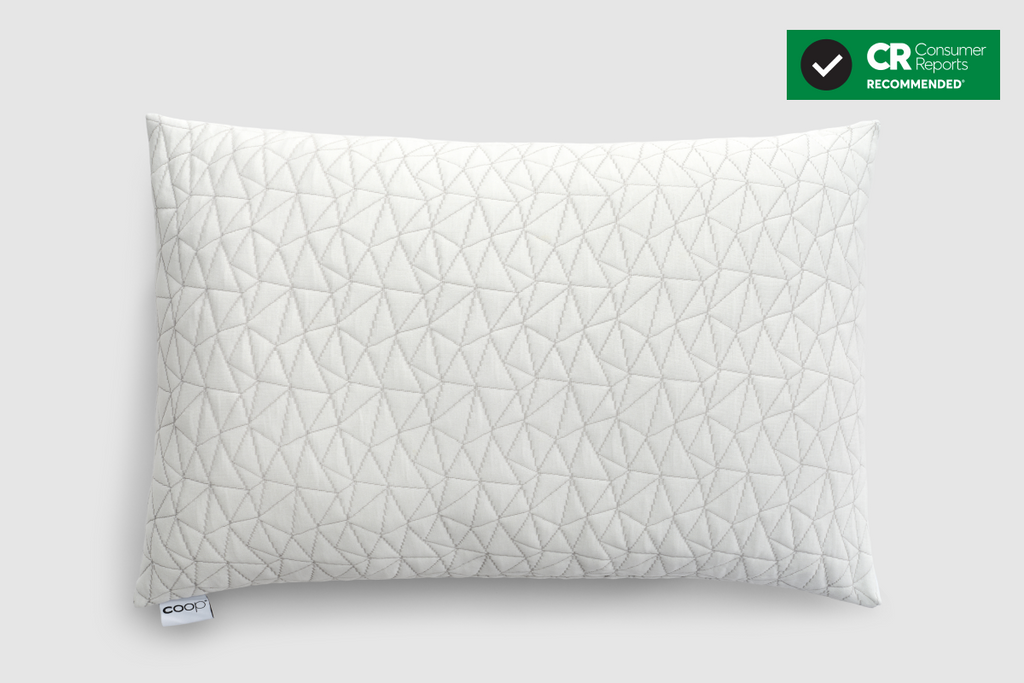
If the pillow is adjustable, remove fill in small increments — a handful every few nights — until the mirror test passes. If it is a fixed pillow, options are limited: down and polyester can be compressed with use, foam cannot, so an over-tall foam pillow usually means an exchange within the trial window.
Re-check after any mattress change. And if lowering the pillow removes the symptoms, you have confirmed the diagnosis — the pillow was the problem, and you are done.
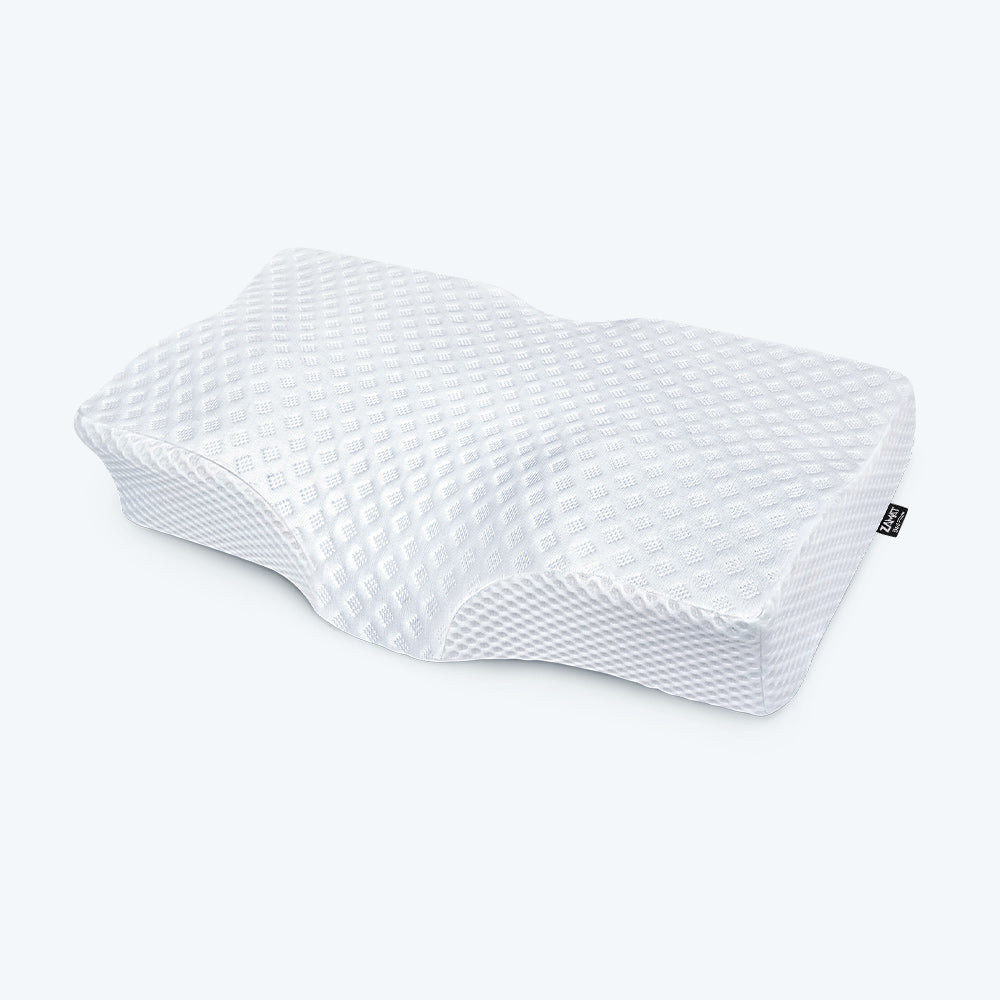
Pillows we recommend for this

FAQ
Keep reading
Get the Mr. Squish Pillow Cheat Sheet
A simple guide to choosing the right pillow based on your sleep position, body size, and comfort preferences.
No spam. Unsubscribe anytime.
Affiliate disclosure: Mr. Squish may earn a commission when you buy through links on this page. Recommendations are based on independent product research; any hands-on test is labelled separately. Learn more.