
Pillow Loft for Side Sleepers on a Firm Mattress
On a firm mattress almost nothing sinks. Your shoulder stays near the surface, so close to your full shoulder width becomes vertical space between your ear and the bed — the largest gap any pillow has to fill. That makes firm-mattress side sleeping the situation where a too-low pillow does the most damage, and where fills that collapse overnight cause the most morning neck pain.
In this guide
The target range
For an average-build side sleeper on a firm mattress, aim for roughly 5 to 6.5 inches of compressed loft — about half an inch above the medium-mattress baseline, and up to an inch above it on an extra-firm bed, a futon, or a floor mattress. Broad shoulders on a firm mattress are the one combination that regularly needs 6 to 7 inches or more.
As always, compressed loft is the measurement that counts. Judge the pillow under the weight of your head, not by the number on the packaging.
- Narrow shoulders, firm mattress: about 4 to 5 inches
- Average shoulders, firm mattress: about 5 to 6 inches
- Broad shoulders, firm mattress: about 6 to 7 inches or more
Support consistency matters more than height alone
A firm mattress asks the pillow to hold a taller column of support all night, which is exactly where soft fills fail. A down pillow that measures six inches when you lie down can be at two inches by 3 a.m., and on a firm bed that leaves your head dramatically below your spine.
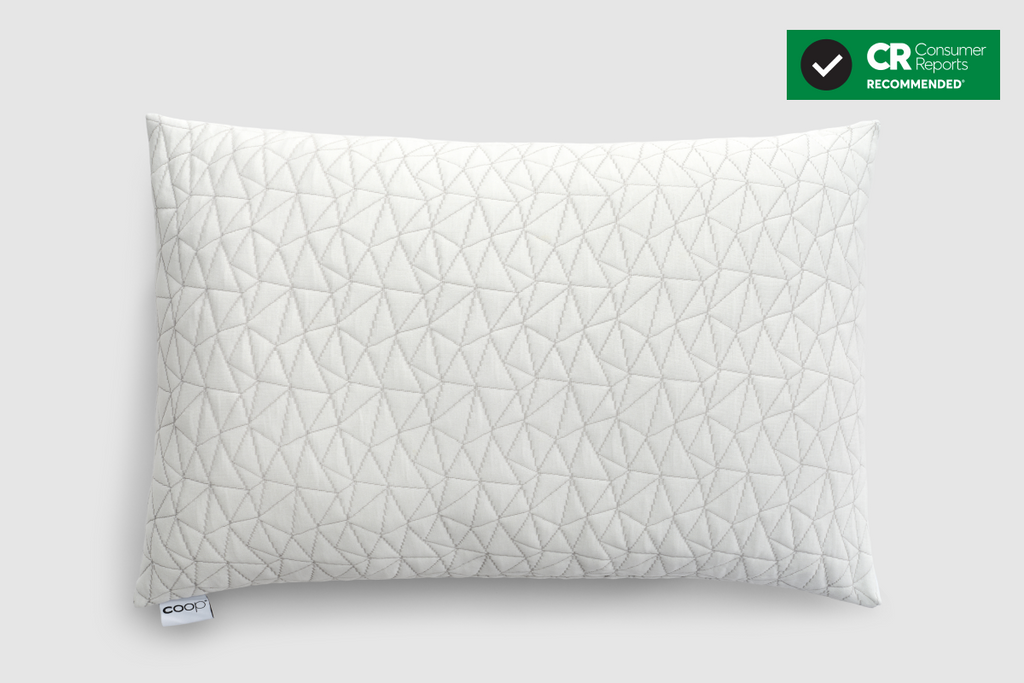
Prioritise fills that resist compression: dense shredded memory foam with enough fill to stay tall, solid latex, buckwheat, or a firm contour foam. Adjustable pillows help here too, since you can overfill toward the top of your range.
Signs your pillow is too low for a firm bed
Look for extension symptoms: a pulling ache along the upper side of your neck, a hand or forearm shoved under the pillow, folding the pillow in half during the night, or waking with your head visibly lower than your spine in a photo.
Shoulder pain is the other common signal. On a firm mattress the shoulder takes real pressure, and a pillow that is too low lets your head drop toward it, closing the joint space further.
Protecting the shoulder as well as the neck
A firm surface compresses the side-sleeping shoulder, so pillow height alone may not be enough. Bringing the shoulder forward of the pillow edge, hugging a body pillow to stop the torso rolling, and using a knee pillow to keep the hips stacked all reduce the load. A shoulder cut-out or notch shape gives the joint somewhere to sit.
If shoulder pain persists on a firm bed with correct pillow height, the mattress is a fair suspect — a plush topper is the cheaper experiment before replacing it.
When to go adjustable
Firm mattresses tend to need loft at the tall end, and tall requirements are the hardest to buy off the shelf: many pillows sold as high loft compress into the medium range. An adjustable pillow lets you keep adding fill until the alignment check passes, and lets you top it up as the fill compacts. Our Pillow Loft Calculator will give you the target range first.
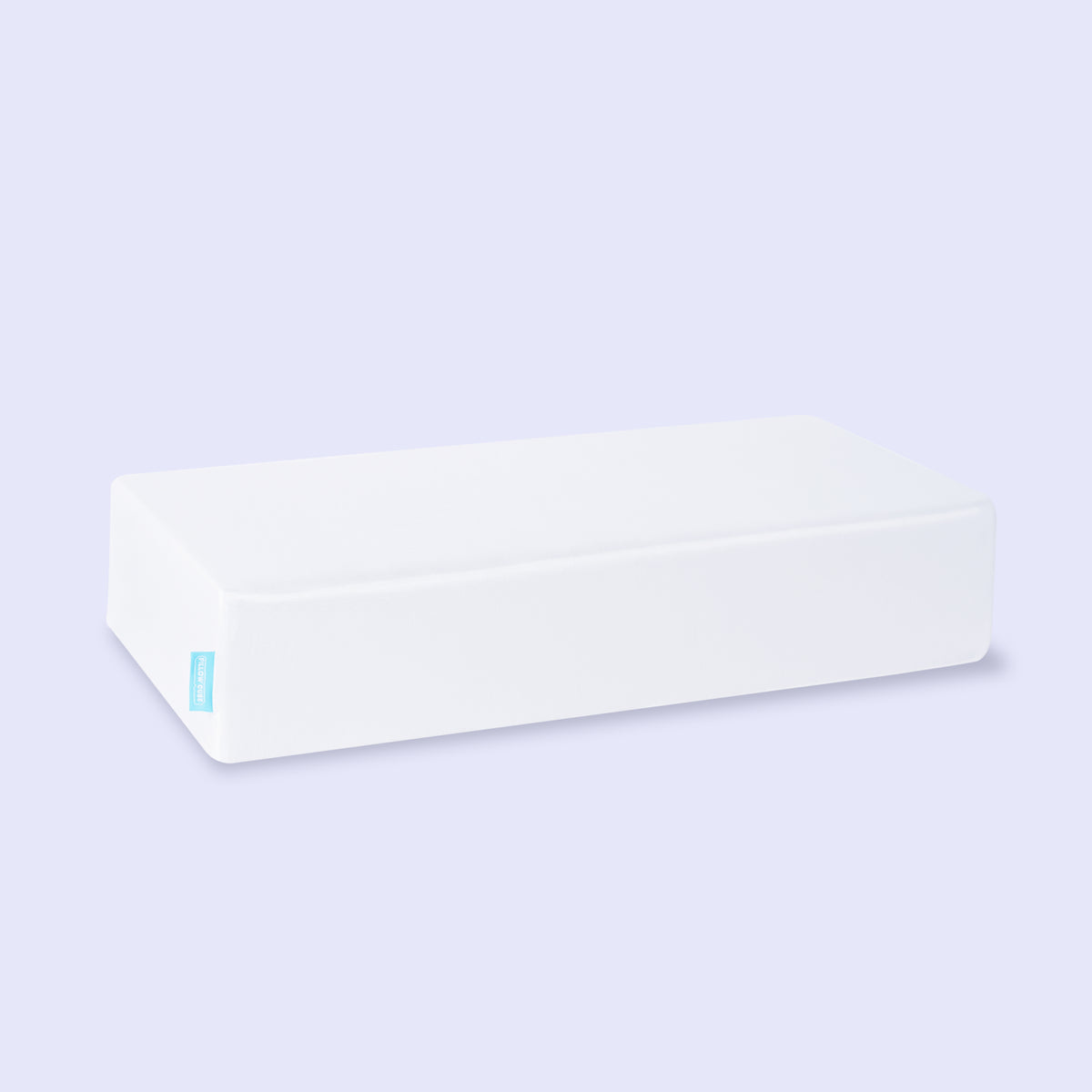
Pillows we recommend for this

FAQ
Keep reading
Get the Mr. Squish Pillow Cheat Sheet
A simple guide to choosing the right pillow based on your sleep position, body size, and comfort preferences.
No spam. Unsubscribe anytime.
Affiliate disclosure: Mr. Squish may earn a commission when you buy through links on this page. Recommendations are based on independent product research; any hands-on test is labelled separately. Learn more.