
Pillow Loft for Side Sleepers on a Soft Mattress
Standard side-sleeper advice — four to six inches of compressed loft — assumes a medium mattress. On a genuinely plush bed, your shoulder disappears into the surface, your torso follows it down, and the gap your pillow has to fill gets noticeably smaller. Keep using the standard number and you end up with your chin pushed toward your chest all night, which is the classic soft-mattress pillow mistake.
In this guide
The target range
For an average-build side sleeper on a soft mattress, aim for roughly 3.5 to 5 inches of compressed loft — about half an inch to an inch below the medium-mattress baseline. Narrow shoulders trend toward the bottom of that band; broad shoulders can still need 5 to 6 inches even on a plush bed, because a wide shoulder creates a large gap regardless of how much it sinks.
Compressed loft is the number that matters: the height under the weight of your head, not the height on the shelf. A six-inch down pillow may compress to two or three inches; a six-inch latex pillow barely compresses at all.
- Narrow shoulders, soft mattress: about 3 to 4 inches
- Average shoulders, soft mattress: about 4 to 5 inches
- Broad shoulders, soft mattress: about 5 to 6 inches
Why sinkage changes the maths
On your side, the pillow fills the vertical distance between your ear and the mattress surface. A plush comfort layer lets the shoulder press into the bed rather than being stacked on top of it, so that distance shortens. Heavier sleepers sink further still, which compounds the effect and is why body weight matters as much as the firmness label.
This also explains a common complaint: the pillow that was perfect before you added a plush topper suddenly feels too tall. The pillow did not change — the gap did.
Signs your pillow is too tall for a soft bed
Look for flexion symptoms: chin pushed toward your chest, a bunched or compressed feeling under the jaw, an ache at the base of the skull on waking, or an instinct to slide the pillow further down under your shoulder. Some people also find one arm goes numb, because a tall pillow plus a sunken shoulder rolls the torso forward.
Confirm it with the mirror test on your own bed: nose pointing straight ahead, spine in one line from lower back to the back of the head.
Which fills suit a plush mattress
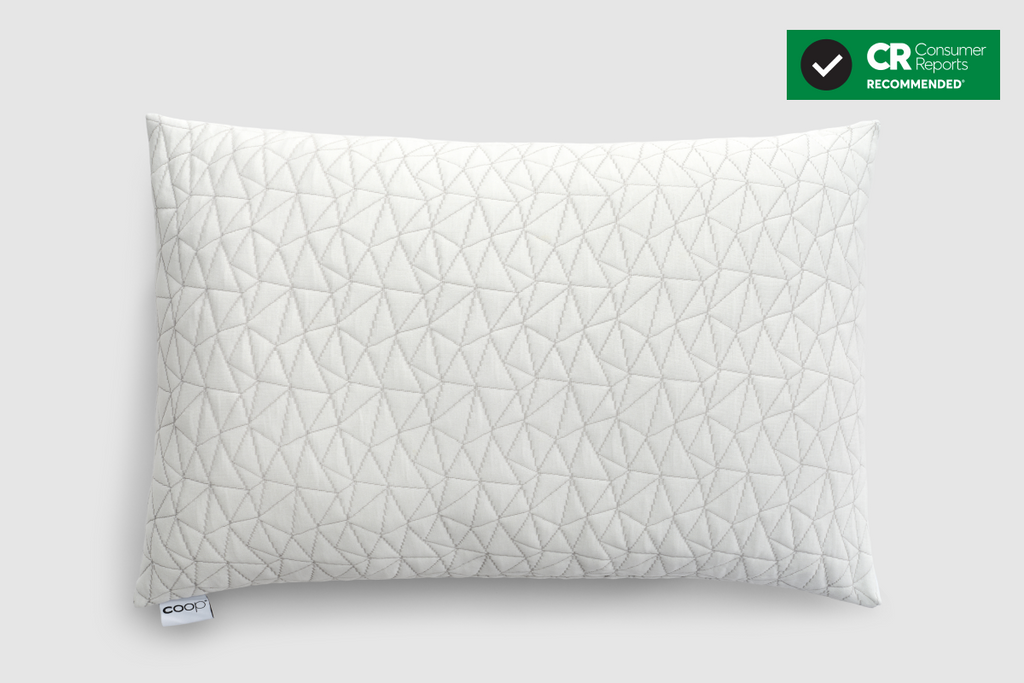
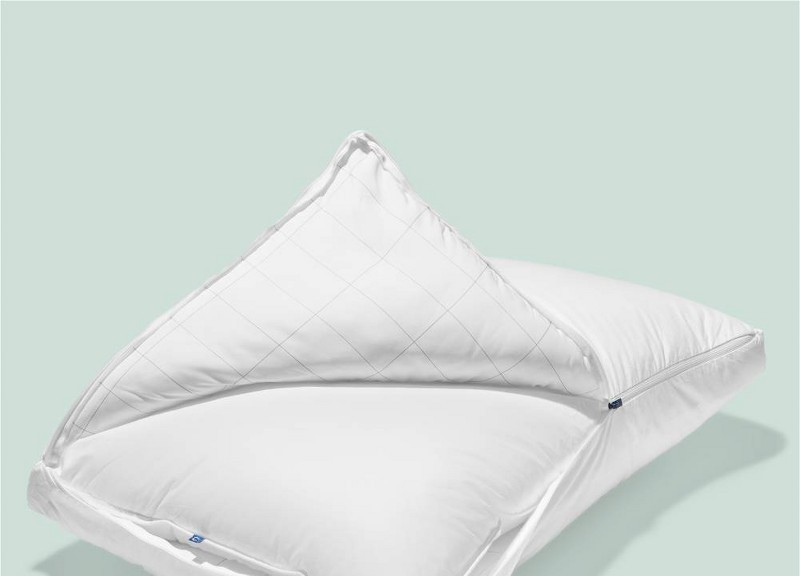
Adjustable shredded fills are the safest choice, because a soft mattress usually needs a loft between two standard sizes and a handful of removed fill gets you there. Thin solid latex works well if you want consistency, and a low-profile contour pillow suits people who want the height fixed.
Be careful with plush down and feather on a soft mattress: a sinking shoulder plus a collapsing pillow can leave your head lower than your spine by the small hours, which produces the opposite problem. If you want a soft feel, look for a soft surface over a dense core.
Don't forget the shoulder itself
A plush mattress is generally kinder to side-sleeping shoulders than a firm one, because the joint is cradled instead of compressed. If shoulder pain is your main complaint and the bed is already soft, the pillow adjustment is usually about height and a body pillow to stop you rolling forward, rather than a firmer surface.
Pillows we recommend for this
FAQ
Keep reading
Get the Mr. Squish Pillow Cheat Sheet
A simple guide to choosing the right pillow based on your sleep position, body size, and comfort preferences.
No spam. Unsubscribe anytime.
Affiliate disclosure: Mr. Squish may earn a commission when you buy through links on this page. Recommendations are based on independent product research; any hands-on test is labelled separately. Learn more.