
Where Should Your Shoulder Go Relative to Your Pillow?
The single most common side-sleeping setup mistake is putting the shoulder on the pillow. When your shoulder rides up onto the pillow, everything above it goes wrong in sequence: the pillow is pushed away from your neck, your head drops or rolls, and the gap the pillow was meant to fill opens back up. The correct position has your shoulder on the mattress, the pillow edge touching the top of your shoulder, and your neck and head fully supported from jaw to crown.
In this guide
The correct position
Lie on your side and let your downside shoulder rest on the mattress, slightly forward of your body line rather than stacked directly under you. Pull the pillow down until its lower edge touches the top of your shoulder. Your neck should rest on the pillow's lower third — not just your head.
That last point is the one people miss. A pillow that supports only the head leaves the neck suspended; the pillow should cradle from the base of the skull down to where neck meets shoulder.
Mistake one: shoulder on the pillow
When the shoulder rides up onto the pillow, it pushes the pillow away from the neck and raises the shoulder toward the ear — a compressed, shrugged position held all night. Morning symptoms: a tight trapezius, an ache between the shoulder blades, and a pillow that has migrated away from you.
This mistake is most common with pillows that are too small or too soft: the shoulder slides on because the pillow does not hold its position under load. A pillow with a stable, grippy cover and enough fill to resist being pushed helps.
Mistake two: a gap between shoulder and pillow
The opposite error leaves a space between the top of your shoulder and the pillow edge, so the bottom of your neck is unsupported. The head tips down into the gap and the neck bends — the too-low failure with extra steps.
The fix is positioning, not a new pillow: pull the pillow down snug against the shoulder every time you settle in. If the pillow will not stay there because it is too thick or too rounded to tuck in, that is a shape problem — curved-edge and shoulder-notch designs exist for exactly this.
How pillow shape changes the answer
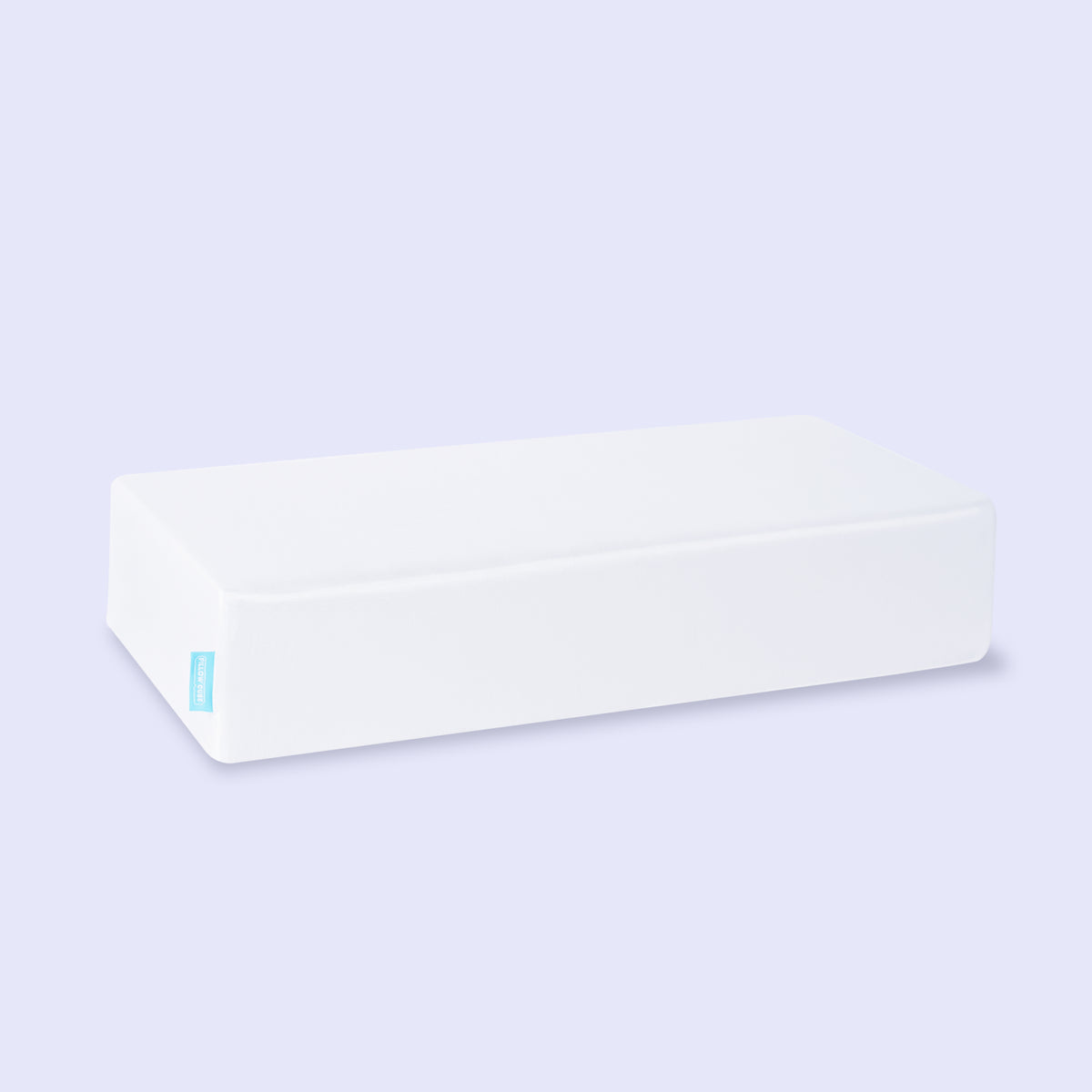
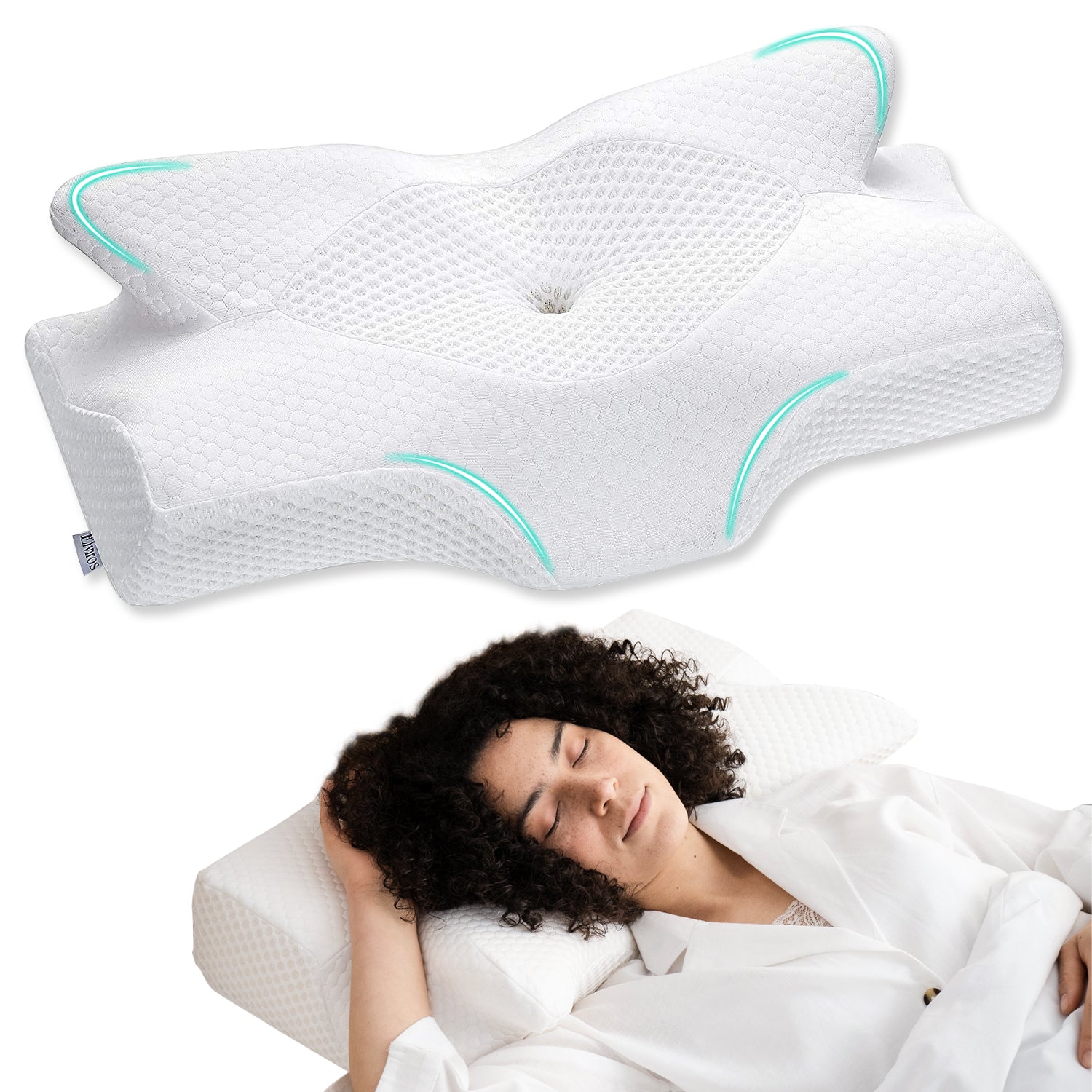
Rectangular pillows force a compromise: the edge is a straight line and your shoulder is not. Shoulder-notch cervical pillows cut a curve into the lower edge so the shoulder slides in and the neck support stays continuous. Cube-style side pillows go the other way — a vertical wall that fills the entire ear-to-shoulder space, shoulder firmly on the mattress.
If you repeatedly wake with your shoulder on the pillow or a gap beside your neck, shape is a legitimate reason to change pillows rather than keep fighting the geometry.
Pillows we recommend for this

HoneyDew Scrumptious Side Pillow
Side sleepers who want a plush feel that still holds loft
FAQ
Keep reading
Get the Mr. Squish Pillow Cheat Sheet
A simple guide to choosing the right pillow based on your sleep position, body size, and comfort preferences.
No spam. Unsubscribe anytime.
Affiliate disclosure: Mr. Squish may earn a commission when you buy through links on this page. Recommendations are based on independent product research; any hands-on test is labelled separately. Learn more.