
Why Does My Ear Hurt When I Sleep on My Side?
Side sleeping funnels the weight of your head through a small patch of ear cartilage for hours at a time. That is enough to make the outer ear genuinely sore, and in some people it produces a small, stubbornly tender lump on the rim that keeps flaring because the same spot is compressed every single night. This guide separates the pressure causes, which bedding can help with, from the medical causes, which it cannot.
In this guide
The pressure explanation
The outer ear is cartilage with very little padding over it and a modest blood supply. Compress it for six or eight hours and the tissue complains — more so on a firm pillow, more so if you always sleep on the same side, and more so as the surrounding fill flattens over time and your ear takes more of the load.
A useful test: if the pain is on whichever side you slept on, fades during the day, and returns the next morning, pressure is the likely mechanism. Sleeping on the other side for a night or two usually confirms it.
When it is CNH
Chondrodermatitis nodularis helicis is a small, painful nodule on the ear rim strongly associated with sustained night pressure, and offloading the ear is a recognised part of managing it. The tell-tale signs are a persistent lump rather than diffuse soreness, tenderness sharp enough to wake you, and a flare pattern tied to which side you slept on.
A lump on the ear should be examined rather than self-diagnosed, because other conditions can look similar and a few need prompt attention. Take the pressure-relief steps by all means, but get the diagnosis from a clinician.
Piercings, hearing aids, and healing tissue
Fresh cartilage piercings are painful for months and night pressure is one of the main reasons they stay irritated. The same goes for sleeping in hearing aids or moulds, and for the recovery period after ear surgery. In all of these cases the aim is simple: no contact on the affected spot.
How to take pressure off the ear
The most direct fix is a pillow with an actual ear hole, so the ear sits in open space while the surrounding foam still supports your cheek and jaw. Check that the opening is bigger than your ear plus clearance, and that the pillow's loft still suits side sleeping — an ear cut-out in a pillow that is too flat just swaps earache for neck ache.
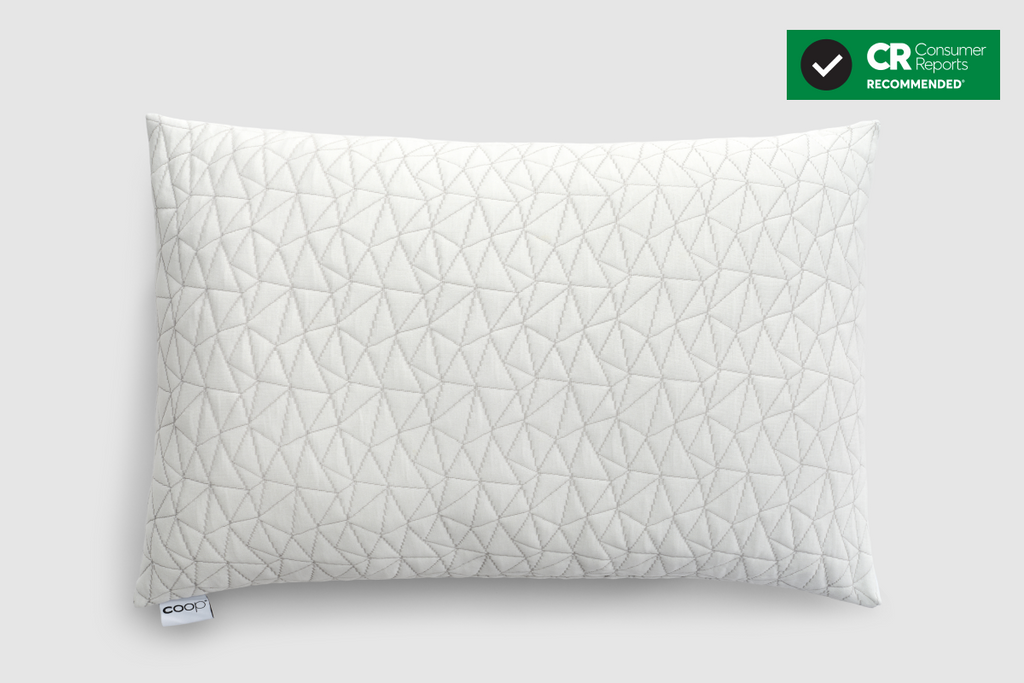
Without buying anything, an adjustable shredded-fill pillow can be thinned at the contact point to make a shallow hollow, and buckwheat can be scooped the same way. A rolled towel with a gap in the middle is a zero-cost way to test whether offloading helps before you spend money. A smooth, frequently washed case reduces friction on tissue that is already sore.
- Ear-hole or cut-out pillow: most complete offloading
- Adjustable shredded fill: remove fill under the ear to make a hollow
- Buckwheat: scoop a crater and it holds its shape
- Softer fill plus a smooth case: helps mild soreness, not a nodule
When to see a clinician instead
Pain deep inside the ear canal, discharge, hearing change, dizziness, or fever is not a pillow problem — that is an ear problem and it needs assessment. The same applies to any persistent lump. Bedding belongs to the management of surface pressure, nothing more.
Pillows we recommend for this

SleepEasy Side Sleeper CNH Pillow with Ear Hole
Side sleepers with CNH, ear surgery recovery, or ear cartilage pain
FAQ
Keep reading
Get the Mr. Squish Pillow Cheat Sheet
A simple guide to choosing the right pillow based on your sleep position, body size, and comfort preferences.
No spam. Unsubscribe anytime.
Affiliate disclosure: Mr. Squish may earn a commission when you buy through links on this page. Recommendations are based on independent product research; any hands-on test is labelled separately. Learn more.