
How to Tell if Your Pillow Is Too Firm
Firmness and height get confused constantly, and that confusion is why people buy the wrong replacement. Firmness is how much the pillow gives under load; height is how far your head sits above the mattress. A pillow can be too firm at the right height, or perfectly firm at the wrong height, and the symptoms are different. Here is how to identify the firmness problem specifically.
The signs
An over-firm pillow does not let your head settle in, so contact is concentrated on a few small areas instead of spread across the surface. That shows up as soreness where the pillow touches rather than as a general ache.
- Your ear, cheekbone, or jaw is sore on the side you slept on
- Your head feels propped up rather than supported, and does not sink at all
- You wake with a band of tension in the temples or at the base of the skull
- You keep punching a dent into the pillow before falling asleep
- A side-sleeping shoulder feels jammed upward, because the pillow will not yield around it
The two-minute check
Lie down in your normal position and look at how far your head sinks. A well-matched pillow lets the head settle a little and then holds it; an over-firm pillow holds it immediately with almost no give, so the surface stays flat under your cheek.
Then check alignment separately. If your neck is in line but the contact points hurt, that is a firmness problem. If your chin is pushed toward your chest, that is a height problem, and it needs a lower pillow rather than a softer one.
Who actually needs firm
Firm is not a fault. Side sleepers, heavier sleepers, and broad-shouldered sleepers all need dense support because a soft pillow collapses under the load and leaves the neck unsupported by the early hours. Back sleepers and lighter sleepers usually need less.
So before softening things, check that you are not trading a sore cheek for a sagging pillow at 3 a.m. The goal is the softest surface that still holds your height all night.
What to do about it
If the pillow has removable fill, take some out: less fill means less internal pressure as well as less height, and it is the quickest change available. If it is a solid foam core, a thicker quilted protector or a plush pillow topper spreads contact without changing the height much.
Solid memory foam also firms up noticeably in a cold bedroom, so an unusually hard pillow in winter may just be temperature. If nothing helps and the fill cannot be changed, the honest answer is a different fill type — shredded foam, kapok, or latex all yield more evenly than a dense one-piece slab.
Pillows we recommend for this
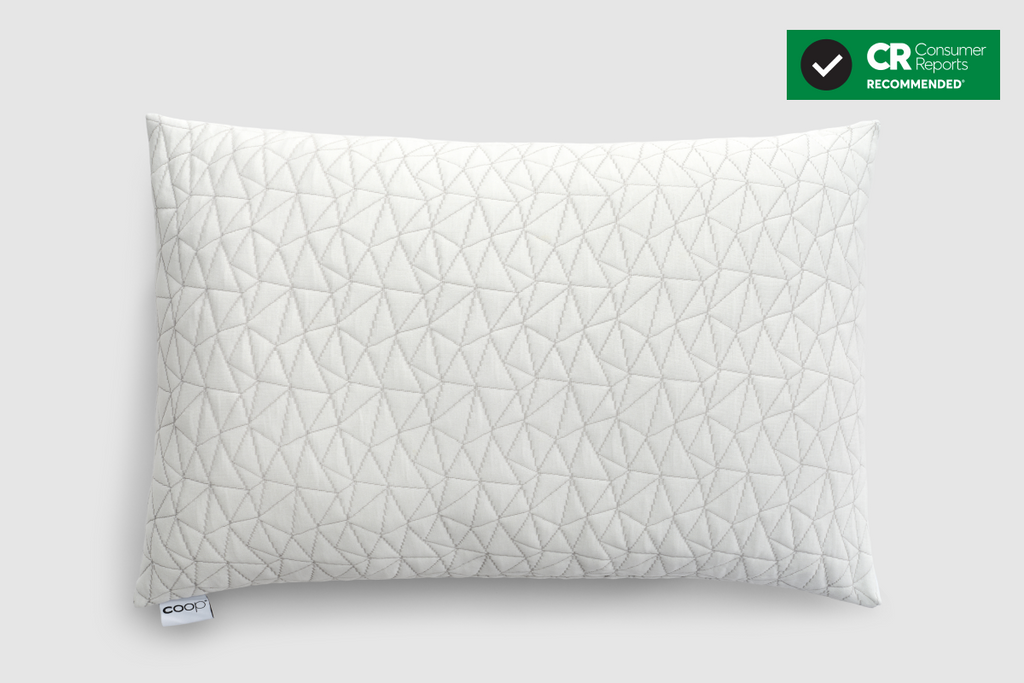

Layla Kapok Pillow
Side and back sleepers who want adjustable loft without a foam-only feel
FAQ
Keep reading
Get the Mr. Squish Pillow Cheat Sheet
A simple guide to choosing the right pillow based on your sleep position, body size, and comfort preferences.
No spam. Unsubscribe anytime.
Affiliate disclosure: Mr. Squish may earn a commission when you buy through links on this page. Recommendations are based on independent product research; any hands-on test is labelled separately. Learn more.