
Cervical Pillow Height Guide: Choosing the Right Contour
A cervical pillow cannot be adjusted after you buy it, which makes the height decision the whole purchase. The contour that matches your body holds your neck in neutral all night; the one that misses by an inch bends it in the wrong direction for eight hours. This guide covers the height ranges, how position changes which contour you use, and the two-measurement check that gets the size right the first time.
In this guide
The two heights on every cervical pillow
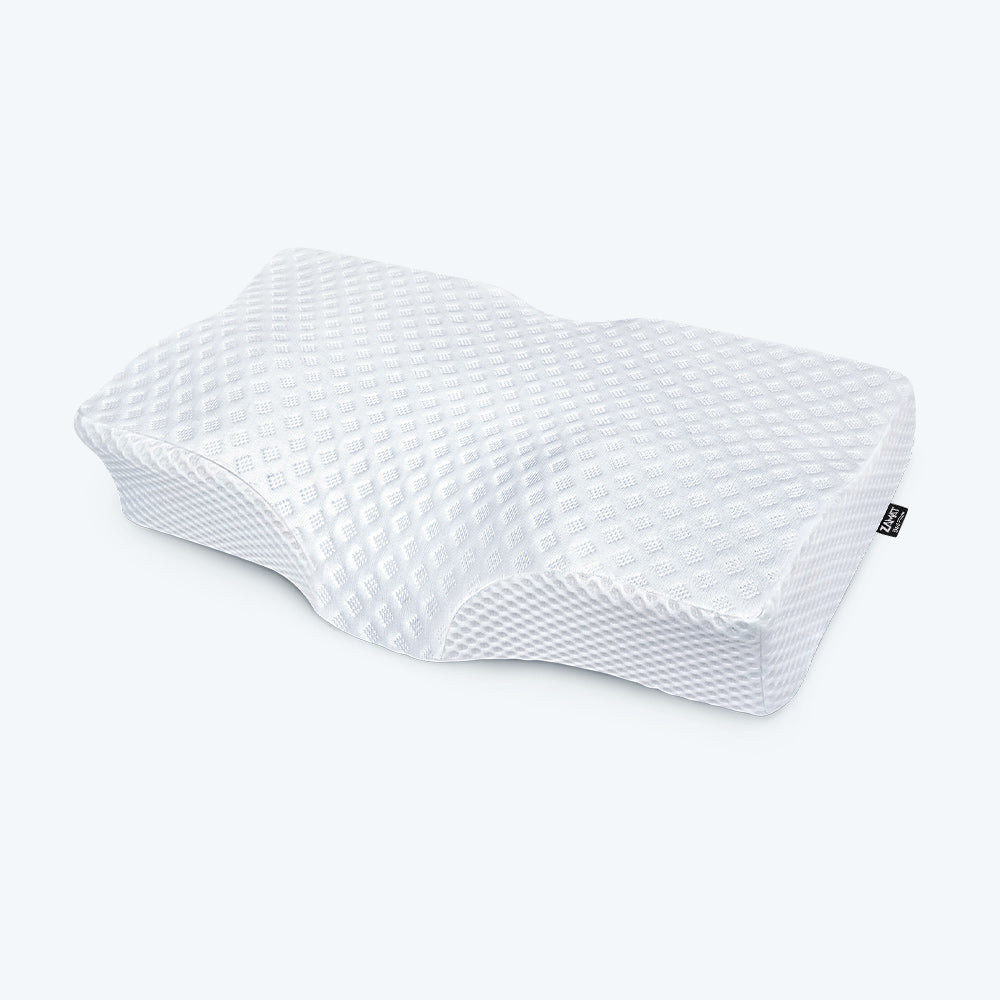
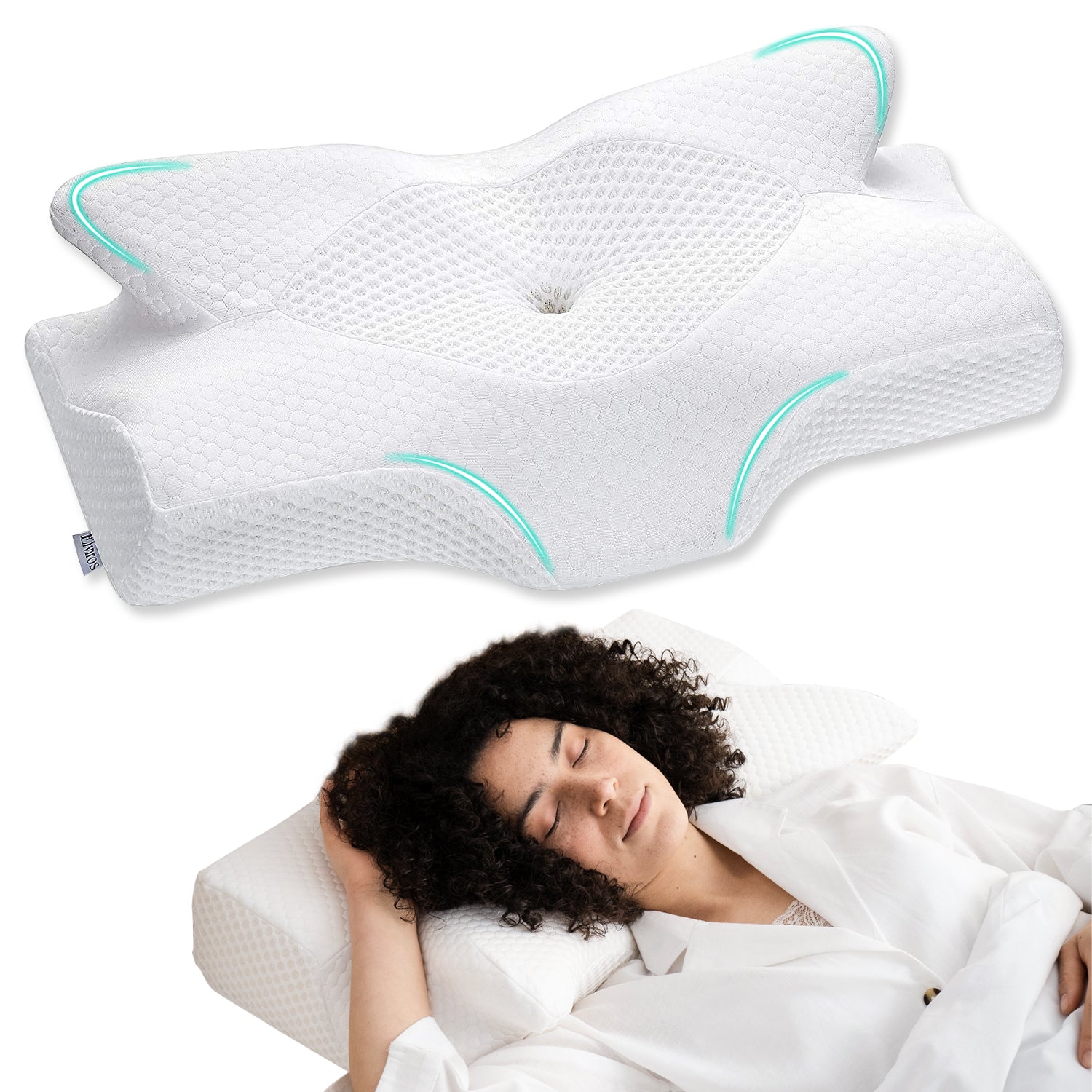
Most cervical pillows have a lower contour on one long edge and a higher contour on the other, with a head cradle between them. The lower edge suits back sleeping and smaller frames; the higher edge suits side sleeping and broader shoulders. You choose the edge, and sometimes the pillow size, to match your proportions.
Published heights typically run from about three to five inches on the low edge and four to six on the high edge. When comparing, use the contour height, not the overall pillow height — the cradle in the middle is deliberately lower.
Match the contour to your sleep position
Back sleepers need the neck roll to fill the curve of the neck without pushing the head forward — a contour of roughly three to four inches for most adults. Side sleepers need the contour to fill most of the shoulder gap — roughly four to six inches depending on shoulder width and mattress firmness.
Combination back-and-side sleepers are exactly who dual-height cervical pillows are designed for: low edge when you are on your back, high edge when you roll to your side. It only works if both heights happen to fit you, so check both numbers.
The fit check before you commit
Two measurements predict fit. First, your side-sleeper gap: lie on your side and measure mattress to ear level — the high contour should be within about half an inch of that number compressed. Second, your neck depth on your back: the roll should fill the space behind your neck without lifting your head.
Then use the trial window. Cervical fit can only be confirmed on your own mattress over several nights, so buy from a seller with a real return period and give the pillow two weeks — adaptation discomfort is normal, sharp pain is not.
Signs the contour is wrong
Too high: chin pushed toward your chest on your back, or head tilted upward on your side, with compression felt at the front of the neck. Too low: the neck roll barely touches you, your head tips back on your back or drops on your side, and the pillow feels like a regular pillow with a bump.
Either error means the size is wrong, not that cervical pillows are wrong. A different contour height — or a switch to an adjustable pillow, which lets you build the support height yourself — is the fix.
Pillows we recommend for this

FAQ
Keep reading
Get the Mr. Squish Pillow Cheat Sheet
A simple guide to choosing the right pillow based on your sleep position, body size, and comfort preferences.
No spam. Unsubscribe anytime.
Affiliate disclosure: Mr. Squish may earn a commission when you buy through links on this page. Recommendations are based on independent product research; any hands-on test is labelled separately. Learn more.