
Cervical Pillow vs Regular Pillow: What's the Difference?
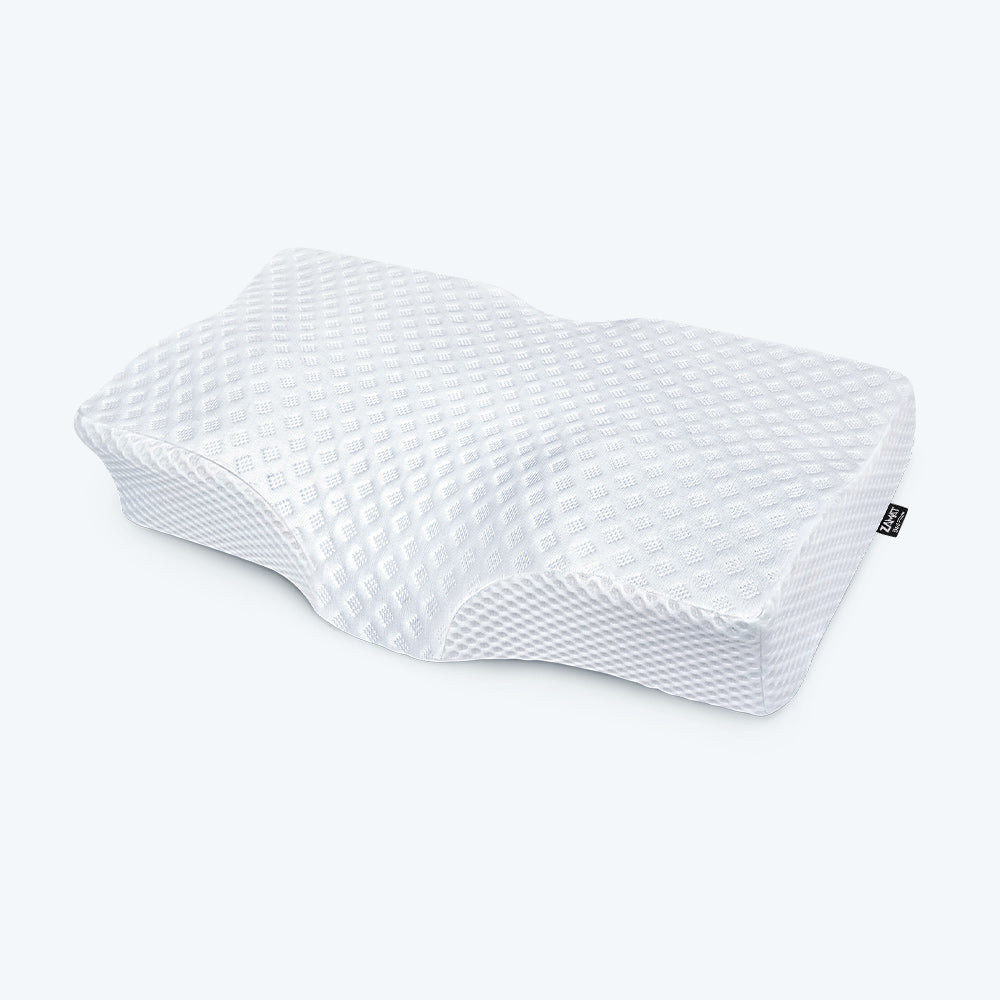
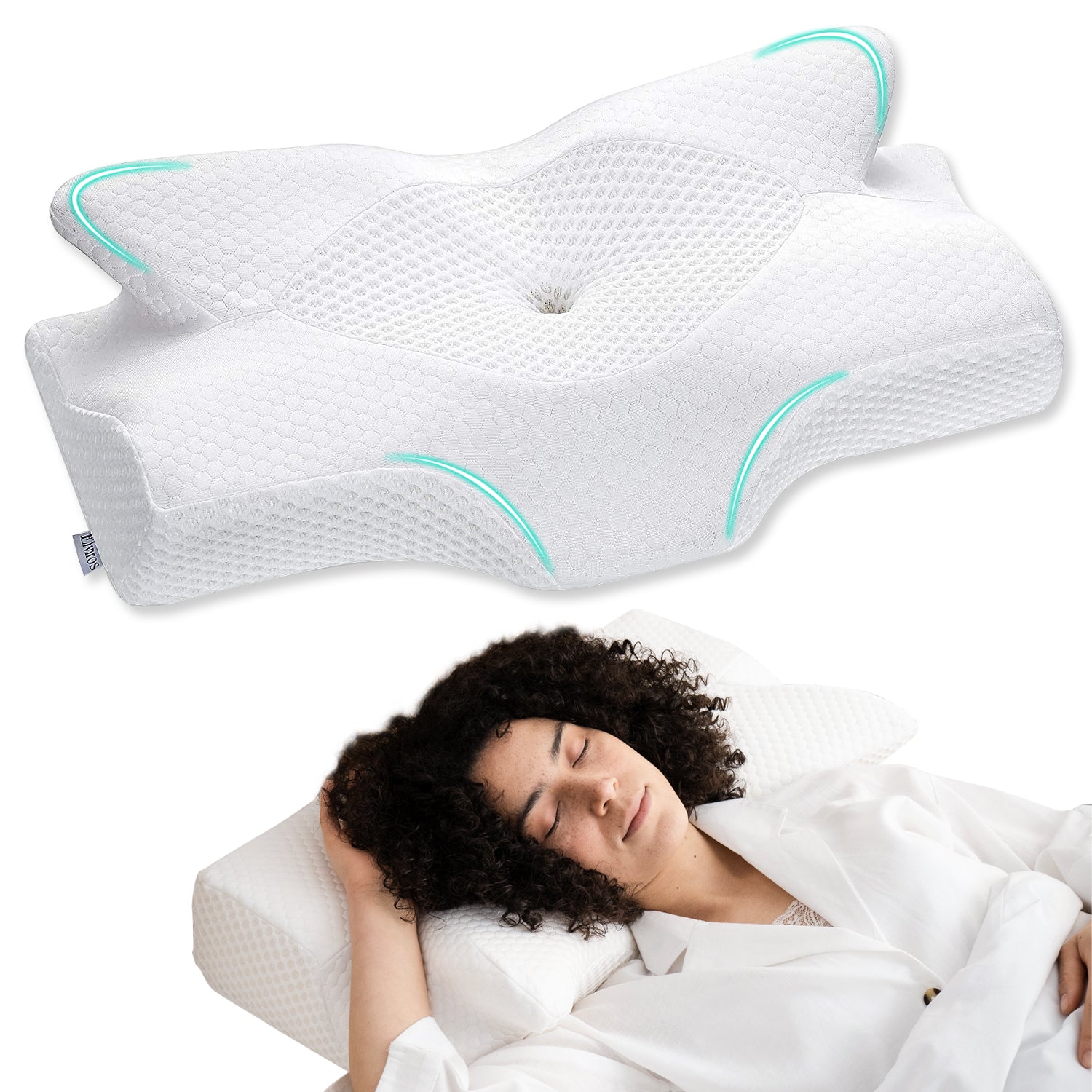
A cervical pillow is a pillow with the shape decided for you: a raised roll that supports the neck's natural curve and a lower cradle for the head, built from foam that holds that geometry all night. A regular pillow is a blank canvas — you shape it, and it slowly un-shapes itself as you sleep. Neither is automatically better. The choice comes down to whether your neck needs a fixed support structure or a surface you can mold.
In this guide
What a cervical pillow actually does
The design goal is neutral alignment: the raised contour fills the space under the curve of your neck while the cradle lets your head sit slightly lower, so the cervical spine holds its natural lordosis instead of flattening or kinking. Because the shape is molded into solid or cut foam, it does not collapse, migrate, or need re-fluffing.
That fixed shape is both the product and the risk. When the contour dimensions match your proportions, the support is excellent and consistent. When they do not, the pillow is wrong in a way you cannot adjust — which is why sizing matters more with cervical pillows than any other type.
What a regular pillow does instead
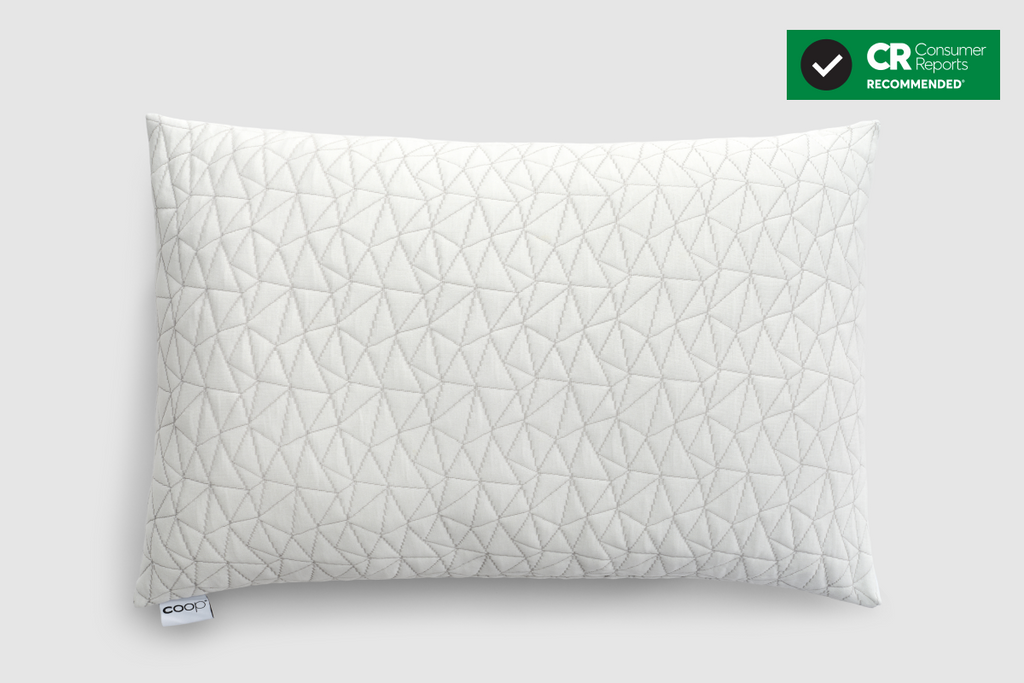
A regular pillow — down, polyester, shredded fill — is passive: it provides material, and your head and neck arrange it. The advantage is adaptability. You can bunch it, flatten it, fold it, and reshape it as you change positions, and adjustable shredded versions let you tune the height over weeks.
The disadvantage is consistency. Passive fills compress, migrate, and flatten overnight, so the alignment you fall asleep with is not the alignment you keep. For sleepers without neck pain, that drift is a comfort issue. For sleepers with neck pain, it can be the whole problem.
Who should choose which
A cervical contour earns its place when you have recurring morning neck pain or stiffness that a correctly sized regular pillow has not fixed, when you sleep mostly in one position, and when you are willing to spend a week or two adapting — contoured support feels strange before it feels good.
- Choose cervical: persistent morning neck pain, single-position sleeper, willing to adapt
- Choose regular/adjustable: combination sleeper, no current pain, or unsure of your ideal height
- Choose adjustable first if your loft need is unknown — it is the lower-risk experiment
- Avoid cheap cervical pillows with no size options: fixed shape plus wrong size is worse than no contour
The adaptation period is real
Switching to a cervical pillow commonly involves one to three weeks of mild discomfort as neck muscles adapt to a different alignment — the same way a new office chair feels wrong before it feels right. Manufacturers and physical therapists both warn about this, and it is the most common reason people abandon a pillow that was actually fitting them.
Give a new cervical pillow two full weeks unless it causes sharp pain, numbness, or headaches — those are stop signals, not adaptation. And if neck pain persists regardless of pillow, that is a clinical question, not a shopping one.
Pillows we recommend for this

FAQ
Keep reading
Get the Mr. Squish Pillow Cheat Sheet
A simple guide to choosing the right pillow based on your sleep position, body size, and comfort preferences.
No spam. Unsubscribe anytime.
Affiliate disclosure: Mr. Squish may earn a commission when you buy through links on this page. Recommendations are based on independent product research; any hands-on test is labelled separately. Learn more.