
Does Your Mattress Change the Pillow You Need?
A pillow does not support your head in isolation. It fills the gap left between your head and the mattress surface once your body has sunk in — and the mattress controls how big that gap is. That is why the same pillow can feel ideal in a hotel and completely wrong at home, why a new mattress often ruins a pillow you loved, and why any loft advice that ignores the bed underneath is only half the answer. This is the cornerstone of our pillow-plus-mattress cluster: the mechanism, the numbers, and the pages that go deeper.
In this guide
The mechanism: the pillow fills a gap the mattress sets
Lie on your side and your shoulder becomes the pivot. On a firm mattress the shoulder stays near the surface, so almost your full shoulder width becomes vertical distance between your ear and the bed — a big gap for the pillow to fill. On a soft mattress the shoulder sinks in, the torso drops with it, and the gap shrinks. Same body, same position, different pillow requirement.
Back sleeping works the same way at a smaller scale: a plush mattress lets the upper back and hips settle, reducing the space behind the neck, while a firm mattress leaves that curve more exposed. Stomach sleeping is the least affected because the gap is already close to zero.
How much to add or subtract
Treat these as starting adjustments to the loft you would otherwise choose for your position and build. They are rules of thumb for narrowing the range, not precise measurements — the check that matters is still alignment, and mattress firmness labels vary between brands.
- Very soft or plush mattress, or a thick soft topper: subtract roughly 0.5 to 1 inch
- Medium mattress: no adjustment — this is the baseline most loft advice assumes
- Firm mattress: add roughly 0.5 inch
- Extra-firm mattress, futon, or floor sleeping: add roughly 1 inch
- Broad shoulders amplify every one of these adjustments; petite frames shrink them
The alignment check that settles it
Get into your normal position on your own mattress and have someone photograph you from behind, or use a mirror. Your nose should point straight ahead and the line from your lower back to the back of your head should be straight. Do this on the actual bed you sleep in — the same pillow on a different mattress is a different test.
If your head tilts down toward the mattress, the pillow is too low for this bed. If your chin is pushed toward your chest and the underside of your neck feels compressed, it is too tall. Adjust the pillow, not the mattress.
Why a new mattress breaks your favourite pillow
Change the mattress and you change the gap, so the pillow that was correct is now measurably wrong. Going firmer means your pillow is suddenly too low; going softer, or adding a plush topper, means it is suddenly too tall. Both show up as unexplained morning neck pain within a week or two of the new bed arriving.
It is also why a mattress that softens with age slowly makes your pillow feel too tall, and why sagging in an old mattress can produce neck symptoms that look like a pillow fault. When one changes, re-check the other.
Adjustable pillows solve this properly
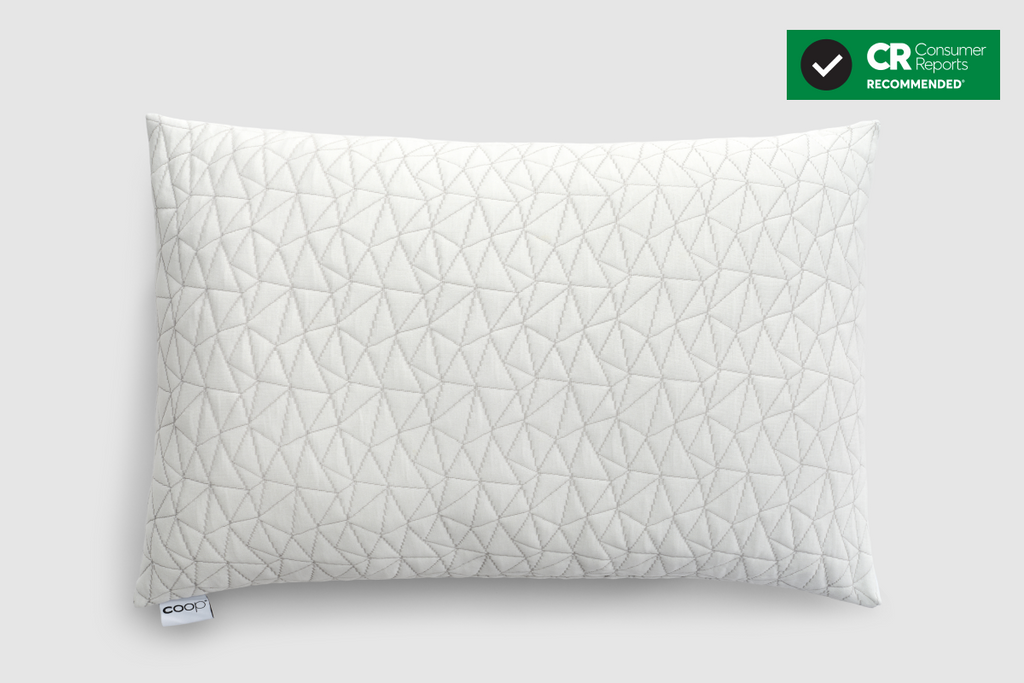
If your mattress might change — new bed, a topper you are trialling, a guest room with a different feel — an adjustable-fill pillow is the practical answer, because half an inch of loft is a handful of fill rather than a return. That is the same reason adjustable pillows dominate our position-based recommendations.
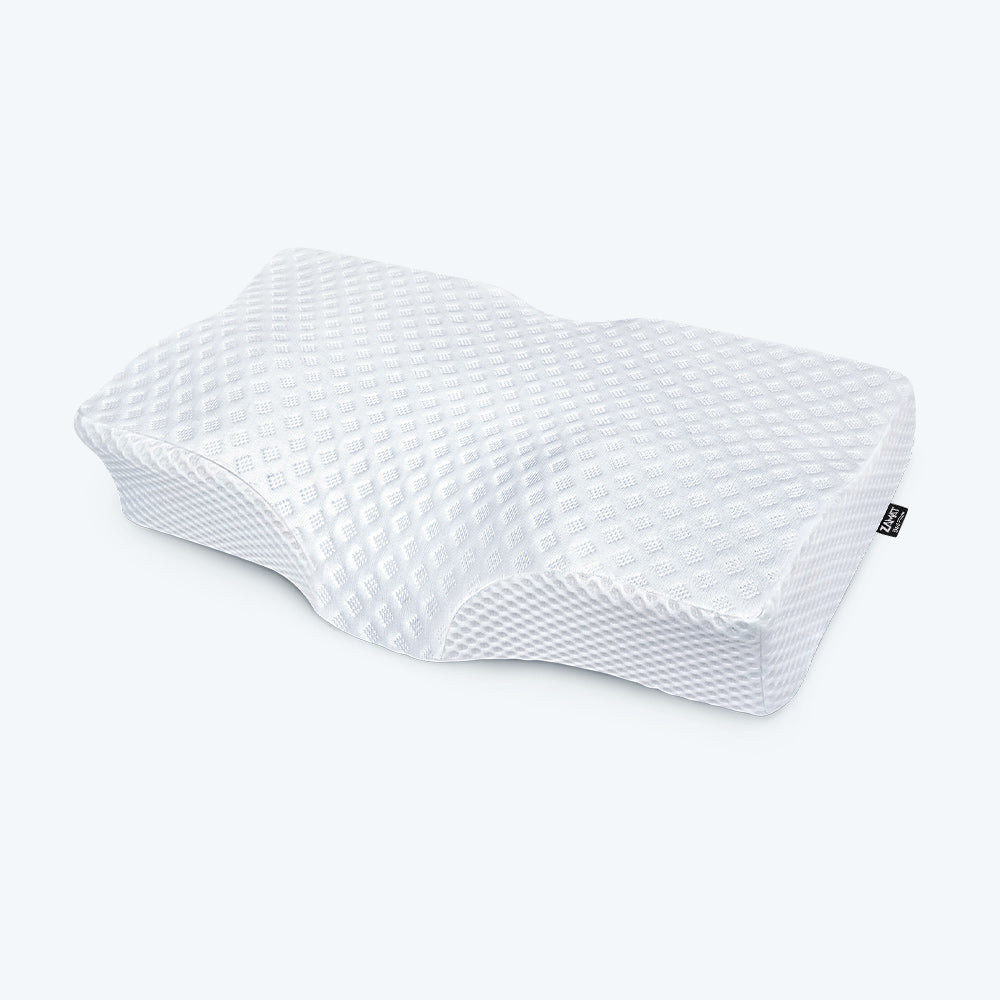
Fixed pillows are not disqualified: a solid latex or contour pillow bought for the mattress you actually own works fine. It just becomes the wrong pillow if the bed underneath it changes.
Firmness labels are not comparable between brands
One brand's medium is another brand's firm, and the same mattress feels firmer to a lighter sleeper than to a heavier one, because sinkage depends on load as well as construction. So do not trust the label — judge the sinkage. How far does your shoulder actually disappear into the surface when you lie on your side?
That question, plus your position and shoulder width, is exactly what our Pillow Loft Calculator turns into a target compressed-loft range, and what the Pillow Matrix maps across body weight and height.
Where to go next in this cluster
Pick the page that matches your situation: pillow recommendations for a soft mattress or a firm mattress, side-sleeper loft on a soft mattress or on a firm mattress, loft by shoulder width, loft by body size, or the calculator if you would rather answer three questions and get a number.
Pillows we recommend for this
FAQ
Keep reading
Get the Mr. Squish Pillow Cheat Sheet
A simple guide to choosing the right pillow based on your sleep position, body size, and comfort preferences.
No spam. Unsubscribe anytime.
Affiliate disclosure: Mr. Squish may earn a commission when you buy through links on this page. Recommendations are based on independent product research; any hands-on test is labelled separately. Learn more.