
How to Choose a Pillow
Buying a pillow feels harder than it should be, because shops describe them by fill and marketing language instead of by the thing that matters: the angle your neck ends up at. There are really only five decisions, and once you make them in the right order, most of the hundreds of options on the shelf disqualify themselves. Work through the steps below and you will finish with a short list of two or three pillows instead of a wall of them.
In this guide
- Step 1: Start with your sleep position
- Step 2: Adjust that loft for your body and mattress
- Step 3: Pick a fill that can hold that loft
- Step 4: Choose firmness by pressure, not preference
- Step 5: Get the size and cover right
- Before you buy: two things to check
- How to tell within a week that you got it right
Step 1: Start with your sleep position
Position sets the loft range, and loft is the single factor most likely to cause or cure morning pain. Everything else is a refinement on top of it.
- Side sleepers: high loft, roughly 5 to 6 inches, medium-firm.
- Back sleepers: medium loft, 3 to 5 inches, ideally contoured.
- Stomach sleepers: low loft, under 3 inches, soft.
- Combination sleepers: 4 to 5 inches with a fill that reshapes quickly, or an adjustable pillow you can compromise with.
Step 2: Adjust that loft for your body and mattress
Loft needs scale with shoulder width rather than height, because your shoulder is what holds your head off the mattress. Broad shoulders push you to the top of the range; narrow shoulders to the bottom.
Your mattress moves the answer too. A plush bed lets your shoulder sink in, which shrinks the gap the pillow needs to fill, so you want less loft. A firm bed keeps you on the surface and you need more. If you recently changed mattresses and started waking up sore, your pillow height is the first thing to revisit. If your mattress is also due for an upgrade, our sister site SleepSage publishes independent mattress reviews at sleepsage.com.
Step 3: Pick a fill that can hold that loft
Fill decides whether the pillow keeps the height you chose all night, how warm it runs, and how long it lasts.
- Shredded memory foam — holds loft, usually adjustable, the safest all-round choice.
- Solid or contoured memory foam — best support for neck pain, but the height is fixed, so measure carefully.
- Latex — springy, cooler, and the most durable foam option; costs more.
- Down — plush and mouldable, but it compresses and needs fluffing; best for stomach sleepers and back sleepers who like soft.
- Down alternative — the budget hypoallergenic version of down; flattens fastest of all.
- Buckwheat hulls — firm, breathable, adjustable, decade-long lifespan; heavy and it rustles.
Step 4: Choose firmness by pressure, not preference
Firmness is what keeps the loft from collapsing under sustained pressure. Side sleepers concentrate a lot of weight on a small area and need medium-firm or firm. Stomach sleepers need soft so their neck does not extend backwards. Back sleepers sit in the middle.
One useful signal: if your neck aches, your loft is wrong. If your ear or jaw aches, your firmness is too high. Fixing the wrong one of those is the most common pillow-shopping mistake.
Step 5: Get the size and cover right
A standard pillow suits most single sleepers, queen adds a few inches of room for people who move at night, and king works best on king beds or as a reading backrest. Whatever you choose, the pillowcase should fit snugly — a pillow swimming in an oversized case slumps and loses effective loft.
If you run hot, prioritise a percale cotton or performance-knit cover and a ventilated core. A quilted, tightly woven cover on top of solid foam is the warmest combination you can buy.
Before you buy: two things to check
First, the trial period. Pillows take about a week to judge fairly because your muscles have adapted to your old position. Anything under 30 nights is not enough time. Second, whether the pillow is washable — most foam pillows are not, so a removable, machine-washable cover is worth paying for.
How to tell within a week that you got it right
Sleep on the new pillow seven nights in a row and note where the discomfort is each morning: neck means the loft is wrong, ear or jaw means it is too firm, shoulder or arm means the shape is wrong, and nothing at all means you are done. Change one variable at a time and repeat. Most people find the right setup in two rounds.
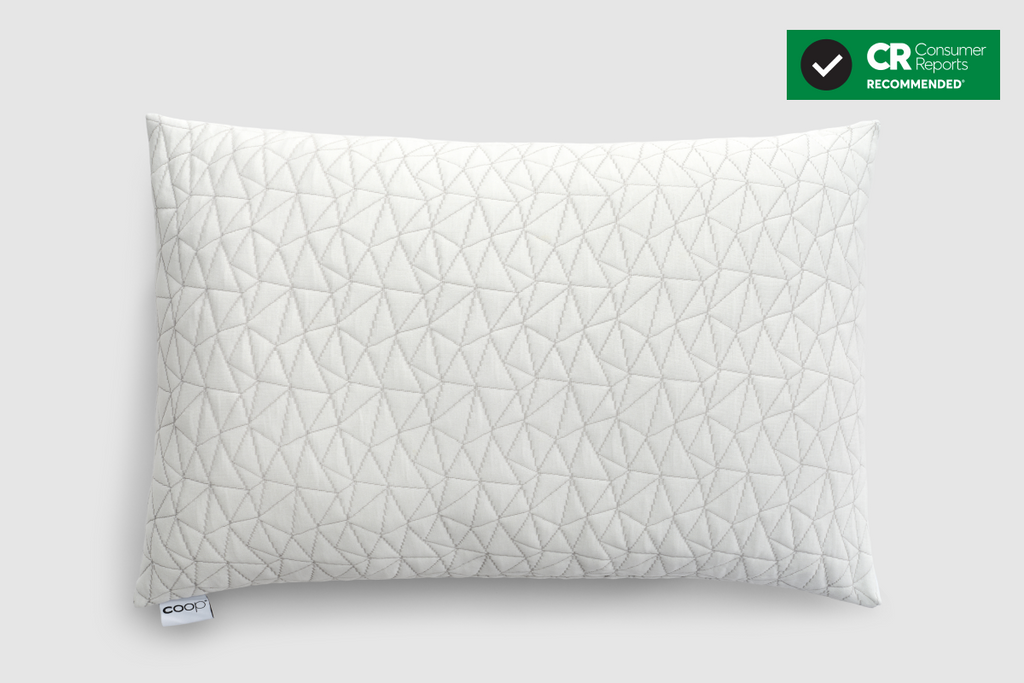
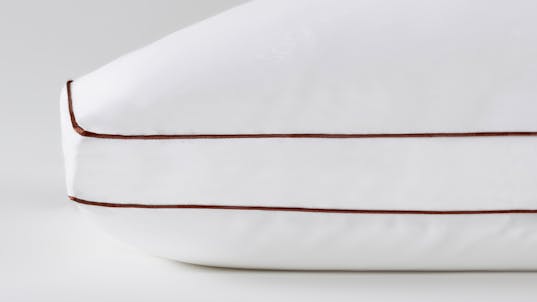
Pillows we recommend for this

FAQ
How do I know what pillow is right for me?
Start with your sleep position to set the loft range, adjust it for your shoulder width and mattress firmness, then choose a fill that holds that loft and a firmness that resists collapsing. An adjustable pillow is the safest choice when you are unsure.
What is the most important thing when choosing a pillow?
Loft — the height of the pillow under your head. It determines the angle of your neck, which is what causes or prevents morning pain.
Is a firm or soft pillow better?
It depends on position. Side sleepers need medium-firm to firm, back sleepers medium, and stomach sleepers soft and low.
How much should I spend on a pillow?
Most excellent pillows sit between $60 and $120. Below $40 you are usually buying a fill that flattens within a year; above $150 you are mostly paying for cover materials.
How long does it take to get used to a new pillow?
About a week. Your muscles adapt to your old sleeping angle, so give any new pillow seven nights before you judge it.
Keep reading
Find the Right Pillow for Your Sleep Style
Get a tailored shortlist based on sleep position, shoulder fit, desired loft and materials using our free Pillow Finder.
Start the Free Pillow Finder →Instant recommendations, no email or signup required. We may earn commissions on some buying links.
Affiliate disclosure: Mr. Squish may earn a commission when you buy through links on this page. Recommendations are based on independent product research; any hands-on test is labelled separately. Learn more.