
How to Sleep Better
Most sleep advice is a long list of everything at once, which is why most of it gets abandoned in a week. In practice a handful of changes do the heavy lifting, and they are boring: a consistent wake time, morning light, caffeine timing, a cool dark room, and getting out of bed when you cannot sleep. Everything else is optimisation on top. This guide puts the changes in the order that gives the fastest return, and flags the point where the problem is medical rather than behavioural.
In this guide
Fix your wake time before your bedtime
Your body clock anchors to when light hits your eyes in the morning, not to when you get into bed. A fixed wake time — including weekends, within about an hour — is the single most effective change most people can make, because bedtime sleepiness follows it automatically after a few days.
Pair it with ten to twenty minutes of outdoor light within an hour of waking. Even an overcast morning outdoors delivers far more light than a bright indoor room.
The inputs that push bedtime around
Three substances account for a large share of self-inflicted bad sleep, and the fixes are timing rather than abstinence.
- Caffeine has a half-life of roughly five to six hours — an afternoon coffee is still partly in your system at midnight. Cut it off by early afternoon.
- Alcohol makes you fall asleep faster and then fragments the second half of the night. It is a sedative, not a sleep aid.
- Large late meals and heavy fluid intake near bed cause reflux and bathroom wakings respectively.
- Vigorous exercise is helpful overall but can delay sleep if it finishes within an hour or two of bed.
Set the room up once
A bedroom that is cool, dark, and quiet removes a whole category of problems permanently. Aim for roughly 16–19°C, block light at the window rather than with an eye mask if you can, and use a fan or white noise to mask intermittent sound — steady sound is far less disruptive than sudden sound.
Get screens out of the last half hour if you can, but the bigger issue is usually what the screen is doing to your alertness rather than its blue light.
The bed itself
This is the part people spend money on and get wrong. A pillow at the wrong loft for your sleep position wakes you with neck pain and gets blamed on stress; a mattress that is too soft for a heavier sleeper does the same for the lower back. Match the pillow to how you actually sleep — higher and firmer for side sleeping, medium for back, very low for stomach — and replace it when it stops re-lofting, usually every one to three years depending on fill.
If you wake up hot, breathability beats thread count: percale cotton, linen, or bamboo viscose, and a pillow with structural airflow rather than a gel coating.
When you cannot fall asleep
Lying awake trains your brain to associate bed with being awake. If you have been awake roughly twenty minutes and are frustrated, get up, go to another room, do something dull in dim light, and return when sleepy. It feels counterproductive and it is the core of the most effective non-drug treatment for insomnia.
Do not chase lost sleep with long naps or early bedtimes; both weaken the pressure that makes you sleepy the following night. A nap before mid-afternoon and under thirty minutes is fine.
When to get help
Talk to a doctor if you snore loudly with pauses in breathing or gasping, if you are exhausted despite adequate hours in bed, if you have been sleeping badly most nights for three months or more, or if you have creeping urges to move your legs at night. Those point to sleep apnoea, chronic insomnia, or restless legs — conditions with specific treatments that no amount of sleep hygiene will fix. Cognitive behavioural therapy for insomnia is the recommended first-line treatment for chronic insomnia and outperforms sleeping tablets long term.
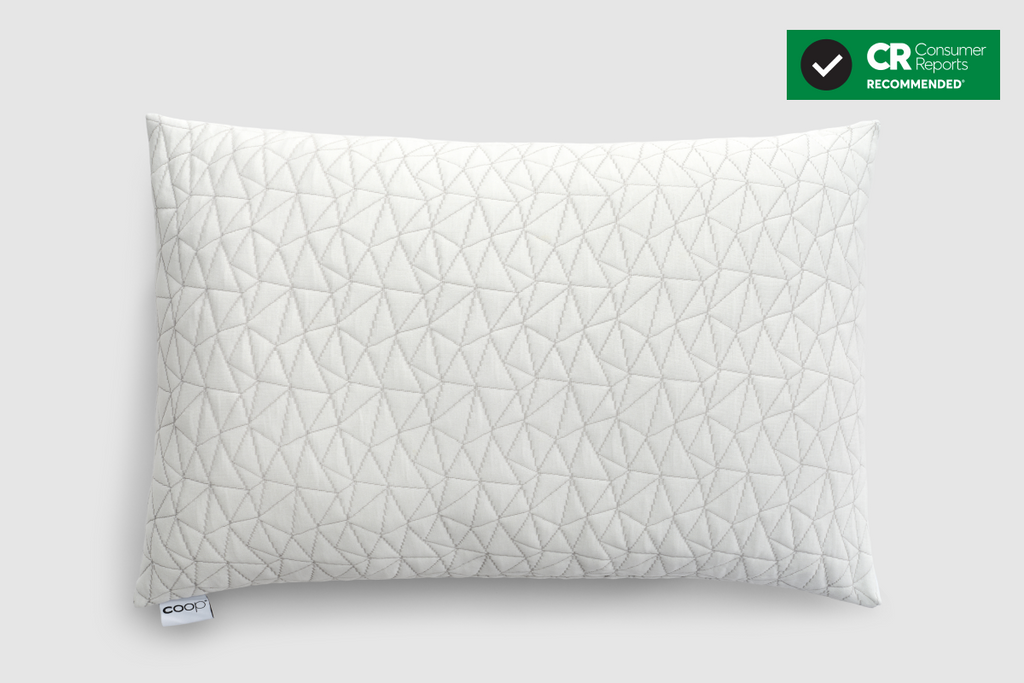
Pillows we recommend for this

FAQ
How many hours of sleep do I actually need?
Most adults need seven to nine hours. The practical test is whether you wake without an alarm feeling rested and stay alert through the afternoon.
Do sleep trackers help?
They are useful for spotting patterns like weekend schedule drift, but they estimate sleep stages rather than measure them, and anxiety about the score is a real phenomenon.
Does melatonin work?
It is most useful for shifting a delayed body clock or for jet lag, taken in small doses a few hours before target bedtime. It is not a sedative and works poorly as one.
Is it bad to read in bed?
Reading a physical book in dim light before sleep is fine for most people. The problem is stimulating, anxiety-raising content and bright screens, not the location.
How long before new habits improve my sleep?
A consistent wake time and morning light usually show effects within one to two weeks. Give any single change at least ten days before judging it.
Keep reading
Find the Right Pillow for Your Sleep Style
Get a tailored shortlist based on sleep position, shoulder fit, desired loft and materials using our free Pillow Finder.
Start the Free Pillow Finder →Instant recommendations, no email or signup required. We may earn commissions on some buying links.
Affiliate disclosure: Mr. Squish may earn a commission when you buy through links on this page. Recommendations are based on independent product research; any hands-on test is labelled separately. Learn more.