
How to Sleep With Hot Flashes and Night Sweats
A hot flash at night is a heat surge followed by sweating and then, awkwardly, a chill as the sweat evaporates. That three-stage pattern is why generic 'cooling' bedding advice often misses: the goal is not only to feel cool at lights-out, it is to shed heat fast during the surge and dry out fast afterward so you are not lying in a cold damp patch. Most of the useful changes are cheap and mechanical rather than clever. This guide is general information, not medical advice — frequent or severe night sweats deserve a conversation with your doctor, since they have causes beyond menopause.
In this guide
Start with the room, not the bedding
Air temperature and air movement do more than any single product. A bedroom around 16–19°C, a fan aimed across the bed rather than at you, and an open door for circulation change how quickly your skin can shed heat during a surge.
A fan matters more than most people expect because evaporative cooling only works if moving air carries the moisture away. Still air in a warm room is the worst case.
Bedding that actually helps
Pick materials by how they handle moisture, not by the word printed on the packaging.
- Layer with several thin covers instead of one duvet, so you can shed and replace layers without waking fully.
- Choose cotton percale, linen, bamboo viscose, or Tencel over sateen, flannel, and polyester blends.
- Keep a second pillowcase and a towel within reach so you can swap mid-night without getting up.
- Wear loose moisture-wicking sleepwear rather than sleeping bare — fabric moves sweat off your skin, skin against sheets does not.
- Consider a mattress protector that breathes; many waterproof protectors are vinyl-backed and trap everything.
What to look for in a pillow
Your head and neck are a big share of heat loss, so the pillow matters more than its size suggests. Structural airflow beats gel: a hyper-elastic grid, latex with pinhole ventilation, or shredded fill in a breathable shell all keep moving air over a full night, whereas a gel pad conducts heat well for the first twenty minutes and then sits at body temperature.
Washability matters as much as cooling. Night sweats mean the pillow gets wet repeatedly, so a pillow you can launder without it clumping will stay usable much longer than one you cannot.
Habits that reduce the surges themselves
Bedding manages symptoms; behaviour can reduce how often they happen. Common triggers worth testing one at a time are alcohol in the evening, spicy food at dinner, caffeine late in the day, and a hot bath or shower right before bed. A cool shower an hour before bed and a glass of cold water on the nightstand are both low-effort and frequently reported as helpful.
Paced breathing at the start of a flash — slow, deep breaths for a few minutes — is a standard non-drug technique and worth learning before you need it at 3am.
When to talk to a doctor
See a clinician if night sweats are drenching, come with fever, weight loss, or new pain, if they started suddenly without other menopause symptoms, or if they are wrecking your sleep night after night. There are effective medical options, both hormonal and non-hormonal, and night sweats can also be a side effect of medication or a sign of something unrelated to menopause.
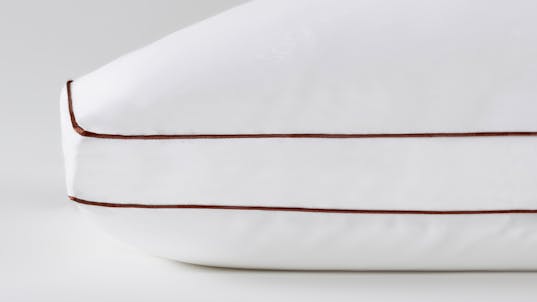
Pillows we recommend for this

FAQ
Do cooling pillows actually work for hot flashes?
Airflow-based ones help meaningfully; gel-pad ones help briefly. Look for grid, latex, or ventilated shredded construction rather than the word cooling.
What bedroom temperature is best?
Most guidance lands around 16–19°C, with a fan for air movement. Cooler than that risks the post-sweat chill waking you.
Should I use a fan or air conditioning?
A fan is usually better value because moving air aids evaporation. Air conditioning lowers the baseline temperature but does not move air across your skin as effectively.
Are bamboo sheets good for night sweats?
Bamboo viscose wicks and breathes well, which suits sweating. Linen and cotton percale perform similarly and tend to dry faster.
Why do I get cold right after a hot flash?
Evaporating sweat cools you below your comfortable temperature. Wicking sleepwear and a swappable dry pillowcase blunt that swing.
Keep reading
Find the Right Pillow for Your Sleep Style
Get a tailored shortlist based on sleep position, shoulder fit, desired loft and materials using our free Pillow Finder.
Start the Free Pillow Finder →Instant recommendations, no email or signup required. We may earn commissions on some buying links.
Affiliate disclosure: Mr. Squish may earn a commission when you buy through links on this page. Recommendations are based on independent product research; any hands-on test is labelled separately. Learn more.