
How to Sleep on a Wedge Pillow (Without Sliding Off)
A wedge pillow is one of the few sleep products with real clinical backing: elevating your torso by 30 to 45 degrees measurably reduces nighttime acid reflux, eases snoring, and helps sinuses drain. Yet most people who buy one quit within a week — not because wedges don't work, but because they set them up wrong. Too steep an angle, the wrong position on the wedge, or no pillow on top will have you sliding to the foot of the bed by midnight. This guide covers the setup that actually works.
In this guide
Pick the right angle first
Wedge pillows come in heights from about 6 to 12 inches, which translates to an incline of roughly 15 to 45 degrees. Higher is not better — the evidence-backed range for acid reflux is 30 to 45 degrees, and anything steeper just makes you slide down.
- Acid reflux and GERD: 30–45 degrees (usually an 8–12 inch wedge). This is the range used in clinical studies.
- Snoring and mild sleep apnea: 20–30 degrees. Enough to keep soft tissue from collapsing into the airway, flat enough to stay put.
- Congestion and post-nasal drip: 20–30 degrees keeps mucus draining without straining your back.
- Reading and watching TV in bed: 40–45 degrees, but only while you're awake — it's too steep to sleep on.
- After surgery: follow your surgeon's angle exactly; more elevation is not more healing.
Position yourself high on the wedge
The single most common mistake is lying too low on the wedge, so the slope starts at your shoulder blades and your lower back hangs off the edge. Your hips should sit in the lower third of the wedge, and the incline should support you from the mid-back up through the head. If your lower back feels unsupported or arched, shimmy up until the wedge's flat section is under your hips, not your ribs.
Your head should end up near the top edge of the wedge, not hanging off it and not buried in the middle. If the wedge is too short to cover hips-to-head for your height, that's a sizing problem — look for a wedge at least 30 inches long on the slope.
Always put a normal pillow on top
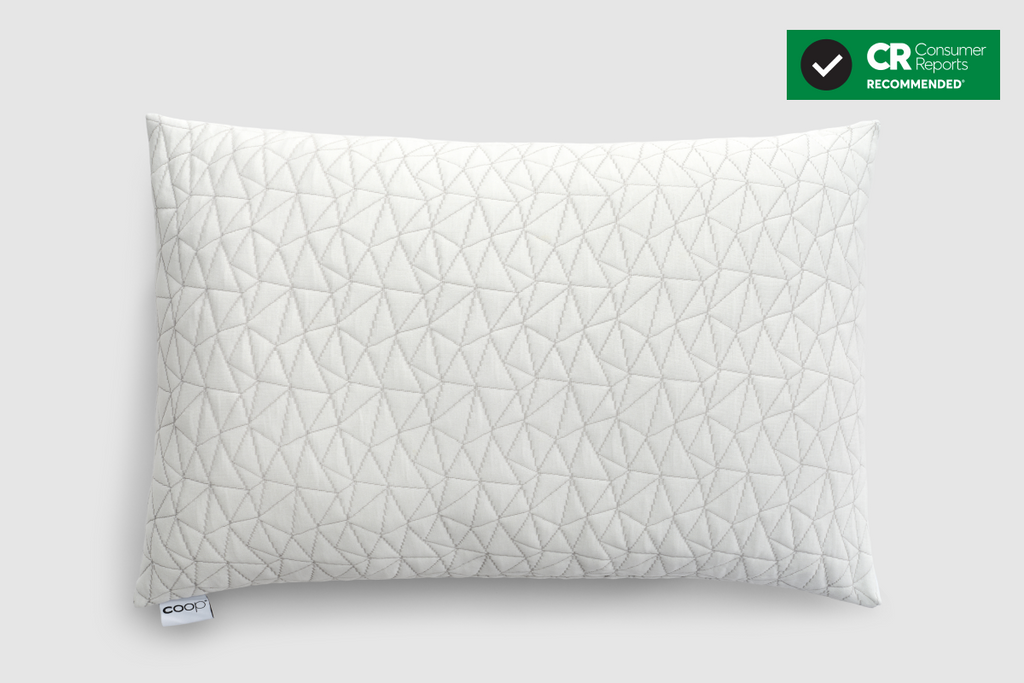
Bare wedge foam under your head is miserable: it holds your neck at one fixed angle and gets hot fast. Place your regular sleeping pillow flat on top of the wedge, near the top edge. This lets your neck rest at its natural angle while your torso gets the elevation. An adjustable-fill pillow works best here because you can remove fill until your chin sits neutral instead of tipped toward your chest.
Back sleeping vs side sleeping on a wedge
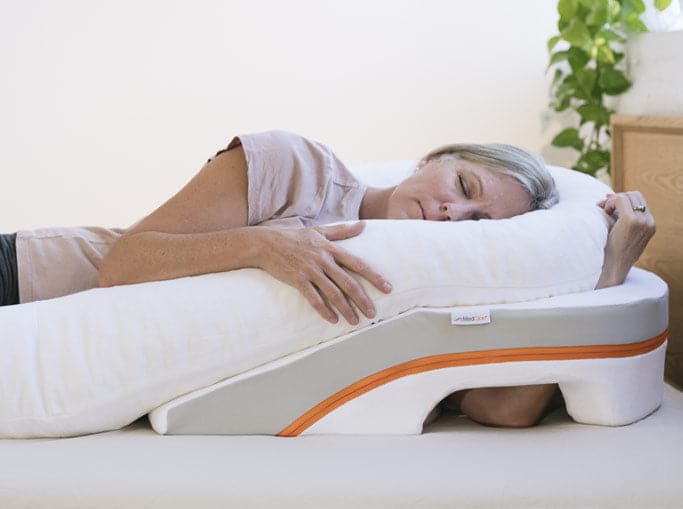
Back sleeping is the easiest way to use a wedge: your weight is distributed evenly and sliding is minimal. Side sleeping works too, but you need to keep your bottom shoulder slightly back off the edge of the wedge rather than jammed into the slope, and hug a pillow to keep your top shoulder from rolling forward. Stomach sleeping on a wedge is not recommended — the incline forces an extreme neck twist.
If you slide down during the night, the fix is a small firm pillow or rolled towel at the small of your back — it creates a ledge your hips rest against. Some people also put a pillow under their knees, which stops the slide and takes pressure off the lower back at the same time.
What to expect in the first week
Sleeping on an incline feels strange for the first three to five nights, and mild lower-back tightness is common while your body adapts. Start by using the wedge for the first half of the night, then go flat — and extend the wedge time each night. If reflux relief is your goal, consistency matters more than angle: a moderate incline every night beats a steep wedge you abandon after three nights.
If you have been diagnosed with GERD, sleep apnea, or a heart condition, treat the wedge as a complement to your treatment, not a replacement — and mention it to your doctor, since position therapy changes how some conditions present.
When a wedge pillow isn't enough
If a standard foam wedge keeps collapsing, isn't wide enough to roll on, or can't hold the angle you need, two upgrades solve most problems: a full-length incline system with an arm pocket and body pillow (better for side sleepers and reflux that wakes you up), or an adjustable bed base, which is expensive but eliminates every sliding and sizing issue at once. A pregnancy wedge is the opposite case — a small, low wedge meant to support the belly or back while side sleeping, not to incline the torso.
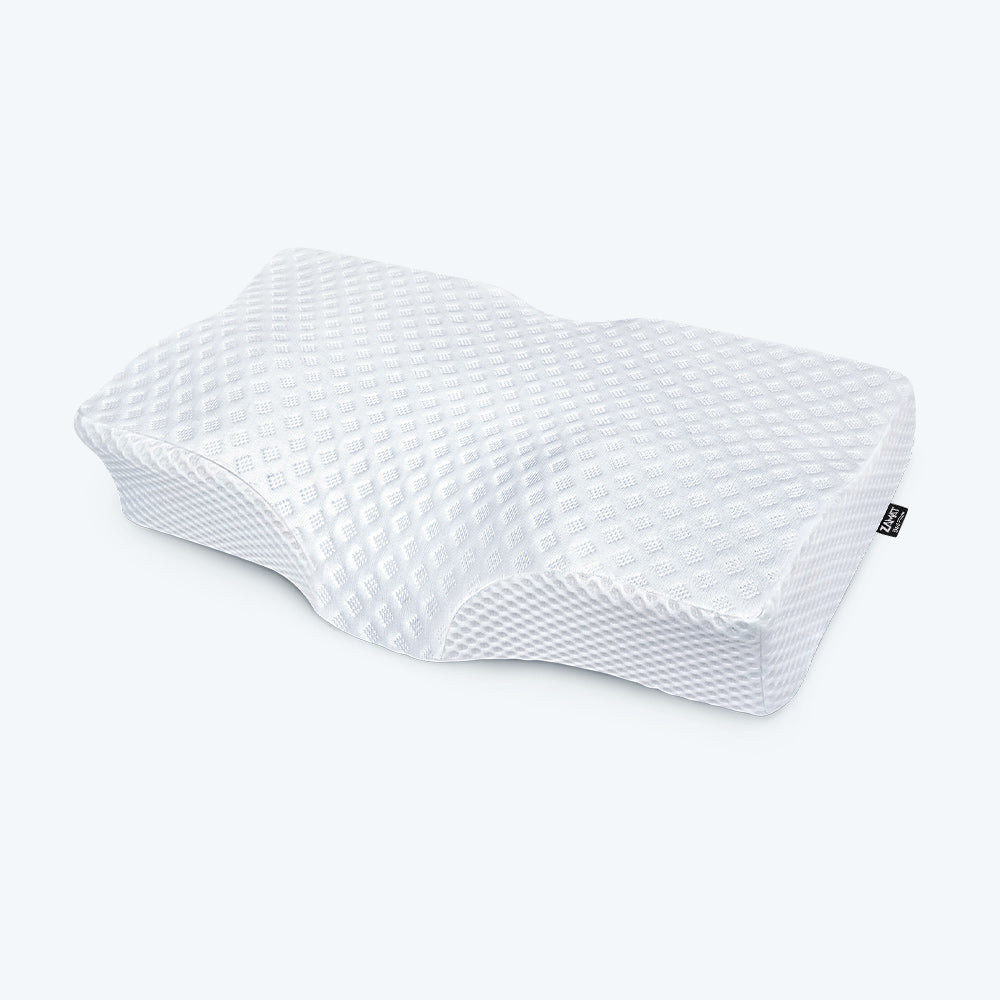
Pillows we recommend for this
FAQ
Is it better to sleep on a wedge pillow on your back or side?
Back sleeping is easiest and works for most people. Side sleeping is fine — especially left-side sleeping for reflux — as long as you keep your lower shoulder slightly back off the slope and use a pillow on top for your head.
What angle should a wedge pillow be for acid reflux?
Thirty to forty-five degrees, which usually means a wedge 8 to 12 inches tall. Studies show this range reduces esophageal acid exposure; steeper angles mostly just make you slide down.
Do you put a pillow on top of a wedge pillow?
Yes. Sleeping directly on the wedge foam locks your neck at one angle and traps heat. A regular pillow on top lets your neck rest naturally while your torso stays elevated.
How do I stop sliding down a wedge pillow?
Position your hips in the lower third of the wedge, place a small firm pillow or rolled towel at your lower back, or put a pillow under your knees. If sliding continues, the wedge is too steep or too short for your height.
Can a wedge pillow help with snoring or sleep apnea?
A 20–30 degree incline can reduce snoring and mild positional sleep apnea by keeping airway tissue from collapsing. It is not a treatment for moderate or severe sleep apnea — that needs a CPAP and a doctor.
How long does it take to get used to a wedge pillow?
Most people adjust within a week. Ease in by using the wedge for the first half of the night for a few days, and expect some mild lower-back tightness while your body adapts to the incline.
Keep reading
Find the Right Pillow for Your Sleep Style
Get a tailored shortlist based on sleep position, shoulder fit, desired loft and materials using our free Pillow Finder.
Start the Free Pillow Finder →Instant recommendations, no email or signup required. We may earn commissions on some buying links.
Affiliate disclosure: Mr. Squish may earn a commission when you buy through links on this page. Recommendations are based on independent product research; any hands-on test is labelled separately. Learn more.