
How to Stop Snoring Naturally
Snoring is the sound of turbulent air moving past soft tissue that has relaxed and narrowed your airway. Anything that narrows that airway further — lying on your back, alcohol, nasal congestion, extra weight around the neck — makes it louder. That is good news, because most of those are things you can change without a device. It is also why the first fix worth trying is free: sleeping on your side. Before working through the list, though, read the warning-signs section, because loud snoring with breathing pauses is a medical issue rather than a nuisance.
In this guide
Change position first
On your back, the tongue and soft palate fall backward into the airway. For a large share of snorers the noise reduces dramatically or stops entirely on the side, which makes positional change the highest-value single fix.
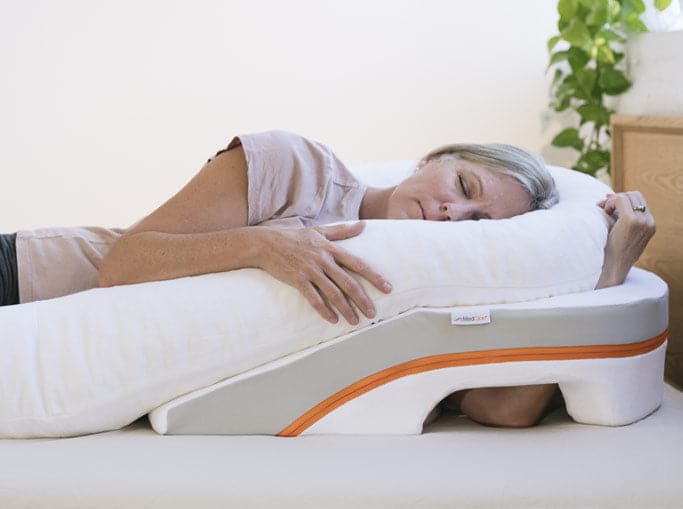
Making it stick is the hard part. A body pillow to hug, a wedge behind the back, or a firm side-sleeper pillow that makes side sleeping genuinely comfortable all work better than willpower. Raising the head of the bed a few inches, or using a wedge, helps some people who cannot stay off their back.
Clear the nose
If you cannot breathe through your nose, you breathe through your mouth, and mouth breathing makes snoring worse. Nasal congestion from allergies, a deviated septum, or a dusty bedroom is a very common contributor.
- Saline rinse or spray before bed for congestion.
- Treat allergies properly — dust-mite protectors on pillow and mattress, and washing bedding weekly at high temperature.
- Humidify a dry bedroom; dry air irritates and swells nasal tissue.
- Nasal strips or internal dilators help mechanically if the narrowing is at the nostril.
Alcohol, sedatives, and timing
Alcohol relaxes the throat muscles that hold the airway open, and it does so most strongly in the first hours of sleep. Cutting evening drinking, or at least stopping three to four hours before bed, produces a noticeable change for many people within a night. Sedating medications, including some sleep aids and muscle relaxants, do the same thing.
Weight, fitness, and muscle tone
Fat around the neck narrows the airway, and modest weight loss reduces snoring for many people who are carrying extra weight — it is one of the better-supported interventions.
Oropharyngeal exercises — tongue and throat exercises, sometimes described as mouth or throat exercises for snoring — have reasonable evidence for reducing snoring intensity when done consistently for several weeks. Singing and playing a wind instrument work on the same principle.
Bedding and bedroom changes
A pillow too flat lets the chin drop toward the chest and kinks the airway; too tall does the same in the other direction. Aim for a loft that keeps the neck in line with the spine for your position. Anti-snore pillows that encourage side sleeping work through position, not magic, and that is fine — position is the mechanism that matters.
Keep the bedroom clear of dust and wash bedding weekly; a congested nose is a snoring amplifier.
When it is not just snoring
See a doctor if a partner notices pauses in your breathing, gasping, or choking; if you are sleepy during the day despite enough hours in bed; if you wake with headaches or a very dry mouth; or if you have high blood pressure alongside heavy snoring. Those are signs of obstructive sleep apnoea, which raises cardiovascular risk and needs diagnosis with a sleep study. No pillow, strip, or exercise treats it — but effective treatment exists, and people usually feel dramatically better on it.
Pillows we recommend for this

Nitetronic Z6 Smart Anti-Snore Pillow
Shoppers comparing automatic repositioning designs and their limitations
FAQ
Do anti-snore pillows work?
The ones that work do so by keeping you off your back or by aligning the airway. That is a real mechanism, but it only helps positional snorers.
Why do I only snore on my back?
Gravity lets the tongue and soft palate fall backward and narrow the airway. That is called positional snoring and it is the easiest kind to fix.
Do nasal strips help?
They can, if your restriction is at the nostril rather than deeper in the throat. They are cheap enough to test for a week.
Does losing weight stop snoring?
It reduces it for many people carrying extra weight, because neck fat narrows the airway. It is not a guaranteed cure, particularly for anatomical causes.
Is snoring always sleep apnoea?
No — plenty of people snore without apnoea. But snoring with breathing pauses, gasping, or daytime sleepiness needs medical assessment.
Keep reading
Find the Right Pillow for Your Sleep Style
Get a tailored shortlist based on sleep position, shoulder fit, desired loft and materials using our free Pillow Finder.
Start the Free Pillow Finder →Instant recommendations, no email or signup required. We may earn commissions on some buying links.
Affiliate disclosure: Mr. Squish may earn a commission when you buy through links on this page. Recommendations are based on independent product research; any hands-on test is labelled separately. Learn more.