
Why Does My Pillow Go Flat?
Every pillow loses height eventually, but there is a big difference between a fill that has clumped and can be recovered and a fill that has permanently compressed and cannot. Working out which one you have decides whether you spend twenty minutes in the laundry or buy a replacement — and it also tells you what to choose next so it does not happen as quickly.
In this guide
Cause 1: permanent compression
Fills wear out by being squashed. Each night, the weight of your head compresses the fibres or foam, and each morning slightly less of that height comes back. Polyester fibre and cheap down alternative go first, because the fibres break down and mat together; solid memory foam loses its rebound more slowly but still loses it.
The test is simple: fold the pillow in half and let go. A healthy pillow springs back. One that stays folded, or unfolds slowly and lazily, has lost its structure and cannot be restored.
Cause 2: clumping, which is fixable
Shredded foam, down, and feather fills migrate and bunch, leaving high ridges and flat hollows. That reads as a flat pillow even though the fill is still perfectly good. Fluffing daily and a full tumble dry with a couple of wool dryer balls redistributes it, and shredded foam usually needs the clumps broken up by hand afterwards.
If a dryer cycle restores usable height, you had clumping rather than wear, and regular fluffing will keep it at bay.
Cause 3: moisture and body oils
A pillow absorbs a surprising amount of sweat, oil, and skin over a year, and that load mats fibres together and speeds up the loss of loft. It is also why old pillows yellow. A washable pillow laundered every two to three months, inside a protector under the pillowcase, keeps its height meaningfully longer than one that is never washed.
How long a pillow should last
Treat these as rough planning numbers rather than guarantees, since load, laundering, and climate all matter.
- Polyester and cheap down alternative: about 6 months to 2 years
- Down and feather: 2 to 5 years with regular fluffing
- Shredded memory foam: 2 to 4 years, longer if you can top up the fill
- Solid memory foam: 2 to 4 years
- Latex and buckwheat: often 4 years or more, and buckwheat hulls can be replaced
What to buy if flattening keeps happening
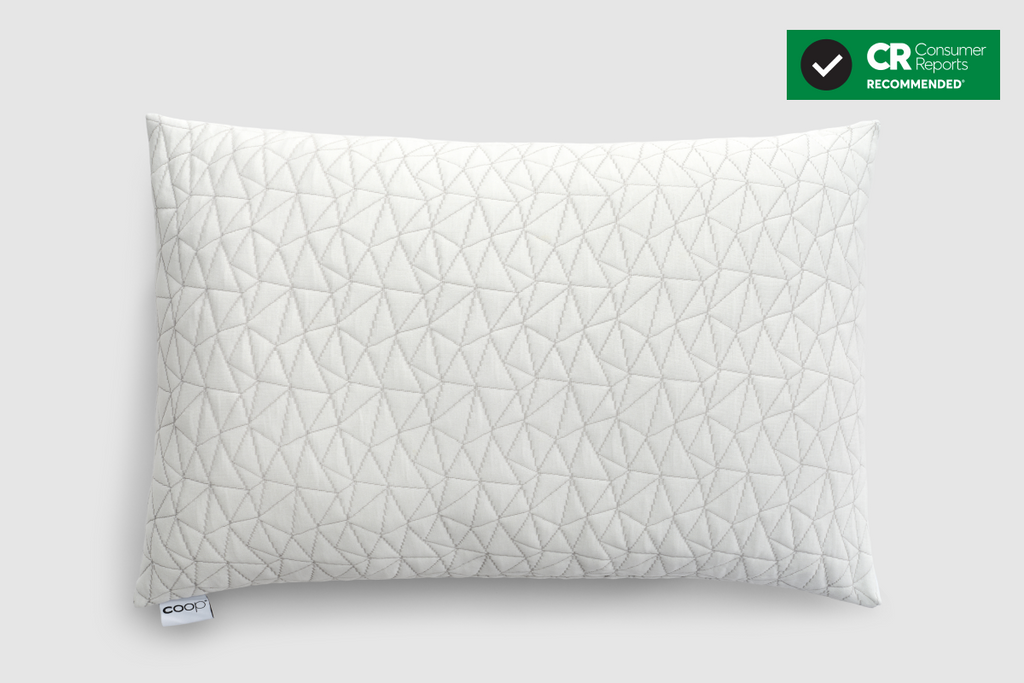
If you are replacing pillows every year, the fill type is the problem. Latex holds height almost indefinitely by comparison; buckwheat can be refilled with fresh hulls; adjustable shredded pillows let you top up as the fill compacts, which effectively resets the pillow rather than replacing it.
Heavier sleepers and side sleepers compress fills faster than anyone else, so density matters more for them. If that is you, prioritise support consistency over initial softness — and check whether the pillow can be refilled at all before buying.
Pillows we recommend for this
FAQ
Keep reading
Get the Mr. Squish Pillow Cheat Sheet
A simple guide to choosing the right pillow based on your sleep position, body size, and comfort preferences.
No spam. Unsubscribe anytime.
Affiliate disclosure: Mr. Squish may earn a commission when you buy through links on this page. Recommendations are based on independent product research; any hands-on test is labelled separately. Learn more.