
Why Does My Pillow Hurt My Neck?
If your neck hurts and the pillow is the suspect, the cause is almost always mechanical and almost always one of five things. The point of this guide is to narrow it down in a couple of nights rather than buying another pillow and hoping. Work through the list in order, because the first cause is far more common than the rest and the fix is often free.
In this guide
1. The height is wrong for your position
This is the leading cause by a wide margin. Your pillow's job is to fill the gap between your ear and the mattress so your neck stays in line with your spine. Too low and the head drops, stretching the muscles on the upper side. Too high and the neck bends the other way and the underside bunches. Either position, held for eight hours, produces a stiff, aching neck by morning.
Check it the simple way: lie down in your normal position and have someone photograph you from behind, or look in a mirror. Your nose should point straight ahead, and the line from your lower back to the back of your head should be straight.
- Side sleeping: roughly 4 to 6 inches of compressed loft for an average build
- Back sleeping: roughly 3 to 5 inches
- Stomach sleeping: under 3 inches, or no pillow at all
- Firm mattress: add about half an inch. Soft mattress: subtract about half an inch
2. The fill collapses partway through the night
A pillow that measures correctly when you lie down but bottoms out by 3 a.m. is functionally too low for most of the night. Down, feather, and low-density polyester are the usual culprits, especially under a side sleeper's head, and the giveaway is that you fold or bunch the pillow without thinking about it.
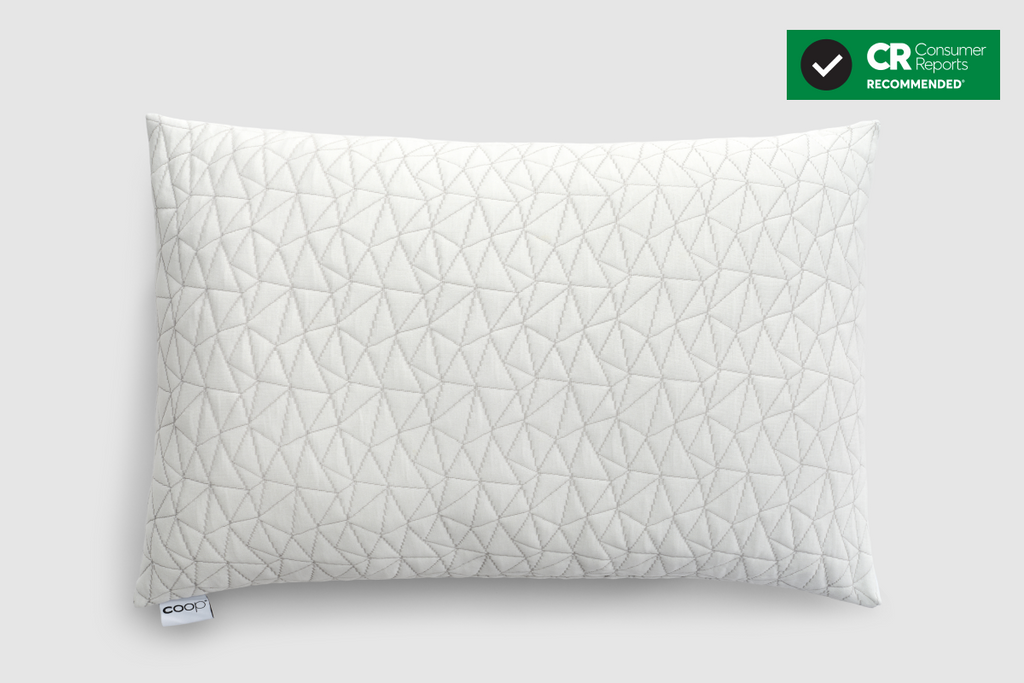
Support consistency is a construction property, not a firmness rating. Dense shredded foam, solid latex, and buckwheat hold height far better through a full night than plush loose fills.
3. The shape fights your position
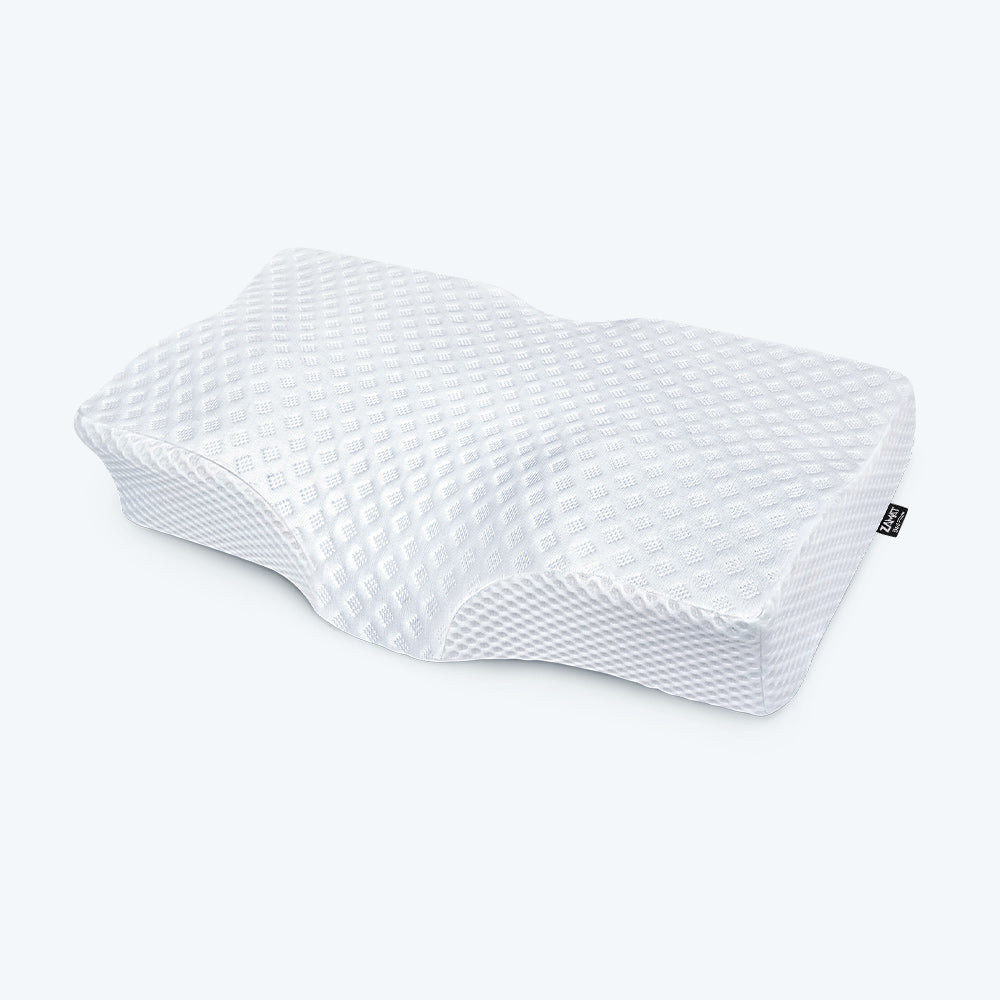
Contoured cervical pillows hold the head in one fixed position. That helps if the contour dimensions match your build and your usual position, and it hurts if they do not — a combination sleeper on a deep contour ends up perched on a ridge whenever they roll.
Flat, uniform pillows have the opposite trade-off: nothing holds the neck, but nothing forces it either. If your pain started when you switched to a contour shape, the shape is the first thing to question.
4. You are inside a normal break-in period
Switching pillow types genuinely feels wrong for a while. Manufacturers commonly quote one to two weeks for the neck to adapt to a new support level, and mild stiffness during that window is expected. What is not expected is pain that gets worse night after night, or new symptoms like numbness or headaches.
So give a plausible pillow a fortnight, but stop sooner if the trend is clearly downward. Adaptation should improve, not escalate.
5. The pillow is simply worn out
Fills compress permanently. A pillow that is yellowed, lumpy, or that stays folded when you bend it in half has lost the height it was sold with, which quietly turns a well-fitted pillow into one that is too low. Most pillows are replaced every one to two years, sooner for loose fills and longer for latex.
Before you buy, work out the loft you actually need — our pillow loft guide and the Pillow Matrix combine position, body size, and mattress firmness into a starting number — then choose an adjustable pillow if you are unsure, because a removable fill corrects a height error in minutes rather than a return.
When it is not the pillow
Neck pain with arm numbness, weakness, or pain shooting below the elbow is a medical question. So is pain after any injury, pain that wakes you regardless of position, and pain that has not shifted after several weeks of correct pillow height. See a clinician rather than working through more bedding.
Pillows we recommend for this
FAQ
Keep reading
Get the Mr. Squish Pillow Cheat Sheet
A simple guide to choosing the right pillow based on your sleep position, body size, and comfort preferences.
No spam. Unsubscribe anytime.
Affiliate disclosure: Mr. Squish may earn a commission when you buy through links on this page. Recommendations are based on independent product research; any hands-on test is labelled separately. Learn more.