
Best Pillows for Back Sleepers
Back sleepers need a medium loft of roughly three to five inches: enough to support the curve behind your neck, not so much that your chin tips toward your chest. Contoured shapes shine in this position.
These picks are based on manufacturer specifications and our research, not hands-on testing. See how we test pillows
Quick picks
Shortlist order is editorial, not a ranking of measured performance. Compare each option’s fit, construction, price, and return terms before choosing.
| Pillow | Best for | Construction | |
|---|---|---|---|
| TEMPUR-Neck Pillow | Back and side sleepers who want firm cervical support | Contour Memory Foam | Review |
| Saatva Memory Foam Pillow | Adults who want a layered foam pillow with preset loft choices | Memory Foam + Latex | Review |
| Bear Contour Pillow | Side and back sleepers who prefer a fiber-filled contour | Down Alternative | Review |
| Casper Original Pillow | Combo sleepers who want a versatile, low-maintenance pillow | Down Alternative | Review |
| Saatva Latex Pillow | Back and side sleepers who want bouncy, cool support | Latex | Review |
We may earn a commission from purchase links. Prices vary by size and seller; check current terms. Affiliate disclosure
TEMPUR-Neck Pillow

The original ergonomic neck pillow. A dense TEMPUR material wave shape with two lobe heights so you can pick your loft.
Verified specs: Solid TEMPUR material, ergonomic contour fill · Small / Medium / Large, roughly 3.5–5 in loft · firm feel · Retailer dependent trial · 5 years warranty.
Research pick — based on manufacturer specifications and our research.
Saatva Memory Foam Pillow
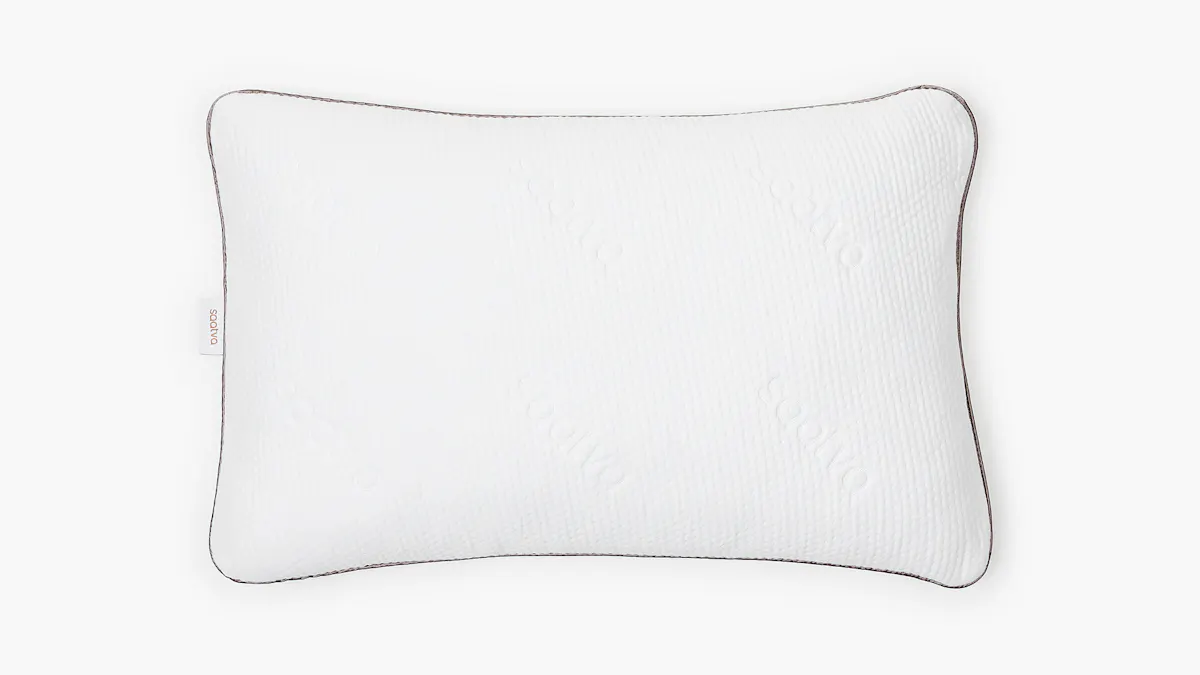
Graphite-infused foam with a memory-foam-and-natural-latex core. Choose the loft carefully; graphite is a design feature, not a measured cooling result.
Verified specs: Graphite-infused memory foam; shredded memory foam and natural latex core fill · Standard roughly 4–5 inches; High roughly 6–7 inches loft · medium feel.
Research pick — based on manufacturer specifications and our research.
Bear Contour Pillow
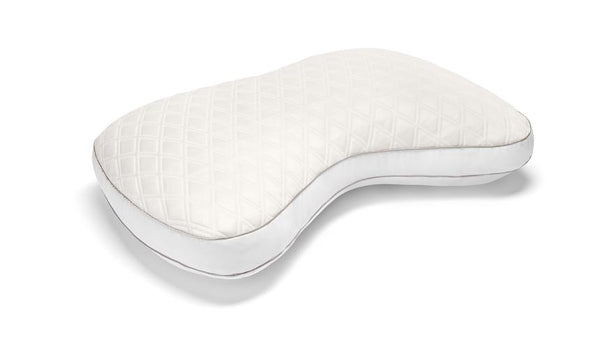
An ergonomic cervical contour design that cradles the neck and shoulders with cool-to-the-touch foam.
Verified specs: Siliconized fiber fill · medium feel · 30 nights from delivery; customer pays return shipping trial.
Research pick — based on manufacturer specifications and our research.
Casper Original Pillow
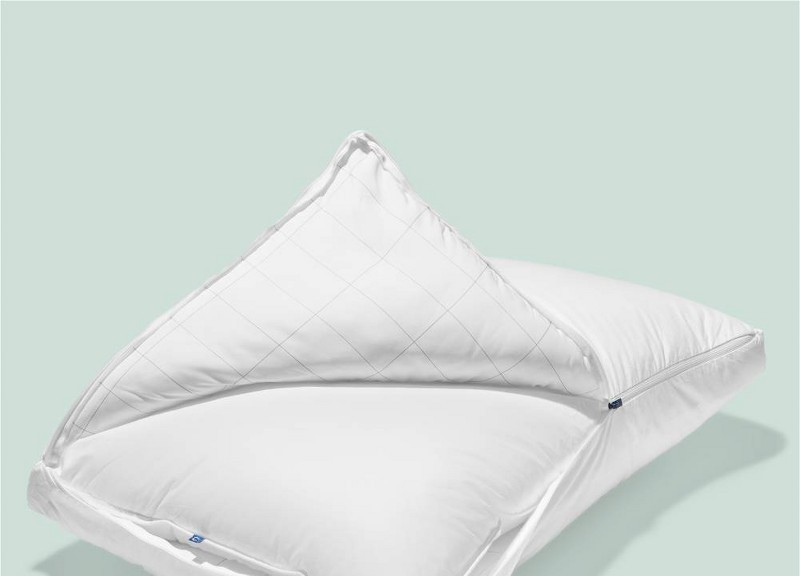
A pillow-in-pillow design — soft outer chamber for plushness, supportive inner chamber for shape retention. Easy, breezy, classic.
Verified specs: Down-alternative microfiber, pillow-in-pillow fill · Medium, roughly 5 in loft · medium feel · 30 nights trial · 1 year warranty.
Research pick — based on manufacturer specifications and our research.
Saatva Latex Pillow
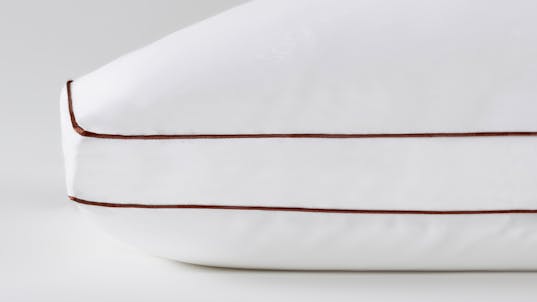
A shredded latex core inside a fiber outer pillow and cotton cover, with preset loft choices rather than loose-fill tuning.
Verified specs: Shredded natural latex core with microdenier fiber outer fill fill · Standard roughly 4–5 inches; High roughly 6–7 inches loft · medium feel · 45 nights trial · 1 year warranty.
Research pick — based on manufacturer specifications and our research.
Ready to give it a squish?
Start with the first option in this shortlist, then compare its fit and trade-offs with the alternatives.
Buying guide
Keep the chin neutral
Too much loft pushes the chin toward the chest, while too little support leaves the neck curve unsupported.
Start near medium loft
Back sleepers often fit a middle-height pillow, then adjust for body size and mattress sink.
Consider a neck contour
A shaped edge can support the cervical curve while leaving a lower cradle beneath the head.
Finding the medium loft back sleeping wants
Lying on your back, the gap the pillow has to fill is the hollow behind your neck — far smaller than the ear-to-shoulder gap side sleepers deal with. Most back sleepers land between three and five inches of usable loft.
Too much height is the common error. If your chin drifts toward your chest, the airway narrows and the muscles at the back of the neck stay stretched all night, which is a frequent cause of morning stiffness and a contributor to snoring.
Too little support is the opposite failure: the head drops back, the neck curve is unsupported, and the weight is carried by the joints rather than the pillow.
Contour, adjustable, or traditional shape
Back sleeping is the position where contoured cervical shapes make the most sense, because your head stays put. A ridge under the neck with a lower cradle for the head supports the curve without lifting.
A contour only works if its ridge height matches your neck depth, and that is not something a label tells you. If you are unsure, an adjustable shredded-fill pillow is the safer purchase, and the trial window matters either way.
Traditional down and down-alternative pillows can work for back sleepers who prefer a plush surface, but they compress unevenly overnight and give less control over final height.
How we selected these picks
Picks were chosen from published loft and contour dimensions, fill construction, cover breathability, trial and warranty terms, and patterns in published owner commentary (not independently verified) about neck support and chin position.
Mr. Squish has not physically tested these pillows, so nothing here describes how a pillow felt to us overnight.
Compare another fit
More core pillow guides
FAQ
How high should a back sleeper's pillow be?
Roughly three to five inches of usable loft — enough to fill the hollow behind the neck while keeping the chin neutral rather than tucked toward the chest.
Are contour pillows good for back sleepers?
Often yes, because the head stays in one place and the ridge can support the neck curve. The catch is fit: the ridge height has to match your own neck depth.
Can a pillow that is too high cause snoring?
It can contribute. Pushing the chin toward the chest narrows the airway, so some back sleepers snore more on a tall pillow and less on a medium one.
Should back sleepers use a pillow under the knees too?
Many find it comfortable, because slight knee flexion reduces the pull on the lower back. It is a comfort adjustment rather than a treatment.
What if I sleep on my back and side equally?
Use an adjustable pillow set near the top of your back-sleeping range, or see our combination sleeper guide for shapes that reshape quickly as you turn.
Keep reading
Affiliate disclosure: Mr. Squish may earn a commission when you buy through links on this page. Affiliate relationships never determine our recommendations — see how we test.