
Best Pillows for Vertigo
Positional dizziness is most often BPPV, where a sudden head movement — classically rolling over or lying down — triggers a short spinning episode. That is why people with vertigo start looking at their bedding: the symptoms happen where head position changes most abruptly. The realistic aim is a stable, somewhat elevated position that is easy to hold and hard to roll out of, which means a long wedge rather than a stack of pillows, a low shape-holding head pillow on top, and a body pillow to limit rolling during a flare. The picks below were chosen on incline stability, dimensions, and consistent loft from manufacturer specifications and verified owner feedback. These are research picks. We have not physically tested these products, and BPPV usually responds far better to clinician-performed repositioning manoeuvres than to any pillow — see a clinician first.
These picks are based on manufacturer specifications and our research, not hands-on testing. See how we test pillows
Quick picks
| Pillow | Best for | Score | |
|---|---|---|---|
| MedCline Reflux Relief System | Acid reflux and GERD sufferers who sleep on their left side | 9.0 | Review |
| Casper Backrest Pillow | Reading and lounging in bed with structured back support | 6.8 | Review |
| TEMPUR-Neck Pillow | Back and side sleepers who want firm cervical support | 9.0 | Review |
| Coop Home Goods Body Pillow | Side sleepers, pregnancy, and hip alignment | 8.9 | Review |
| Coop Home Goods Original | Side and back sleepers who want to dial in loft | 9.4 | Review |
MedCline Reflux Relief System
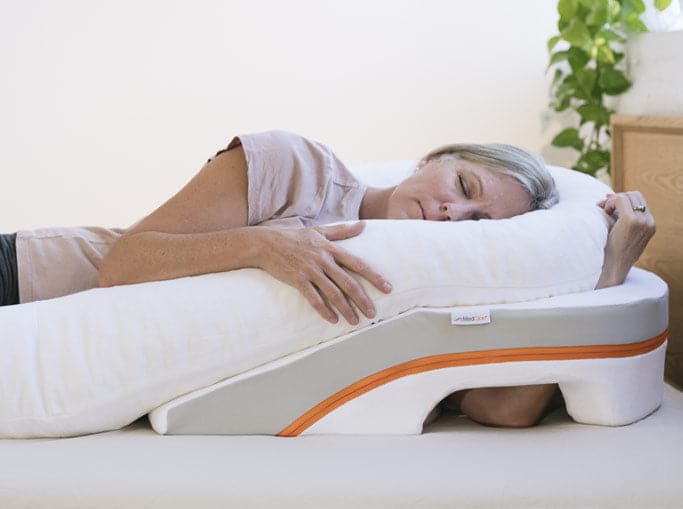
A patented arm-pocket wedge plus body pillow that holds you at an incline on your left side all night — the position clinical research links to the biggest drop in night-time reflux.
Verified specs: Wedge + Body Pillow fill · firm feel · 100 nights trial · 3 years warranty.
Research pick — based on manufacturer specifications and our research.
Casper Backrest Pillow
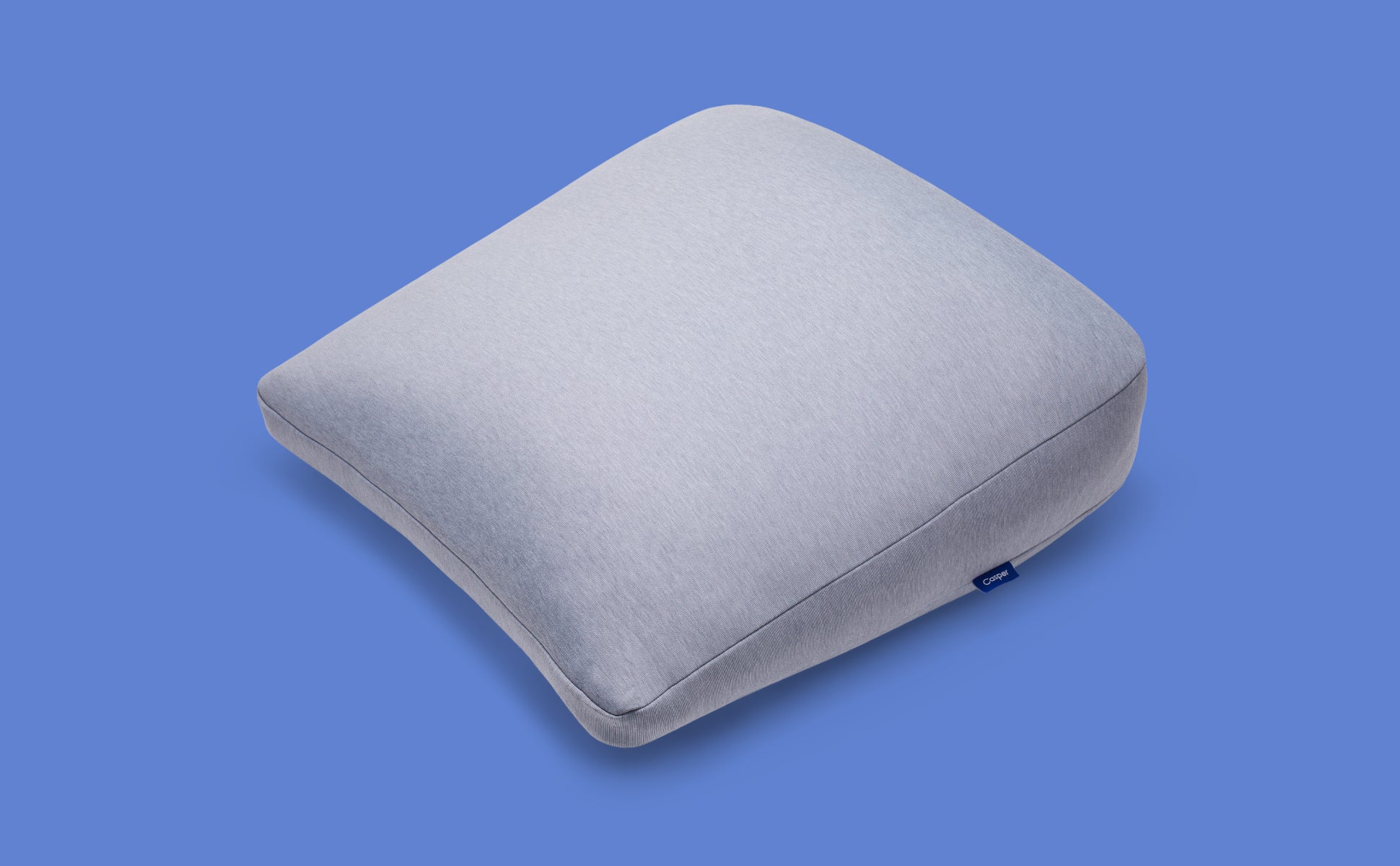
Casper's take on the husband pillow: an upright, structured backrest designed to keep you aligned while reading, watching, or working in bed — a support accessory, not a sleeping pillow.
Verified specs: Foam fill · firm feel.
Research pick — based on manufacturer specifications and our research.
TEMPUR-Neck Pillow

The original ergonomic neck pillow. A dense TEMPUR material wave shape with two lobe heights so you can pick your loft.
Verified specs: Solid TEMPUR material, ergonomic contour fill · Small / Medium / Large, roughly 3.5–5 in loft · firm feel · Retailer dependent trial · 5 years warranty.
Research pick — based on manufacturer specifications and our research.
Coop Home Goods Body Pillow
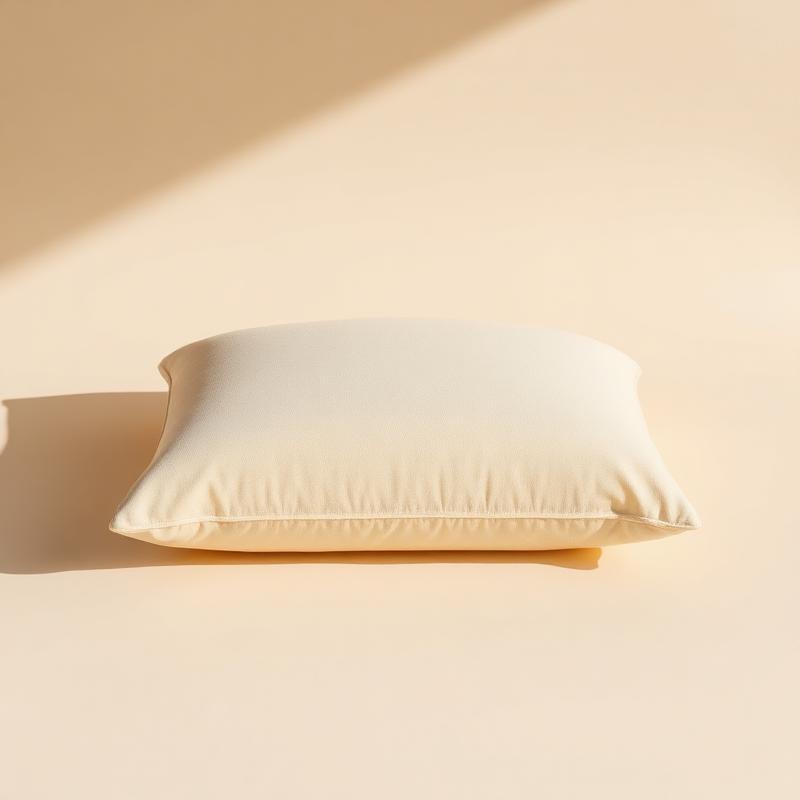
A long adjustable shredded-foam bolster you hug and tuck between your knees. It stops your top hip from rolling forward, which is the quiet cause of a lot of side-sleeper back pain.
Verified specs: Cross-cut shredded memory foam + microfiber fill · Adjustable firmness via fill loft · medium feel · adjustable fill · 100 nights trial · 5 years warranty.
Research pick — based on manufacturer specifications and our research.
Coop Home Goods Original
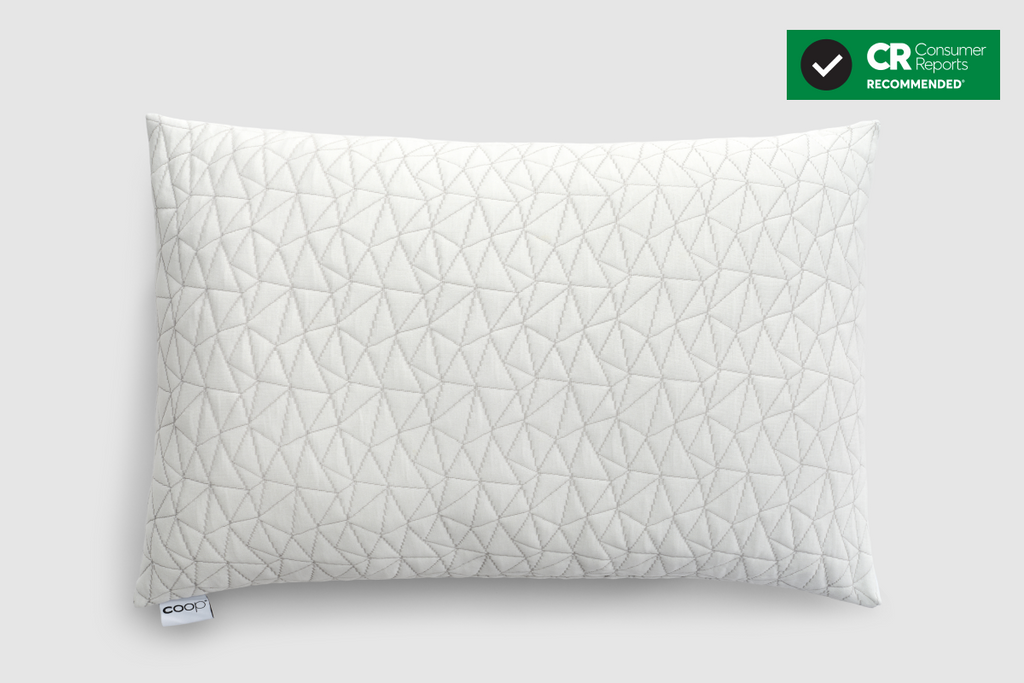
A widely reviewed adjustable pillow with a shredded memory foam and microfiber blend you can add to or remove until the loft suits you.
Verified specs: Cross-cut shredded memory foam + microfiber blend fill · Roughly 3–6 in, fully adjustable loft · medium feel · adjustable fill · 100 nights trial · 5 years warranty.
Research pick — based on manufacturer specifications and our research.
Ready to give it a squish?
Our highest-rated research pick for this category.
Buying guide
A wedge, not a pillow stack
Stacked pillows bend the neck and slide apart. A long wedge inclines the whole torso and stays put.
Low, stable head support on top
Pair elevation with a shape-holding low-loft pillow so the neck is supported without extra flexion.
Limit rolling during a flare
A body pillow helps keep you off the provoking side while symptoms are active.
Diagnosis first
BPPV often responds quickly to clinician-performed repositioning manoeuvres — far more than to any bedding change.
Why bedding comes up with vertigo at all
The commonest cause of positional dizziness is BPPV, where loose crystals in the inner ear trigger a short, violent spinning sensation when the head moves into certain positions — classically rolling over in bed or lying down. That is why people with vertigo start looking at pillows: the symptoms are provoked by head position and movement, and the bed is where both happen most abruptly.
The realistic aim is to reduce sudden head-position change and to make a raised, stable position easy to hold. Many clinicians advise sleeping with the head somewhat elevated and avoiding the provoking side during a flare. Equipment can make that practical.
What to look for
A long wedge is the most useful single item, because it elevates the whole torso in a stable way rather than kinking the neck the way stacked pillows do. Look at incline angle, length, and whether the surface holds you in place instead of letting you slide down overnight.
Pair the wedge with a low-profile head pillow so your neck is supported without extra flexion, and consider a body pillow to stop involuntary rolling during a flare. Stability is the theme throughout: fills that hold their shape are better than plush pillows that let your head sink and shift.
Get the diagnosis first
Vertigo has several causes with different treatments, and BPPV in particular often responds quickly to repositioning manoeuvres performed by a trained clinician — far more effectively than any bedding change. Aftercare instructions following such a manoeuvre sometimes include specific sleeping positions, and those instructions take priority over this page.
Dizziness with hearing loss, severe headache, double vision, weakness, or difficulty speaking needs urgent medical assessment. Pillows are comfort and positioning equipment, nothing more.
FAQ
Keep reading
Affiliate disclosure: Mr. Squish may earn a commission when you buy through links on this page. Affiliate relationships never determine our scores or rankings — see how we test.